Every talented player represents years of investment.
From families and grassroots clubs to academies and national programs, development is cumulative. Progress depends on continuity, availability, and trust across the system.
Yet across many federations, development stalls not because of talent gaps or coaching quality—but because welfare breaks down somewhere along the pathway, often without anyone seeing it in time.
Welfare Is a System Issue, Not a Club Problem
Most federations care deeply about athlete welfare. Policies exist. Guidelines are issued. Expectations are set.
But in practice, federations often lack consistent visibility into what is actually happening on the ground.
Across many systems:
- Clubs collect training load data that the federation never sees
- Medical notes live in isolated tools—or on paper
- Recovery and return to play processes vary widely
- Transitions between club and country disrupt continuity of care
- Early warning signs are missed because standards aren’t consistent
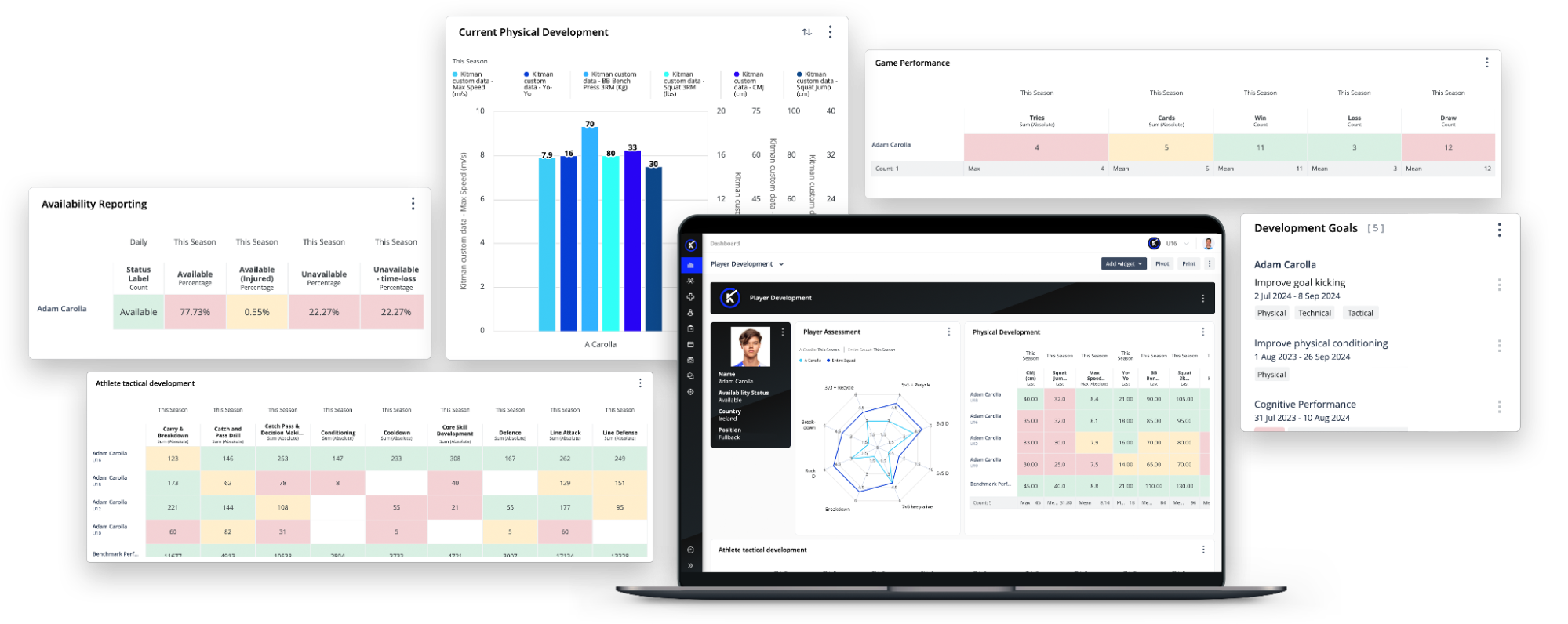
When welfare insight is fragmented or absent, risk increases—and development becomes unstable.
Why Welfare Breakdowns Hit Development First
Injury, illness, and unmanaged workload don’t just sideline players; they also affect the team’s performance.
They disrupt:
- Training continuity during critical development windows
- Confidence and trust between the player, the club, and the federation
- Progression through age groups and pathway milestones
- Long-term availability for national programs
The cost isn’t always visible immediately.
It shows up later as:
- Drop-offs in promising talent
- Players who plateau or exit pathways early
- Gaps between potential and progression
When welfare breaks, development pays the price.
The Visibility Gap Federations Face
Unlike clubs, federations don’t see players every day. Their challenge isn’t effort—it’s access and consistency.
Without unified welfare visibility:
- Leaders rely on partial or delayed information
- Comparisons across clubs and regions are unreliable
- Risk patterns emerge too late to intervene
- National standards exist in theory, but not in practice
Oversight exists. Insight is limited—and foresight remains out of reach.
What Leading Federations Do Differently
Federations that stabilize development outcomes approach welfare as a shared responsibility, not a decentralized afterthought.
They focus on two foundational principles:
1. Enable consistent welfare tracking
Ensuring clubs have the tools and guidance to consistently track workload, injury, readiness, and recovery.
2. Define national welfare standards
Setting clear expectations for what must be monitored, how it’s reported, and how information flows between club and country.
Together, these principles create:
- Safer player environments
- More consistent care regardless of club resources
- Greater trust across the ecosystem
- Earlier intervention when the risk increases
Most importantly, they protect the momentum of development.
Welfare Is Not a Checkbox
For federations, welfare isn’t just about compliance or duty of care.
It is the engine of player availability.
And availability drives:
- Development continuity
- Pathway progression
- Performance readiness
- Long-term value of national investment
When welfare is visible, structured, and consistent, development becomes more resilient.
When it isn’t, progress depends on luck.
Building Toward Safer, More Stable Pathways
Modern federations are recognizing that welfare cannot sit on the periphery of development strategy.
It must be:
- Integrated into how pathways are governed
- Visible across clubs, regions, and age groups
- Structured to support continuity through transitions

This doesn’t require perfection on day one.
But it does require a system-level approach that treats welfare as foundational—not optional.
Protecting Players Protects Progress
Talent development is fragile.
It depends on health, trust, and continuity as much as skill and coaching.
Federations that safeguard welfare don’t just reduce risk—they stabilize development, protect long-term investment, and create pathways where talent has the best chance to thrive.
Contact us to see how federations are strengthening player welfare to protect long-term progress.