Looking for an Athlete Monitoring System?
Athlete monitoring has changed.
Your system should, too.
Whatis it?
An athlete monitoring system is software built to track what athletes do: training load, wellness, recovery, and readiness data that helps performance staff understand how athletes respond to training and competition, then make better load management decisions moving forward.
That definition has held for over a decade. The job behind it has changed.
The data still comes from sports tracking software: GPS, wearables, force plates, and the rest. Capturing it was never the hard part. Turning it into a plan is.
Today’s Heads of Performance aren’t just reviewing what happened. With their S&C coaches and sport scientists, they’re planning what needs to happen: managing exposure across the microcycle, validating whether training matches intent, and preparing athletes for the specific demands of their team’s style of play.
A modern athlete monitoring system isn’t a tracking tool. It’s a planning system.

Why Change?
The pressures on modern performance teams have changed. Many of the tools supporting them haven’t.

Tracking isn't planning
Knowing what athletes did doesn't tell you whether training matched intent or what to adjust next.
A Head of Performance needs a repeatable planning process
The challenge isn't accessing more data. It's aligning staff around one shared view of the plan, the athlete, and the decision.
Workload data lives across too many systems
Load context from tracking systems, force plates, wearables, gym, and testing gets reconciled by hand, and planning still ends up back in spreadsheets.
Training plans rarely match reality
Athlete participation gets modified, pulled from drills, progress individually, or are limited by availability. Staff need to see what was actually completed, not just what was planned.
Workload decisions need medical visibility
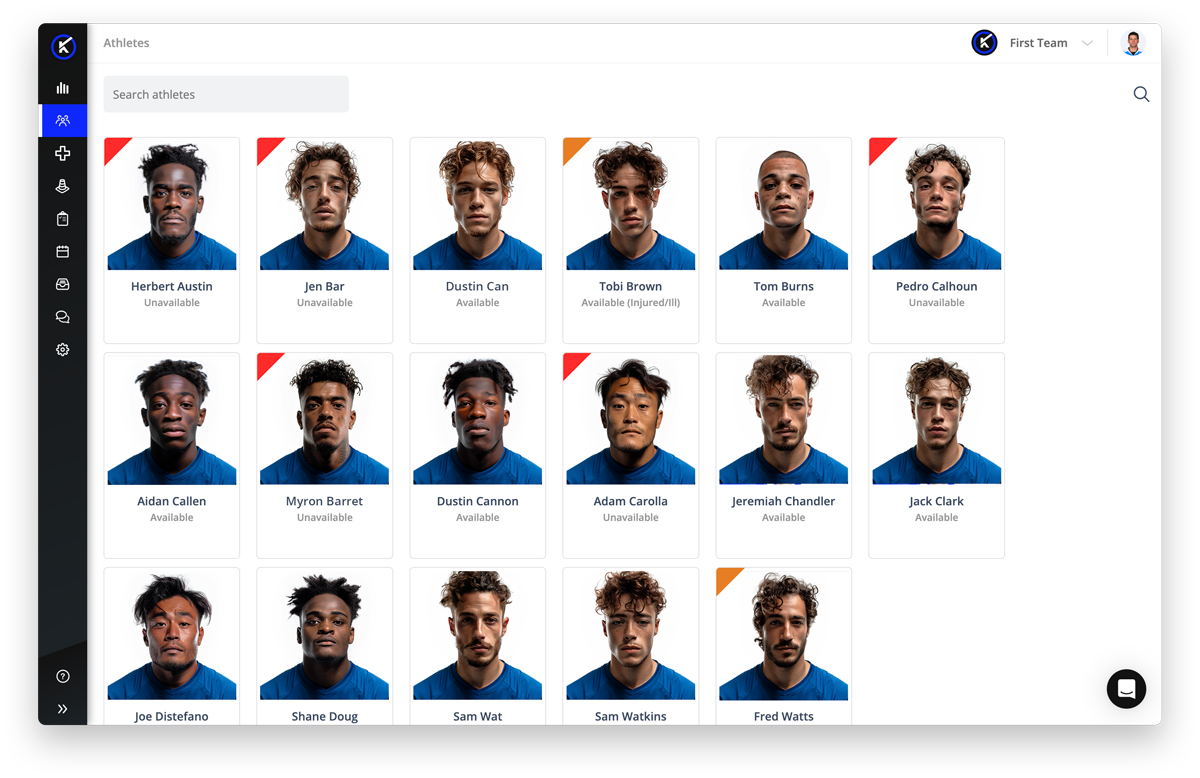
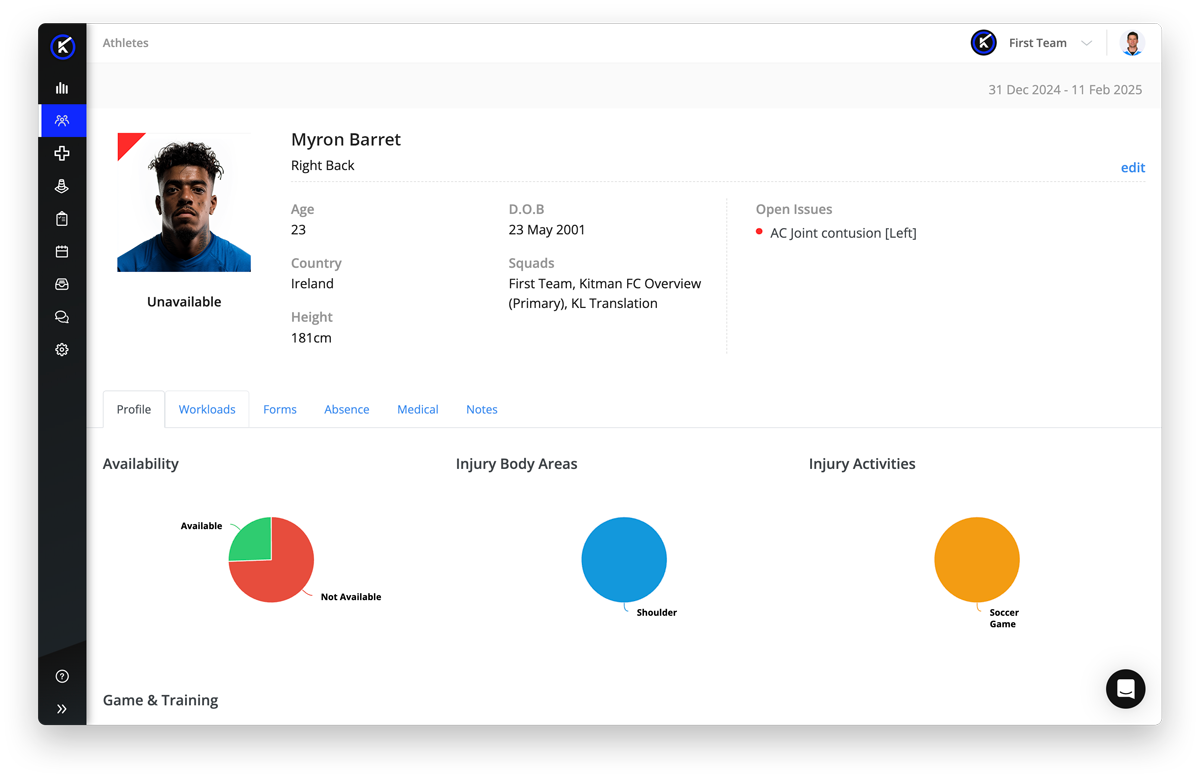
Injury history, availability, and return-to-train status shape every loading call. A system that can't see medical data leaves staff with an incomplete picture.
Academies and youth setups need maturity-aware planning
Load norms for a 22-year-old aren't right for a 16-year-old. Most systems don't account for that.
The Shift
FROM ATHLETE MONITORING TO PERFORMANCE OPTIMIZATION
Most athlete monitoring systems were built to look backward. They capture what happened and give staff a dashboard to review it. That works when the job is to track. It breaks when the job is to plan.
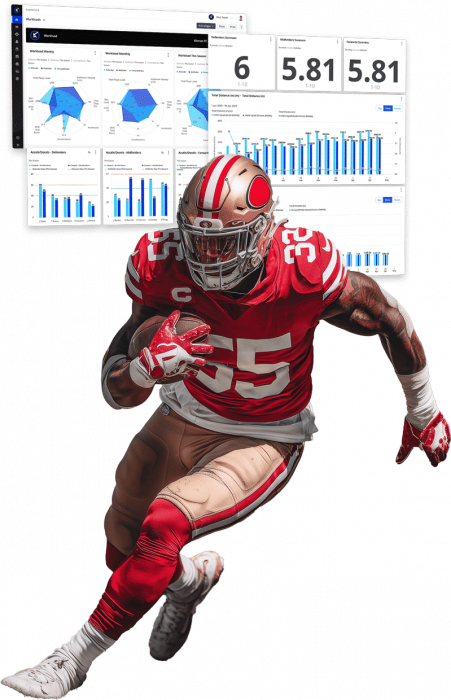
The Performance Optimization Solution in iP replaces that with forward-looking planning. Staff design the microcycle with drill-level clarity through the Drill Library and Game Day +/-, then validate whether training matched intent, including what athletes actually completed, not just what was planned.
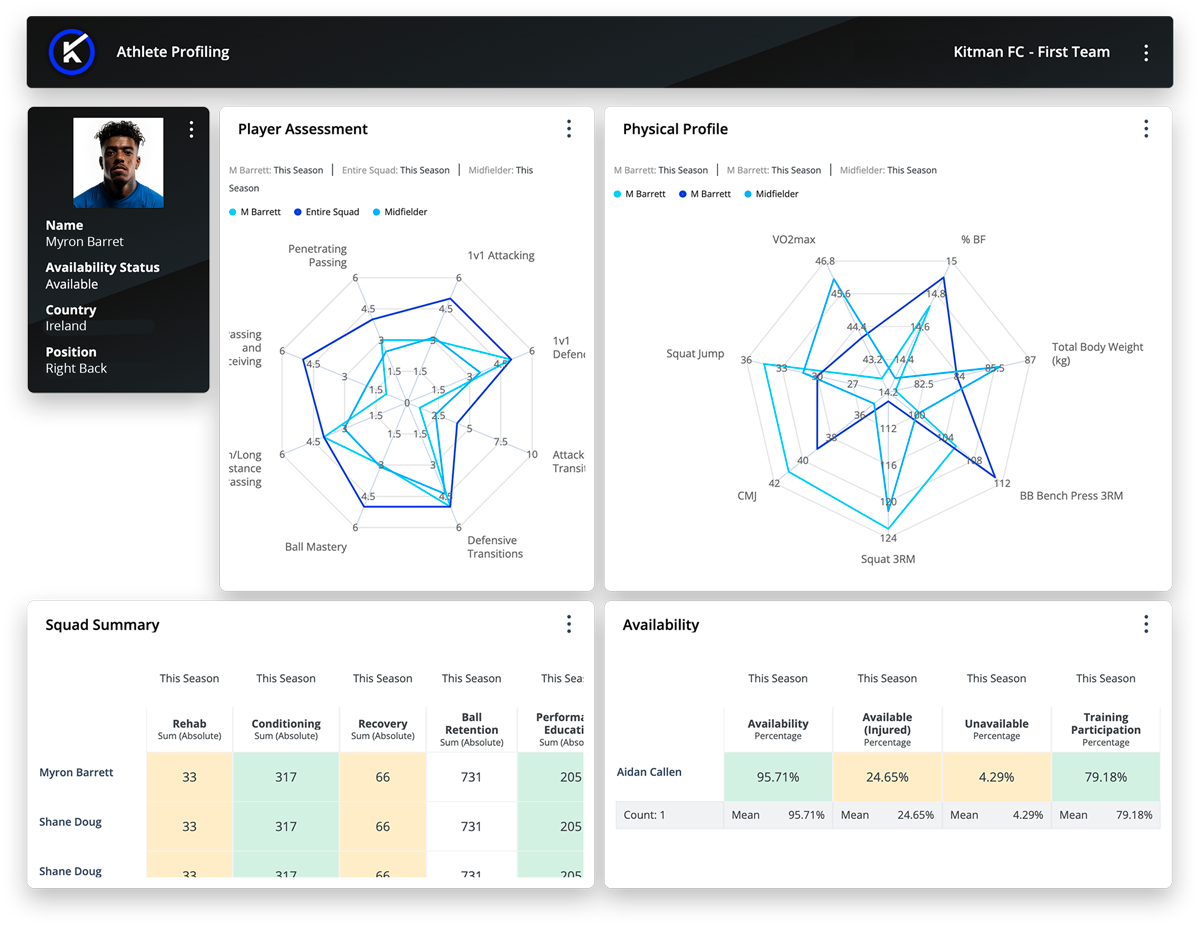
Workload, wellness, testing, and availability data sit in one connected view, so the daily call comes from one place, not reconciled by hand across five systems.
ATHLETE MONITORING SYSTEMS
vs.
PERFORMANCE OPTIMIZATION Solution
How does a traditional athlete monitoring system compare with the Performance Optimization Solution in iP: Intelligence Platform?
Athlete Monitoring Systems
Performance Optimization in iP
Built to
Track and review training load, wellness, and recovery
Plan workload across the microcycle and validate whether training matched intent
Session design
Strong at capturing output; planning the session usually happens elsewhere
Drill-level design with Game Day +/- and match-context benchmarks, so you plan where load lands before the session
Load data
Often connect to tracking and wearables; gym, testing, and wellness frequently land in spreadsheets
Tracking systems, force plates, wearables, and testing in one view, with no manual reconciliation required
Validating intent
Show what happened; comparing it against the plan is typically manual
Compares delivered load against planned load, so you know if training did what it was meant to
Training & Participation Management
Planned work and actual participation are often tracked separately or manually
Tracks participation, modifications, and completed work against the plan, so staff understand what athletes actually did
Medical context
Stronger systems carry availability and injury flags; many don’t see medical data at all
Injury and availability data sit alongside workload, so planning reflects who’s actually fit to perform
The daily call
Post-session review with configurable alerts
Daily player status brings workload, wellness, recovery, and readiness into one decision view
Getting status
to staff
Dashboards and exports, often manually adapted for different audiences
Role-based views, dashboards, and shareable outputs for staff, coaches, and stakeholders who need the insight
Athlete engagement
and communication
Mobile apps vary; some are tied to proprietary hardware or limited to data collection
Athlete App and Coach App support messaging, wellness data collection, calendar visibility, and shared visibility into daily plans
Academy and youth
Usually apply one set of load norms across ages
Growth & Maturation aware training helps to calibrate athlete load relative to biological age
Adapts to
your method
Configurable to a point; deeper changes often need vendor support
Configurable workflows, metrics, and reporting that reflect your methodology while keeping data structured across teams
The Checklist
How to Evaluate athlete monitoring systems vs The PERFORMANCE Optimization Solution
Use the checklist below to compare your current athlete monitoring system, along with the tracking platform, wearable software, spreadsheets, and manual workflows that support it, with the Performance Optimization Solution in iP: Intelligence Platform.
Flexibility matters. But only if it helps performance staff plan better, validate faster, and protect the integrity of the work.
Capability Support = ⬤ Fully supported | ◐ Limited capability | ○ Not supported
Athlete Monitoring Systems
Performance Optimization in iP
DATA AND LOAD CONTEXT
Planning is only as good as the data under it. Data Health experience in iP help teams identify missing inputs, failed syncs, and outliers, so clubs can resolve data quality issues and build cleaner, more reliable reports.
DATA INTEGRATIONS
Connects to tracking systems and wearables
UNIFIED LOAD VIEW
Brings tracking, gym, testing, and wellness load into one view
DATA HEALTH
Identify gaps, sync failures, and outliers that need to be resolved for cleaner reporting
VENDOR FLEXIBILITY
Hardware-agnostic, no vendor lock-in
PLANNING AND SESSION DESIGN
SESSION PLANNING
Structure and plan sessions before they happen
DRILL-LEVEL DESIGN
Drill-level clarity on where load lands
MICROCYCLE PLANNING
Plan the microcycle against match demands with Game Day +/-
LOAD VALIDATION
Validate delivered load against the plan
PARTICIPATION TRACKING
Track participation, modifications, and completed work against the plan
DAILY READINESS AND MONITORING
DAILY INPUTS
Collect wellness, RPE, recovery, and load
ALERTS & FLAGS
Automated alerts and red flags
MONITORING DASHBOARD
Pre-built daily readiness dashboard, ready to use
READINESS VS LOAD
Connect today’s readiness to recent load
PRIORITY ATHLETES
Spot athletes who need a closer look
MEDICAL AND AVAILABILITY CONTEXT
Workload calls depend on who’s fit to load. Because performance and medical data live on one platform, injury and availability sit alongside workload, so performance staff plan with the full picture instead of chasing the medical team or a separate system.
MEDICAL VISIBILITY
See injury and availability alongside workload
RETURN-TO-TRAIN
Factor return-to-train status into load decisions when medical data is connected
ENGAGEMENT AND COORDINATION
SHARED CALENDAR
Shared calendar staff and athletes plan and work from
ATHLETE ACCESS
Athlete access to wellness, RPE, and daily plans (Athlete App)
STAFF ACCESS
Staff access to athlete status, alerts, and communication (Coach App)
REAL-TIME UPDATES
Training plan updates reach the right people in real time
REPORTING AND VISUALIZATIONS (MY iP)
SELF-SERVICE REPORTING
Self-service dashboards included
CREATOR MODE
Build and personalize your own dashboards with Creator Mode
SHAREABLE OUTPUTS
Shareable outputs for staff and coaches
EXPORTS & PRINTABLES
Exportable and printable outputs for stakeholders who don’t work in iP every day
aathlete monitoring system: Common Questions
An athlete monitoring system collects and interprets information about training load, wellness, recovery, readiness, and testing. It helps performance staff understand what athletes have done, how they are responding, and what that information means for training and competition.
They typically combine internal load, such as heart rate, RPE, wellness, and recovery, with external load captured through technologies such as GPS, LPS, optical tracking, and IMUs. They may also include physical testing, gym, participation, and subjective data. The value comes from understanding those inputs together rather than reviewing each source in isolation.
Athlete tracking captures what an athlete did, such as distance, speed, or movement. Athlete monitoring puts that information alongside wellness, readiness, testing, and other context to understand how the athlete responded. Monitoring provides the picture; planning determines what you do next.
It should close the loop between monitoring and action. That means connecting workload and wellness with session planning, participation, medical availability, scheduling, and communication so staff can use what they learn to plan and adapt what happens next.
Traditional athlete monitoring systems tend to focus on collecting workload, monitoring readiness, and reporting on what happened. Performance Optimization is part of Kitman Labs’ iP: Intelligence Platform, a unified operating system for sport that connects monitoring with workload planning, session planning, participation, medical information, development, and daily team operations. Staff can move from understanding what happened to deciding what happens next without relying on separate systems.
MONITORING LOOKS BACK. PLANNING MOVES YOU FORWARD.
A system that only tells you what happened leaves the hardest part to your staff: deciding what comes next. That’s the gap every tracking-only tool leaves open, and the one performance teams close by hand across spreadsheets, dashboards, and disconnected systems every day.
Performance Optimization closes it.
One platform, built from day one to plan workload, validate intent, manage participation, and adapt with confidence, not stitch together tracking outputs after the fact.
The teams pulling ahead aren’t the ones with the most data. They’re the ones who can act on it first.
Ready to plan workload with confidence? Let’s talk.