When players arrive for national duty, they don’t arrive equal.
Some come off heavy match schedules.
Some are returning from injury.
Others have barely played in weeks.
Without shared readiness context, national camps start with uncertainty—and early training decisions can unintentionally increase fatigue, elevate injury risk, or undermine trust with clubs.
For federations responsible for player welfare and performance across international windows, managing load and readiness is no longer optional. It is a core duty of care.
The Readiness Challenge National Teams Face
International windows compress time, increase travel, and move players between environments with different demands and philosophies.
Yet in many federations, national staff begin camps with limited visibility into what came before:
- How much load a player accumulated in the last 7–14 days
- Whether recovery has kept pace with exposure
- Where recent injuries or modified training occurred
- Which players are underloaded versus already fatigued
When readiness insight is incomplete:
- Early sessions apply uniform intensity to unequal athletes
- Fatigued players are unknowingly overloaded
- Underloaded players fail to gain meaningful stimulus
- Injury risk rises and performance suffers
- Club–country relationships come under strain
The issue is not intent.
It’s visibility.
Why Readiness Management Is a Federation Responsibility
Clubs manage players daily.
National teams see them briefly—but at critical moments.
That makes readiness oversight during camps a federation responsibility.
Federations must be able to:
- Assess readiness objectively as players enter camp
- Individualize training exposure immediately
- Monitor recovery in real time
- Document load and decisions transparently
- Return players with clear, defensible context
Without a consistent way to manage readiness across environments, even well-run camps introduce unnecessary risk.
How Federations Build Readiness Visibility Across Club and Country
Leading federations are solving this by ensuring performance data follows the player, regardless of where it originates.
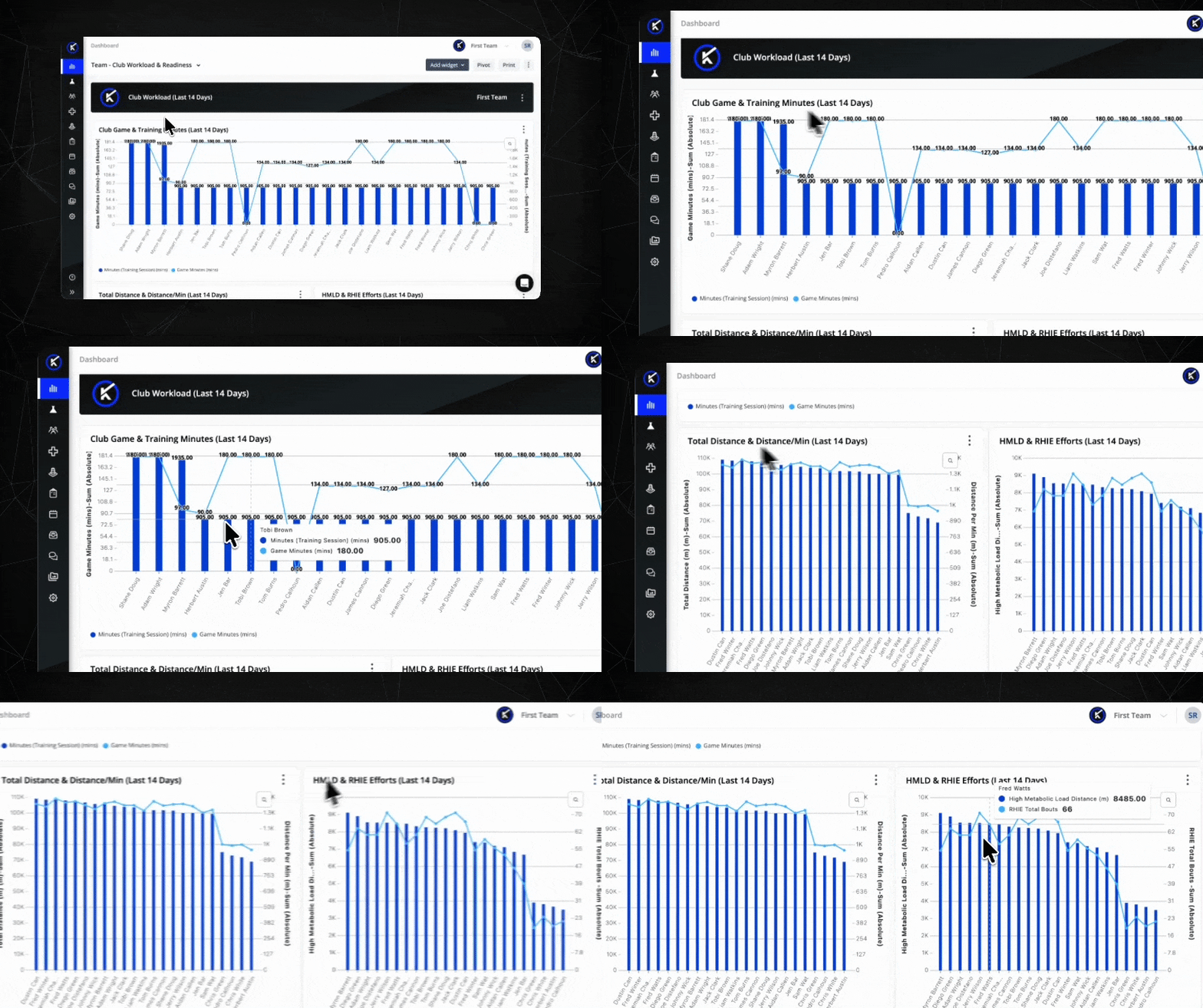
Through Operations & Pathway Management, an Integrated Solution within iP: Intelligence Platform, federations establish the connected foundation that allows performance and readiness insight to live within a single longitudinal player record.
From there, federations can manage load and readiness before, during, and after national duty by connecting performance, workload, and welfare insight within a single, unified structure.
Crucially, this works whether or not clubs are already using iP.
When clubs are using iP
Structured load, wellness, GPS, and performance data flows directly into the player record—giving national staff immediate visibility as players enter camp.
When clubs are not using iP
National staff can still capture and ingest key performance information through standardized data-collection workflows during camp—maintaining consistency, comparability, and continuity within the federation’s system.
In both cases, federations retain one unified readiness record per athlete, not fragmented snapshots.
Managing Readiness in Practice
With a connected readiness model in place, federations can:
See readiness before camp begins
- Review cumulative workload and recovery trends from recent weeks
- Flag athletes at higher fatigue or injury risk
- Adjust Day-1 exposure based on evidence, not assumption
Individualize load during camp
- Set position- or role-specific exposure targets
- Balance training so underloaded players build capacity while fatigued players recover
- Monitor wellness and response daily to guide session progression
Protect continuity after camp
- Generate objective return-to-club summaries with exposure and readiness context
- Support safer reintegration and shared accountability
- Maintain a defensible record of player management decisions
How Federations Enable Safer Camps
With a connected system in place:
- Readiness data is visible as players arrive
- Training intensity adapts to individual context
- Recovery is monitored in real time
- Load decisions are documented transparently
- Player welfare remains consistent across transitions