For federations, it’s easy to equate “modern” with technology adoption—new tools, new platforms, new dashboards. But among the federations making the most progress globally, modernization is not a technology upgrade.
It’s a structural shift designed to support scale, sustainability, and competitive advantage.
Modern federations aren’t modernizing for the sake of efficiency alone. They’re modernizing to:
- Scale development systems without increasing complexity
- Protect long-term growth and commercial value
- Compete more effectively on the global stage
- Allocate resources with greater precision and confidence
In practice, this means modernization is less about adding technology and more about how well systems, standards, and decisions align across the ecosystem.
Across countries, sports, and funding levels, three characteristics consistently separate modern federations from legacy models:
Connected operations
Visible pathways
Accountability at every level
Together, these form the operating foundation that allows federations to grow, compete, and sustain success over time.
1. Connected Operations: From Silos to Systems
In traditional federation models, operations exist in silos.
Player & Staff Registration sits in one system.
Competition management in another.
Development frameworks live in documents.
Welfare and readiness data often disappears when players move environments.
Each system may function well on its own—but collectively, they fail to tell a coherent story.
Modern federations close this gap by treating operations as a connected workflow, not a set of standalone tools.
When operations are connected:
- Registration, eligibility, and competition data reinforce development decisions
- Movement between clubs, regions, and national teams is visible and auditable
- Administrative effort decreases as duplication is removed
- Standards are applied consistently across the ecosystem
- Leaders can see what’s working, what isn’t, and where intervention is needed
Connected operations don’t just improve efficiency. They create transparency and measurement across the system—enabling federations to course-correct, optimize standards, and govern development proactively rather than reactively.
2. Visible Pathways: From Assumption to Evidence
Most federations have a pathway in theory.
What they often lack is pathway visibility.
Without consistent documentation, federations struggle to answer basic questions:
- How is development actually progressing across regions?
- Where are players dropping out — and why?
- Which environments accelerate progression, and which stall it?
- Are selection decisions equitable and evidence-based?
Modern federations address this by ensuring that every player’s journey is:
- Documented over time
- Comparable across regions and cohorts
- Accessible to those making development and selection decisions
Visible pathways shift development from assumption to evidence.
They allow federations to:
- Benchmark progression fairly
- Understand developmental trends over time, not snapshots
- Evaluate the impact of programs longitudinally
- Ensure opportunity is driven by readiness and development context — not uneven access to resources
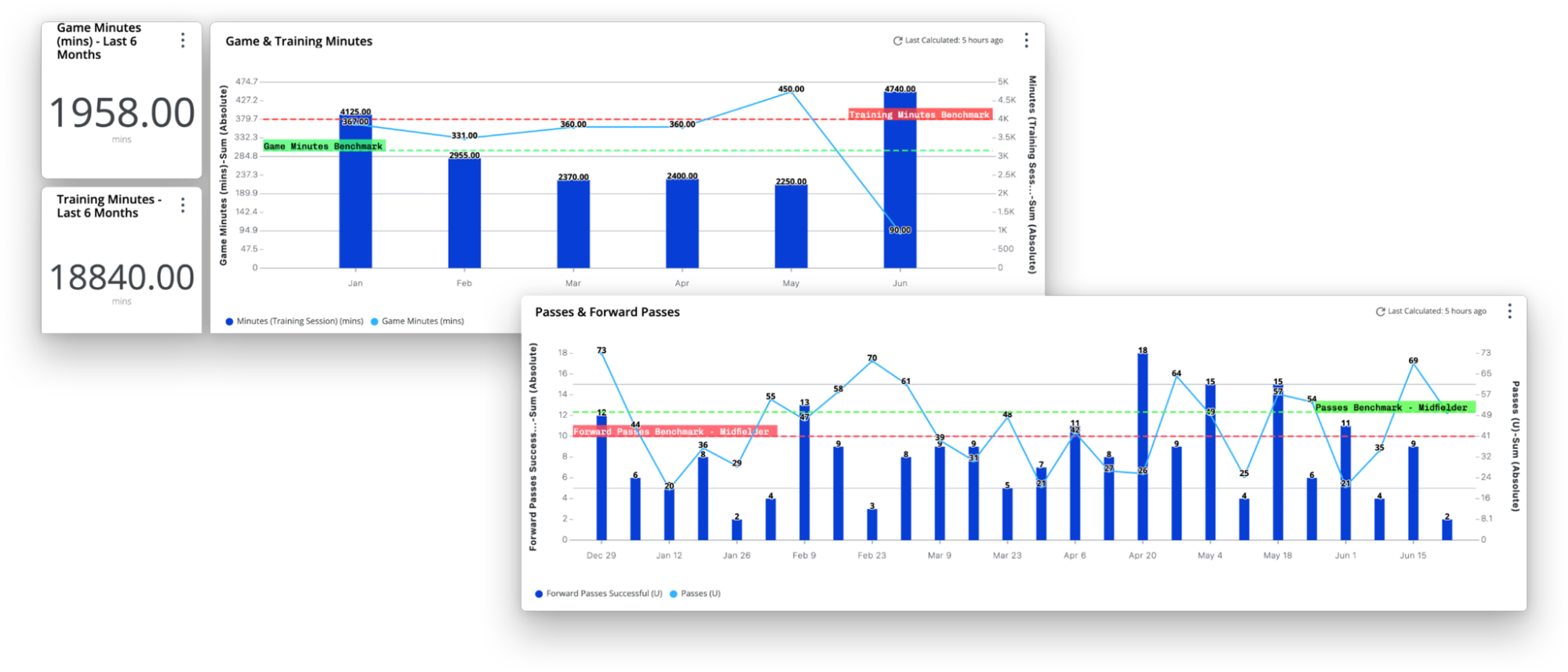
Visibility is what turns a pathway from a concept into a system.
3. Accountability at Every Level: From Policy to Practice
Standards only matter if they are applied consistently.
Many federations invest heavily in:
- Coaching frameworks
- Curriculum design
- Welfare guidelines
- Development principles
But without accountability, these standards remain aspirational.
Modern federations embed accountability into daily work — not through policing, but through structure.
This means:
- Shared definitions of what “good” looks like
- Consistent assessment frameworks
- Clear expectations for clubs and regions
- Real-time visibility into adherence and outcomes

Accountability in modern federations is not retrospective.
It’s continuous.
It allows leadership to support improvement early — before inconsistency compounds into systemic issues.
Why These Three Pillars Only Work Together
Alignment, visibility, and accountability are not independent upgrades.
They reinforce one another.
Connected operations make pathways visible.
Visible pathways enable measurable accountability.
Accountability strengthens alignment across the ecosystem.
When one pillar is missing:
- Operations revert to administration
- Pathways become fragmented
- Accountability becomes manual and inconsistent
Modernization succeeds when all three are present — and integrated.
Modernization Is Structural, Not Cosmetic
The federations advancing fastest aren’t adding complexity.
They’re reducing fragmentation.
They’re aligning what already exists—operations, development, welfare, and insight—into systems that work together.
This is why modernization looks remarkably similar across federations of different sizes and resources. The principles don’t change. Only the starting point does.
iP: Intelligence Platform is designed to operationalize this structure—providing the connected foundation that turns alignment into day-to-day reality, rather than a theoretical ambition.
Modernization succeeds when structure supports decisions—consistently, visibly, and at scale.
What Modern Federations Gain
When alignment, visibility, and accountability are in place, federations gain:
- Clearer oversight without increased admin
- Fairer, more consistent player opportunity
- Stronger trust with clubs and regions
- Better evidence to support strategy and investment
- Systems that evolve instead of breaking under change
Modernization becomes the mechanism that supports sustainable growth, stronger pathways, and long-term competitiveness.
Defining the Future of Federation Leadership
Modern federations don’t just manage the game.
They actively raise its standard.
They use connected structures to:
- Improve consistency in development and competition quality
- Increase the number of players progressing to the highest levels
- Strengthen national competitiveness on the global stage
- Create more compelling competitions that drive fan engagement
- Build sustainable pathways that support long-term financial health
This doesn’t happen through better reporting alone. It happens when federations can see clearly across their ecosystem, measure what’s working, and intervene early to optimize outcomes.
The most effective federations don’t depend on individual effort or informal workarounds. They rely on aligned systems that reinforce standards, accountability, and continuous improvement.
And they don’t modernize recklessly. They modernize with purpose, building structures that scale with participation, performance, and commercial ambition.
Alignment.
Visibility.
Accountability.
That’s what allows federations to raise standards of play, strengthen competitiveness, and grow the game sustainably.
Contact us to see how federations are putting these principles into practice across their ecosystems.