When major leagues and governing bodies modernize, it’s rarely for cosmetic reasons. It’s because the old model can’t keep up with the reality of modern sport:
- Athletes move between environments and programs
- Development journeys span years, not seasons
- Welfare and safeguarding expectations are higher than ever
- Stakeholders need proof of what’s working—now, not at year-end
The organizations making the most progress didn’t simply “add more tech.” They eliminated or reduced disconnected workflows and built connected structures that allow standards, visibility, and accountability to reinforce one another across clubs, academies, regional programs, and national teams.
Here’s what they learned along the way.
Lesson 1: Modernization starts with alignment, not software selection
The fastest-moving organizations didn’t begin by asking, “What system do we buy?”
They began by answering three operational questions:
What must be consistent across every environment?
(Registration and eligibility, assessments, welfare processes, development frameworks)
What must be visible across the whole pathway?
(Progression, exposure, availability, key milestones, selection context)
What must be provable when leadership asks, “What’s working?”
(Standards applied, outcomes achieved, gaps identified, actions taken)
When those answers are clear, technology becomes an enabler—not the strategy.
Lesson 2: What organizations underestimated
Even highly capable organizations tend to underestimate the same three realities:
1) Club and regional variation is the real complexity
Different resources, staff capacity, and maturity levels are normal. Modernization succeeds when the structure accommodates that variation—without lowering standards.
2) “Data collection” isn’t the hard part—consistency is
Many ecosystems already had plenty of data. What they lacked was standardized capture, shared definitions, and a way to connect the story across environments over time.
3) Adoption doesn’t follow a memo—it follows value
When modernization feels like extra work, adoption stalls. When it removes duplication, reduces ambiguity, and improves decisions, adoption spreads quickly.
Lesson 3: What worked better than expected
Once value became visible, momentum built faster than many leaders expected—especially in three areas:
A single source of truth reduces friction immediately
When clubs and central teams work from the same records and workflows—eligibility status, player history, and pathway milestones—the volume of manual follow-up drops. So do disputes about “whose numbers are right.”
Standardization doesn’t erase identity—it strengthens comparability
The strongest modernization programs didn’t force identical coaching content. They standardized structure: shared templates, consistent assessment language, defined checkpoints, and comparable benchmarks.
Visibility improves trust, not just reporting
When stakeholders can see what’s happening—and why decisions are being made—collaboration improves across club and federation lines. The selection rationale becomes clearer, safeguards strengthen, and disputes become easier to resolve with evidence. It also accelerates decision-making when the stakes are highest.
Lesson 4: The modernization pitfalls the strongest programs avoided
The best modernization journeys weren’t perfect—but they were disciplined. They avoided common traps:
Trap: building dashboards without correcting the underlying structure
Dashboards don’t create consistency. Workflows do.
The organizations that moved fastest embedded standards into daily work—so reporting reflected reality instead of interpretation.
Trap: trying to modernize everything at once
The most effective programs started with a clear constraint (operations, development structure, welfare continuity, or insight) and expanded from there—without overwhelming clubs and regions.
Trap: measuring activity instead of impact
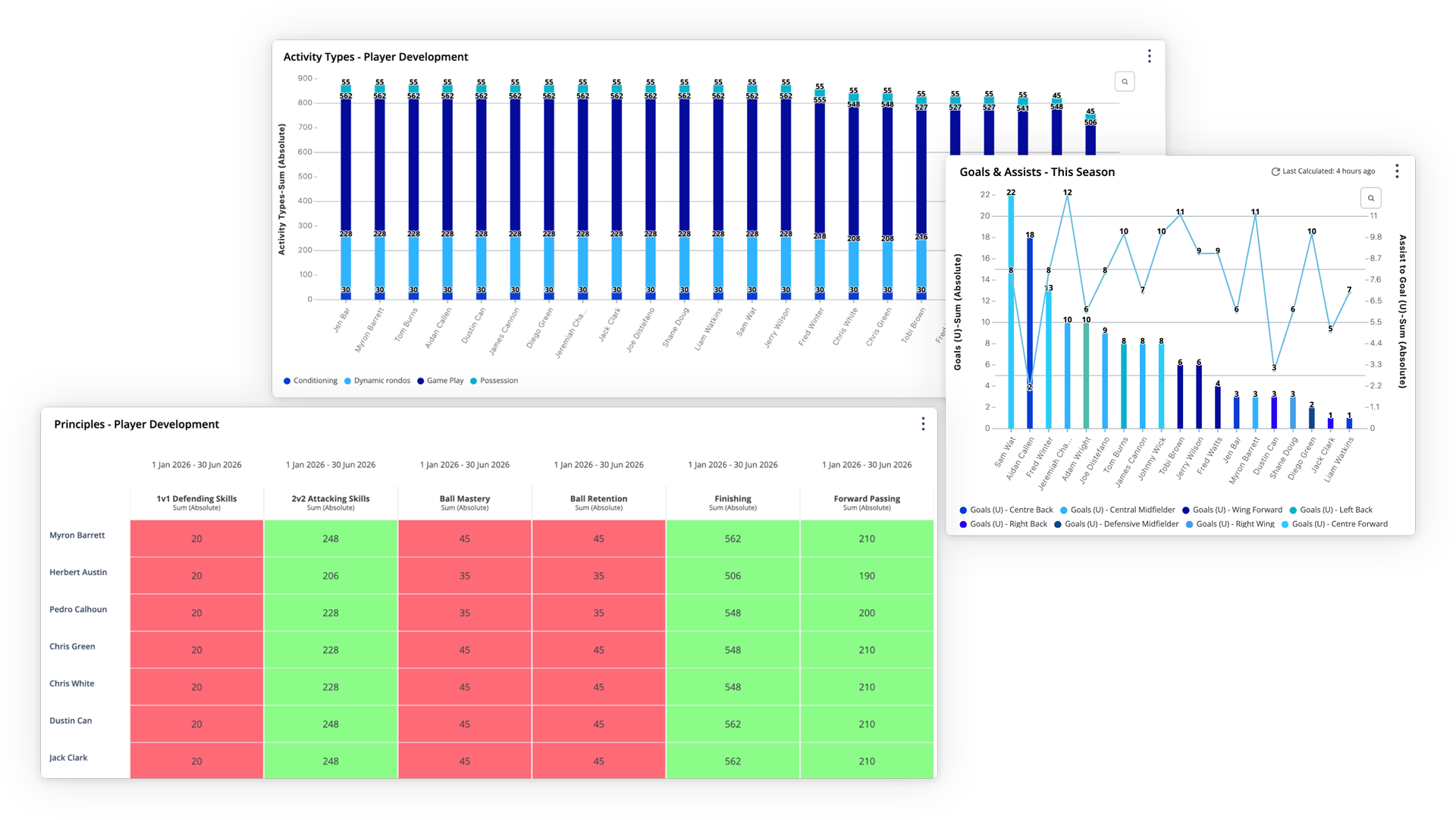
Participation metrics matter, but they don’t prove development effectiveness. Leading organizations connected development inputs to outcomes: progression, availability, exposure, and selection context.
Lesson 5: The breakthroughs that created real outcomes
Across modernized ecosystems, the same high-value shifts emerged repeatedly:
- Faster course-correction—issues surfaced early enough to intervene before they became structural.
- More defensible selection—decisions shifted from recent impressions to longitudinal context.
- Higher consistency across environments—expectations applied through shared structure, not informal interpretation.
- Better welfare continuity—information followed athletes across transitions, strengthening safeguarding and trust.
- Stronger evidence for investment decisions—leaders could see what was working, what wasn’t, and where to allocate resources with confidence.
What this means for federations
These lessons are relevant to federations regardless of size, resources, or stage of development.
The transferable insight is simple: modernization works when it reduces fragmentation and makes standards measurable at the point of work—so federations can intervene earlier, allocate resources smarter, and raise national performance.
If you’re deciding where to start, use this practical filter:
- If oversight and integrity are the constraint → start with connected operations
- If inconsistency is the constraint → start with development structure and shared frameworks
- If risk and continuity are the constraint → start with welfare visibility across transitions
- If strategy and funding are the constraint → start with insight that proves impact
Where Operations & Pathway Management fits
Many leading organizations achieved these outcomes by moving away from disconnected tools toward a connected operating foundation—where competition governance, pathway participation, development structure, and welfare oversight work together.
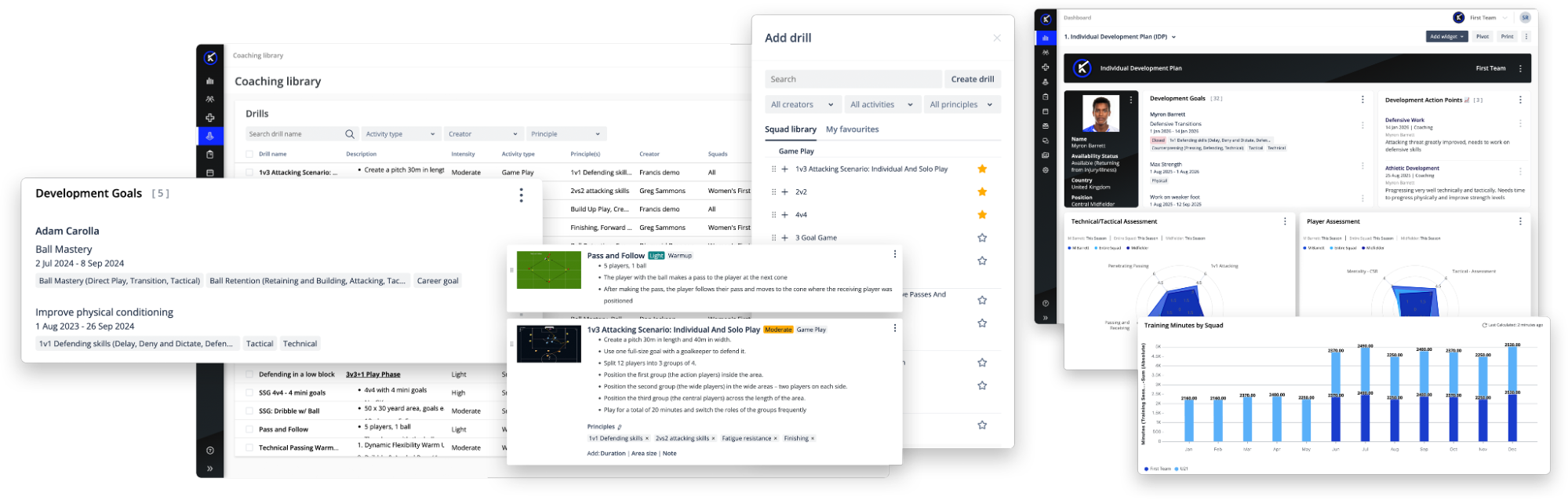
That’s exactly what Operations & Pathway Management, an integrated solution within iP: Intelligence Platform, is designed to support: a unified structure across stakeholders and environments, so modernization becomes measurable, repeatable, and scalable—without forcing a one-size-fits-all operating model.
The real takeaway
Modernization doesn’t succeed because an organization works harder or adds more tools. It succeeds because the system makes high standards easier to apply, visibility easier to maintain, and accountability easier to prove.
Contact us to see how leading organizations are building connected ecosystems—and how federations can apply the same lessons to strengthen pathways, welfare, and long-term national performance.