Ask a league administrator or general secretary what their system does and you’ll get a list: registration, fixtures, results, discipline.
Ask what their week actually looks like and you’ll get another list. Chasing a club for eligibility paperwork. Checking whether a suspension carries across competitions. Rebuilding a participation report by hand because the information they need sits across different records or systems.
Both answers are accurate. The gap between them is the problem.
What league software was built to do
Sports league management software made the administrative work of running organized sport more manageable: registering participants, publishing fixtures, recording results, and logging disciplinary outcomes.
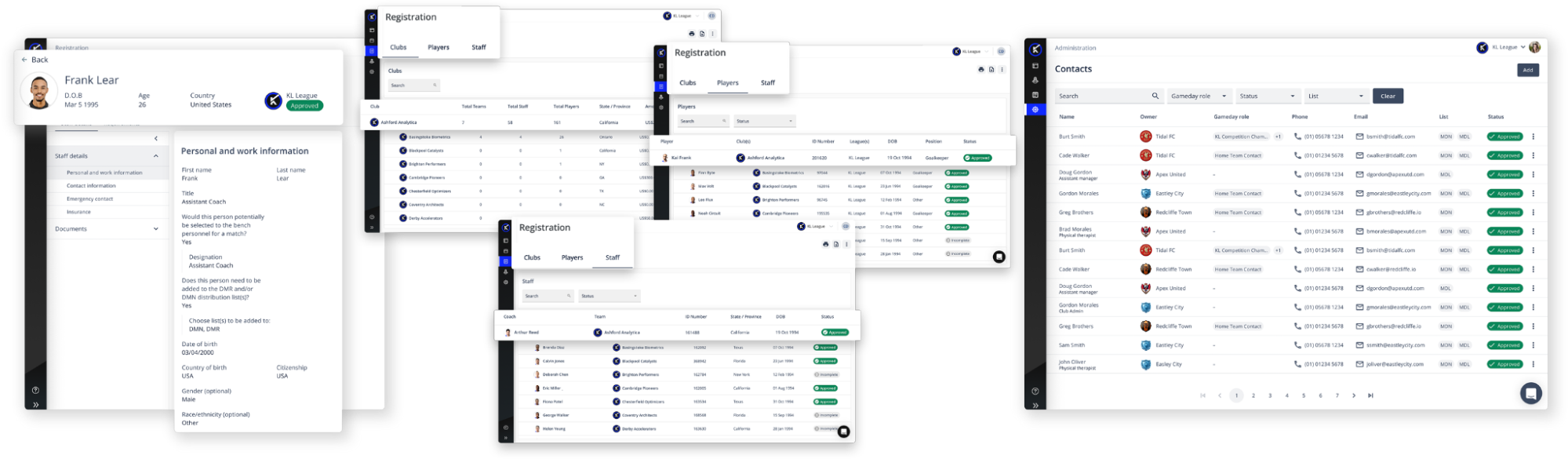
That was the right job for a long time. Leagues needed the paperwork to move faster, and it did.
The challenge is that the job around it has grown.
Governing bodies now run more competitions, in more formats, across more clubs and teams. Compliance expectations have grown, and so has the cost of getting something wrong. Clubs, officials, and partners expect information that is current and relevant to their role.
Administration got easier. Governing got harder.
What breaks when every process lives in its own system
Most leagues did not set out to create separate systems. They added a tool when they needed one, and each tool solved the problem in front of it.
Over time, those tools may work well on their own but leave more work between them. Not every league has every problem, and capabilities vary by provider, but the pattern is common.
- Player history gets split. Records sit across seasons, clubs, and competitions. Building one complete history can mean joining them together by hand.
- Eligibility depends on manual checks. Rules may be documented or configured, but staff still need to make sure they are applied at the right point, ideally before a player is approved or a lineup is submitted.
- Discipline becomes another manual check. When records and rules are not connected, staff may need to check whether a suspension carries across competitions.
- Standards vary from club to club. Participating clubs may follow the same process in different ways, leaving league staff to find and fix the differences.
- Everyone works from a different view. Clubs, officials, and league staff each see their own slice, so basic questions about status get answered by email and phone call instead of by the system.
- Reporting comes too late. By the time league staff have joined the information together, some of the decisions it could have supported have already been made.
None of that means the individual systems are failing. They are doing what they were built to do.
The problem is the work between them, and how much of it still depends on people joining everything together by hand.
What changes when a league is governed, not just administered
Governing a league isn’t just a new name for administering one. It changes what the system needs to help a league do.
Administration asks whether a task was completed.
Governance asks whether the league’s rules and standards are being applied consistently across every club, competition, and season.
That becomes easier when the records and day-to-day processes are connected. When registration, eligibility, fixtures, matchday, discipline, and reporting sit on one connected foundation, three things change.
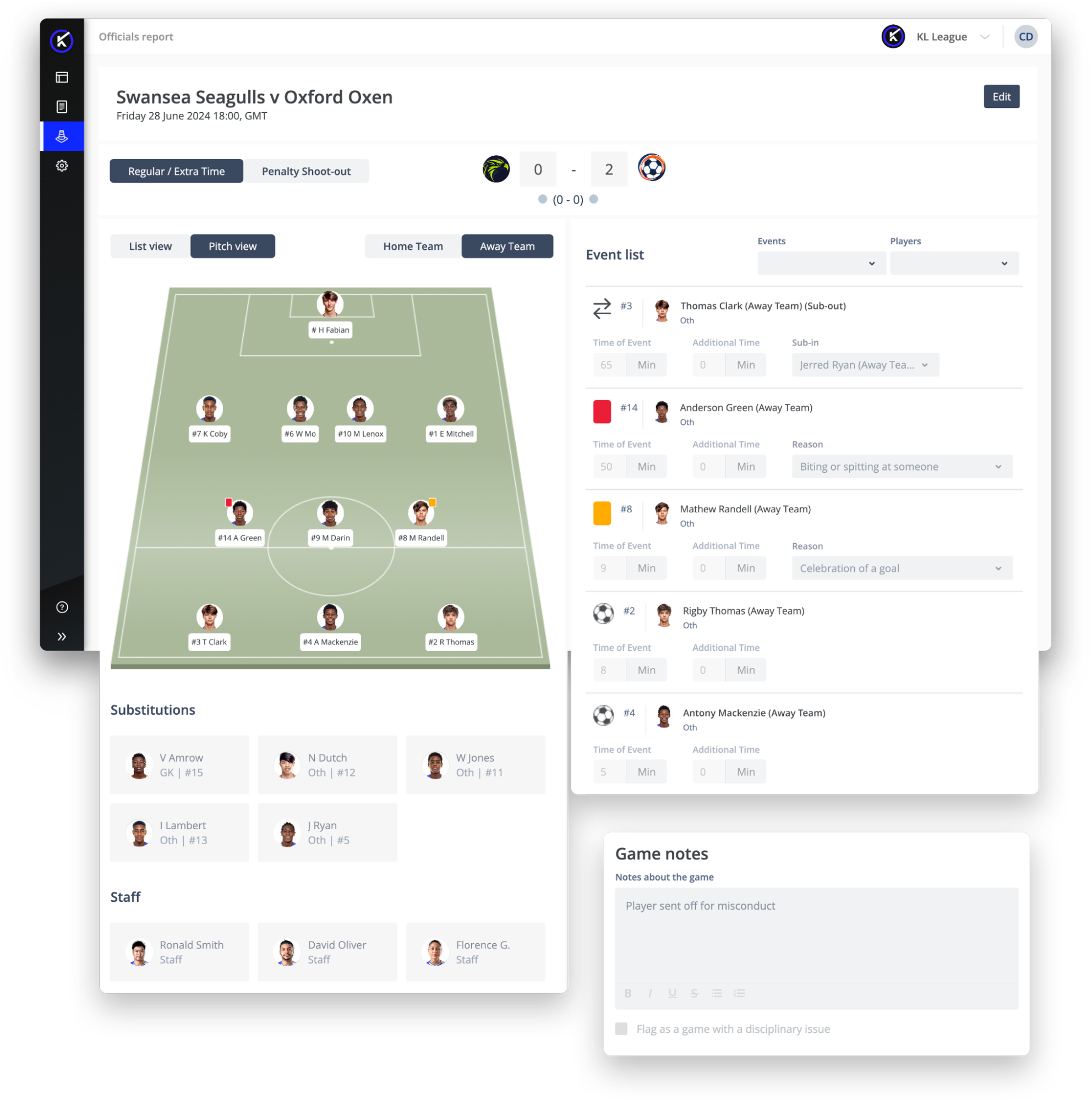
Rules are applied as part of the process. Eligibility and discipline checks can happen as part of registration, matchday, and lineup processes instead of depending on checks after the fact. Fewer issues reach the point where someone has to unpick them.
Records stay connected. Player profiles and records can stay connected as players move between clubs and seasons, reducing duplication and making their history easier to follow. The same information is entered once rather than re-entered in each system that needs it.
Reporting comes from the work itself. Because reporting uses the same information created through day-to-day activity, league staff do not have to rebuild it after the fact. The season’s picture is available while there is still time to act on it.
Clubs, officials, and league staff see the same picture. Each sees what is relevant to their role, drawn from the same records, so status questions are answered by the system instead of by email.
That’s what league-wide governance looks like in practice: clear standards applied consistently, and less of the week spent holding it together by hand.
Reducing what has to be held together manually
Spreadsheets and exports are not going to disappear from a league office, and they do not need to. They are useful.
The problem starts when they become the only place important information lives. That is when extra reconciliation work and risk begin to build.
The goal is not to get rid of spreadsheets.
It is to reduce how much of the season depends on them, and how much of the week goes into keeping them current.
Where this goes next
If you’re comparing this approach with what you run today, the comparison and evaluation checklist can help you assess the two approaches across the key areas of league-wide operations.
If you want to see how that works in practice, the League Operations Solution in iP: Intelligence Platform brings registration, fixtures, matchday, discipline, and reporting together on one connected foundation.
The question is not only whether your current system can handle league administration. It is whether it helps you apply standards consistently and run the league as one connected operation.
Ready to see what that could look like across your competitions? Contact us to talk with our team.