Every time a player moves between club and country, risk is introduced.
Medical history, workload trends, training context, and development insight often remain fragmented across environments. National staff operate with partial visibility. Clubs receive players back with limited context. Medical teams make decisions without a complete picture.
The issue isn’t intent.
It’s continuity.
For federations responsible for player welfare, pathway integrity, and selection standards, fragmented information is no longer acceptable.
The Club–Country Gap Federations Must Close
International duty exposes the same structural weakness across many ecosystems.
When information does not travel with the player:
- National staff must estimate recent workload and readiness
- Clubs lack visibility into how players are managed during camps
- Medical teams operate without full historical context
- Return-to-club decisions carry unnecessary risk
- Trust between stakeholders erodes over time
These gaps don’t just affect performance.
They directly impact player safety, availability, and long-term development.
Why Continuity Is a Federation Responsibility
Clubs see players daily. Federations see them intermittently.
That reality makes continuity even more critical.
Federations are uniquely positioned to:
- Define national standards for data sharing and welfare
- Ensure player records persist across transitions
- Create transparency without increasing administrative burden
- Protect athletes regardless of club resources or geography
When federations lack a system to unify club and country information, continuity depends on emails, spreadsheets, and informal updates. That approach does not scale, and it does not protect players.
What Connected Club–Country Records Enable
Leading federations are addressing this challenge by ensuring that player information follows the athlete, not the organization.
A connected approach allows federations to:
- Maintain a single longitudinal player record across club and national environments
- Provide national staff with full context on workload, readiness, and medical history
- Give clubs clear visibility into national team exposure and care
- Support safer reintegration after international duty
- Strengthen selection confidence with complete, evidence-based insight
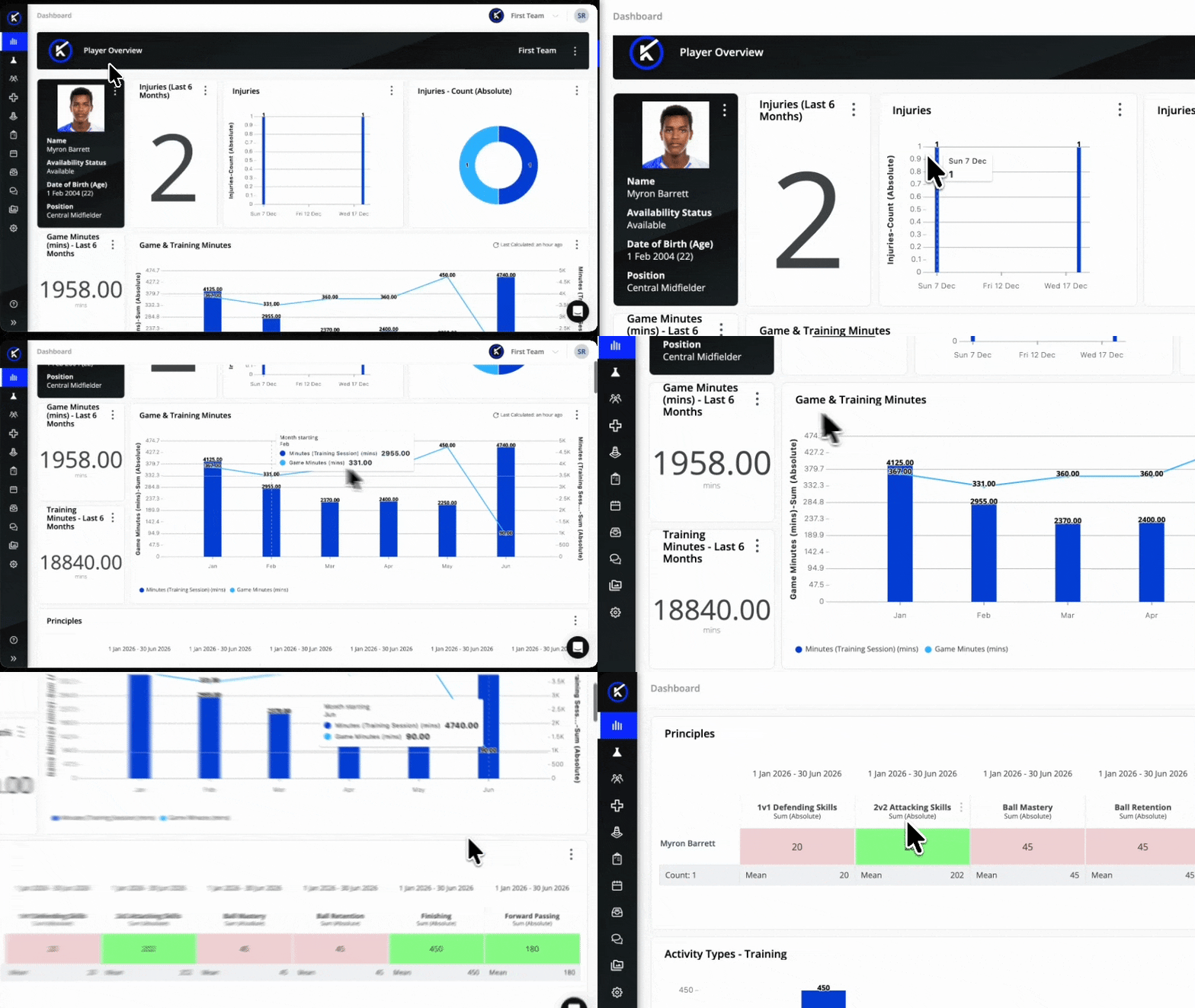
This is how welfare standards move from policy to day-to-day practice.
Bridging Club and Country in Practice
Delivering this level of continuity requires more than guidelines.
It requires shared infrastructure.
Operations & Pathway Management, an Integrated Solution within iP: Intelligence Platform, provides federations with a connected foundation that unifies:
- Player registration and eligibility
- Competition participation and exposure
- Medical and welfare records
- Development history across environments
Within this structure, federations can enable secure, permission-based data sharing between clubs and national teams — ensuring the right information is available at the right time, without duplicating work or compromising data governance.
How Federations Enable Continuity Across Club and Country
With a connected system in place:
- Player records update automatically as athletes move between environments
- National staff access full context before, during, and after camps
- Clubs receive post-camp summaries without manual follow-up
- Documentation and audit trails are maintained by default