Concussion management doesn’t end after an assessment. The most difficult decisions happen over the days and weeks that follow—when athletes progress through return to play (RTP) phases and staff need to understand not only what the assessment showed, but how the athlete is responding to increasing training demands.
Yet in many environments, neurological assessment data, medical documentation, and performance workload/readiness live in different systems. The result: key context is fragmented at the exact moment it’s needed most.
The result: RTP decisions are slower, less consistent, and harder to evidence.
The Challenge: Return to Play Without Full Context
Across sport, medical and performance teams are trying to answer simple but high-stakes questions:
- Where are neurological assessment results stored—and can the appropriate staff see them when needed?
- How is the athlete progressing through RTP phases, and what criteria are guiding those progressions?
- How is the athlete’s workload changing week to week—and is their readiness matching the plan?
- Do we have clear visibility into how symptoms, wellness, and readiness respond as load increases?
- Can we justify decisions with a consistent, auditable record—across staff changes, squads, and seasons?
When assessment, documentation, and performance context are disconnected:
- Neurological assessments sit in a standalone tool
- RTP tracking lives in notes, spreadsheets, or email threads
- Training load and readiness live elsewhere
- Staff spend valuable time reconciling information before they can act
- Decisions rely too heavily on interpretation without full longitudinal context
What We Hear from Teams
- “We can capture assessments—but we struggle to connect them to what the athlete is actually doing in training.”
- “RTP becomes a coordination problem: medical has one view, performance has another.”
- “We’re trying to make decisions with half the story—especially when schedules get congested.”
- “We need to see how readiness and wellness respond to each RTP phase, not just track a checkbox.”
- “We’re often asked to explain RTP status and timelines to coaches and leadership—but it’s hard to clearly articulate readiness or prognosis without objective data to support those conversations.”
The Solution: One Connected Return to Play Workflow
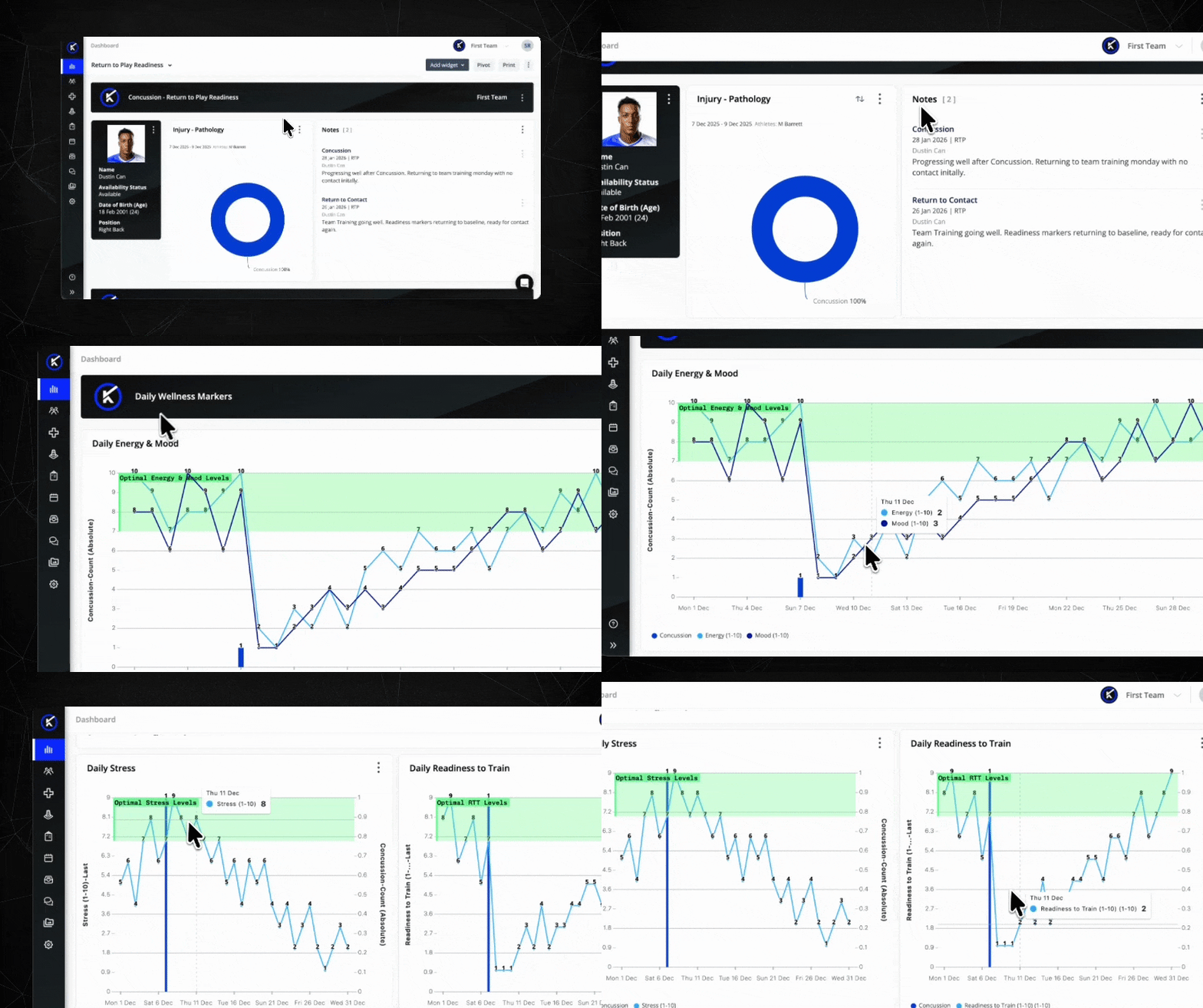
With C3Logix integrated into the iP: Intelligence Platform, teams can manage neurological assessments and concussion management workflows within the Performance Medicine Solution—and then connect that clinical progression to workload and readiness insights through Performance Optimization.
Instead of treating neurological assessment as an isolated workflow, teams gain a unified view that supports RTP as a continuous, phase-based process—where clinical status and performance readiness can be reviewed together.
This allows return to play to be:
- Continuous — from baseline through each RTP phase and back to full participation
- Contextual — informed by workload, readiness, and wellness response over time
- Collaborative — shared across medical and performance staff without system switching
- Defensible — supported by structured records, consistency, and traceability
What You Can Do with C3Logix + Performance Medicine + Performance Optimization in iP
Run validated neurological assessments inside the medical workflow
- Capture neurological assessment results (including SCAT6/SCOAT6-based workflows where applicable), symptom tracking, and objective balance/reaction metrics
- Keep results connected to the athlete’s medical record—reducing manual handling and re-entry
- Maintain continuity across repeat assessments as the athlete progresses through RTP phases
Track RTP progression as a structured, visible process
- Document RTP phases and milestones in the same environment as clinical notes and outcomes
- Maintain consistent protocols across staff and squads
- Reduce gaps in handovers by keeping the full RTP timeline accessible in one place
Monitor readiness and workload response throughout RTP phases
- Connect clinical progression with workload and readiness context from the Performance Optimization Solution
- See how athletes respond as training demands increase—using readiness, wellness, and workload trends to inform conversations
- Identify patterns that suggest an athlete is progressing smoothly vs. showing signs of overload or delayed recovery response
Compare progress against baseline and historical context
- Review baseline and post-injury comparisons across neurological assessment outputs
- Track trends over time to support more consistent progression decisions
- Reduce reliance on subjective recall by grounding discussions in longitudinal evidence
Align teams around faster, clearer decision-making
- Reduce system switching between medical and performance tools
- Keep staff aligned with shared visibility into phase progression, training exposure, and response
- Support consistent, data-backed communication with coaches, leadership, and other stakeholders
The Result: Return to Play Decisions That Match How Care Is Delivered
By connecting neurological assessment, medical workflow, and performance readiness in iP, teams gain:
- Clearer visibility into how athletes respond across RTP phases—not just what happened on a single assessment day
- Better alignment between medical and performance staff on progression decisions
- Reduced administrative burden and fewer “data hunts” before key conversations
- More consistent decision-making supported by connected context
- Stronger continuity of care across staff changes and busy competition periods
Instead of isolated assessment tools and fragmented RTP tracking, return to play becomes connected, measurable, and easier to manage with confidence.