A fast bowler completes rehabilitation and is medically cleared to play.
That answers one question: can the bowler take the field?
Selection raises another: have they done enough recent bowling to handle the demands of a match?
Medical clearance and bowling readiness are related, but they are not the same. Staff need to review medical availability, bowling workload, and physical testing data together. When that information sits in different systems, staff have to piece it together before making a selection decision.
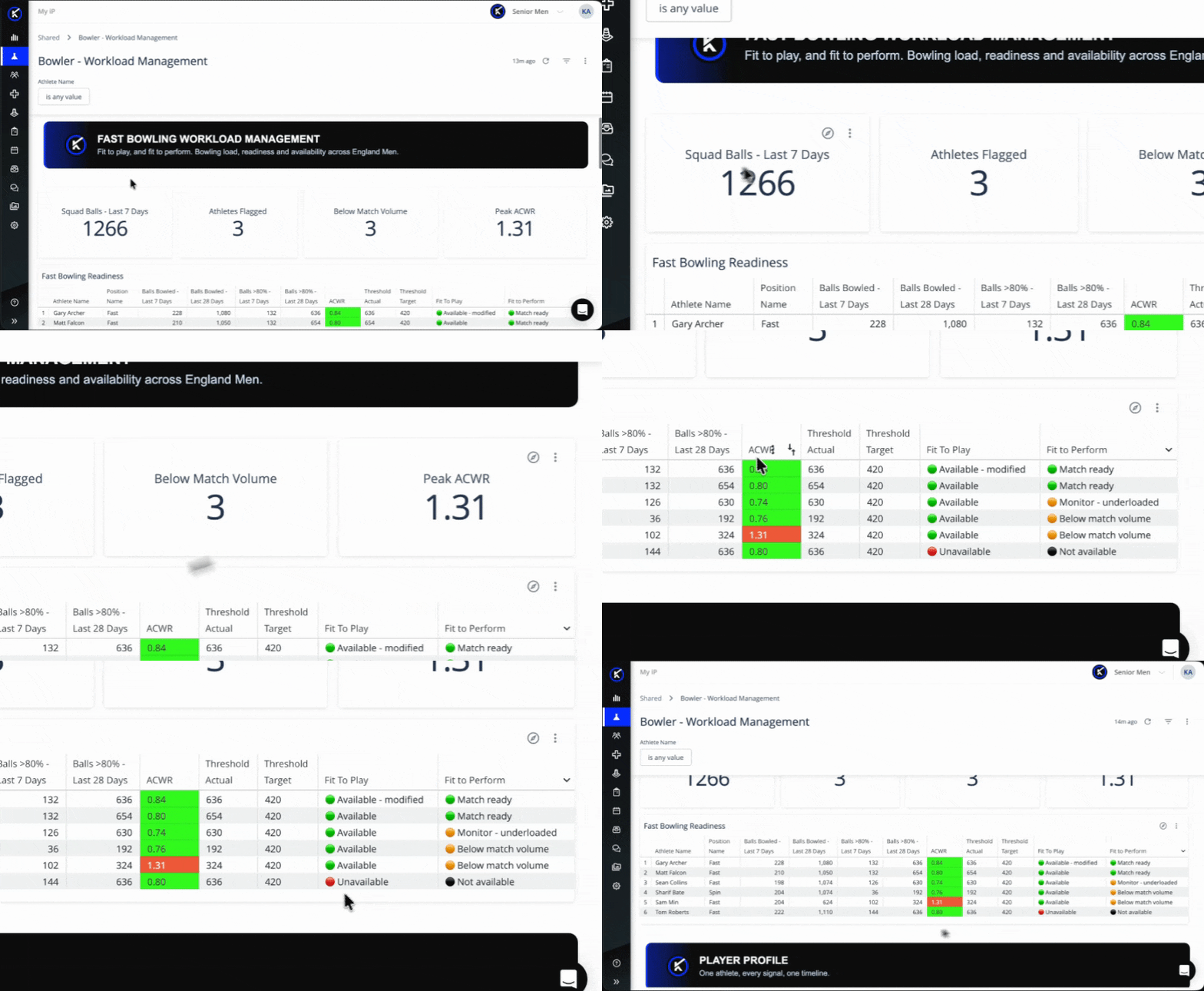
My iP, the reporting and visualization layer within iP: Intelligence Platform, can bring this information into one view, helping staff see the full picture for the same bowler over the same period.
In this example, medical availability comes from the Performance Medicine Solution, while bowling workload and physical testing data come from the Performance Optimization Solution. What teams can report on depends on the Solutions they have enabled.
The Challenge
Running distance alone does not show the full demands of fast bowling. Bowling adds repeated high-intensity actions, and counting deliveries does not show how demanding those deliveries were.
That can leave important gaps:
- Medical clearance and recent bowling workload kept in different systems
- Delivery counts without enough context on intensity
- Limited workload history when a bowler joins from another team
- Spin and seam bowlers assessed without accounting for their different demands
- Physical testing data reviewed separately from bowling workload
Research in elite cricket fast bowlers has linked large increases in bowling workload with greater injury risk. Too little recent bowling can also matter, while consistent exposure over time may help bowlers build tolerance.
The question is not which number says a bowler is ready. It is what they have bowled recently, how that compares with their usual workload, and what the next match may demand.
What Medical and Performance Teams Need to See
A fast bowler may be prepared for a short-format match but not for a five-day match, even with the same medical clearance. Readiness depends on what the next match demands.
That is why recent bowling history matters. A bowler three weeks into a return may be medically cleared but still have built up far less bowling than the next match demands. Medical clearance alone does not show that.
By comparing recent bowling workload with the demands of the next match, medical and performance teams can identify potential gaps. That gives coaches and selectors a clearer picture to discuss before the team is named.
Questions Cricket Teams Face Before Selection
- A bowler arrives medically cleared. How much have they actually bowled in the last month?
- Their running data looks fine. Are we accounting for the 18 overs they bowled on Saturday?
- A fast bowler is medically cleared, but are they ready for a five-day match?
Teams need a way to see what they have, spot what is missing, and bring it together before selection.
What You Can Review in My iP
Separate Total Bowling Volume From Higher-Intensity Work
Where bowling intensity is captured, review total deliveries and higher-intensity or match-pace deliveries separately. A bowler can have plenty of total volume while still having less exposure to the work that most closely reflects competition.
See Bowling Workload Alongside Availability
Review medical availability and recent bowling volume over the same period. If a bowler is available but has limited recent bowling exposure, both facts sit in the same view.
Review the Right Context for the Bowler and the Match
Filter and segment reporting by athlete, bowler type, period, or competition context. A spin bowler and a seam bowler can be reviewed against the profile that suits their role, rather than the same view applied to everyone.
Add Physical Testing to the Same Timeline
Review physical testing alongside bowling load. Research using simulated fast-bowling spells has found countermovement jump height can remain reduced 24 hours later.
That does not make a jump test a readiness verdict. It gives staff another signal to review alongside bowling exposure and medical status.
Follow a Return to Bowling Over Time
Review bowling volume week by week through a return rather than treating return as a status that changes on one date. This makes it easier to see how exposure is building toward match demands.
Use the View as a Prompt, Not a Verdict
The view shows where medical availability, recent bowling load, and testing tell different stories. It does not decide who plays.
That decision stays with the medical, performance, and coaching staff who hold the wider context.
Support Better Selection Conversations Across Staff
The same view supports different conversations.
- A Head of Performance can review whether the bowling group has built enough exposure for the schedule ahead.
- A medical lead can see the workload around an athlete’s medical status while keeping medical clearance and conditioning as separate questions.
- A bowling coach can see what the bowler has actually completed, including the intensity of that work where it is captured.
- A sports scientist can spend less time joining medical, workload, and testing records by hand.
The Outcome: Two Questions, Reviewed Together
- Brings medical availability and recent bowling workload into the same reporting view
- Separates total bowling volume from higher-intensity work where intensity is captured
- Makes gaps in recent workload history easier to spot
- Helps staff review workload in the context of bowler type and match format
- Puts physical testing on the same timeline as bowling workload
- Reduces the manual work of assembling a bowler’s recent history before selection
Because the view depends on medical and performance data, the records behind it need to be complete and consistent. Data Health Check Dashboards in My iP give staff an ongoing way to spot gaps in medical and metrics data before those gaps affect reporting.
The question is not only whether a bowler can play. It is whether their recent work matches what the next match may ask of them.
My iP helps staff see both in one place.