For decades, governance in sport has been treated as a compliance function.
Its role has been clear and necessary: ensure registrations are valid, competitions run smoothly, eligibility rules are enforced, and disciplinary processes are documented.
These systems keep sport organized, fair, and operationally sound.
Necessary? Absolutely.
Transformational? Not usually.
But modern federations are beginning to see governance differently.
They’re recognizing that the operational backbone of sport is also the backbone of athlete development. When governance connects to the wider development journey, it becomes one of the most powerful levers a federation has.
Governance Already Holds the Foundation of the Pathway
Every federation already collects a wealth of information through its governance processes:
- Athlete registrations and eligibility
- Club, team, and program affiliations
- Fixtures, appearances, and competition participation
- Sanctions and disciplinary records
This data is essential. It tells federations who is participating, where they are competing, and how they move through the system.
But on its own, it provides only a partial view.
Governance data excels at oversight.
Development requires context.
Where Governance Falls Short and Why It Matters
When governance systems operate in isolation, they struggle to answer development-critical questions:
- How does competition exposure affect progression over time?
- Which environments consistently support development—and which don’t?
- Where do athletes stall, drop out, or plateau along the pathway?
- How do movement patterns between clubs, programs, and regions influence outcomes?
These questions aren’t about administration.
They’re about how the system is shaping athletes.
Without connection to the rest of the development journey, governance remains reactive, tracking activity rather than informing strategy.
When Governance Connects to the Athlete Journey
The real value of governance emerges when operational workflows connect with the broader development ecosystem:
- Physical testing and growth data
- Training exposure and competitive load
- Readiness, availability, and welfare insight
- Development and coaching assessments

When these elements come together, federations gain something new: a complete, contextual picture of progression.
Governance stops being a record of participation.
It becomes the framework that links development across every stage of the pathway.
From Administrative Oversight to Strategic Intelligence
Forward-looking federations are already using governance infrastructure as more than an administrative necessity.
They are:
- Automating registration and eligibility at scale
- Linking competition participation to long-term development profiles
- Comparing regions, clubs, and environments objectively
- Identifying patterns between context and athlete outcomes
In this model, governance evolves.
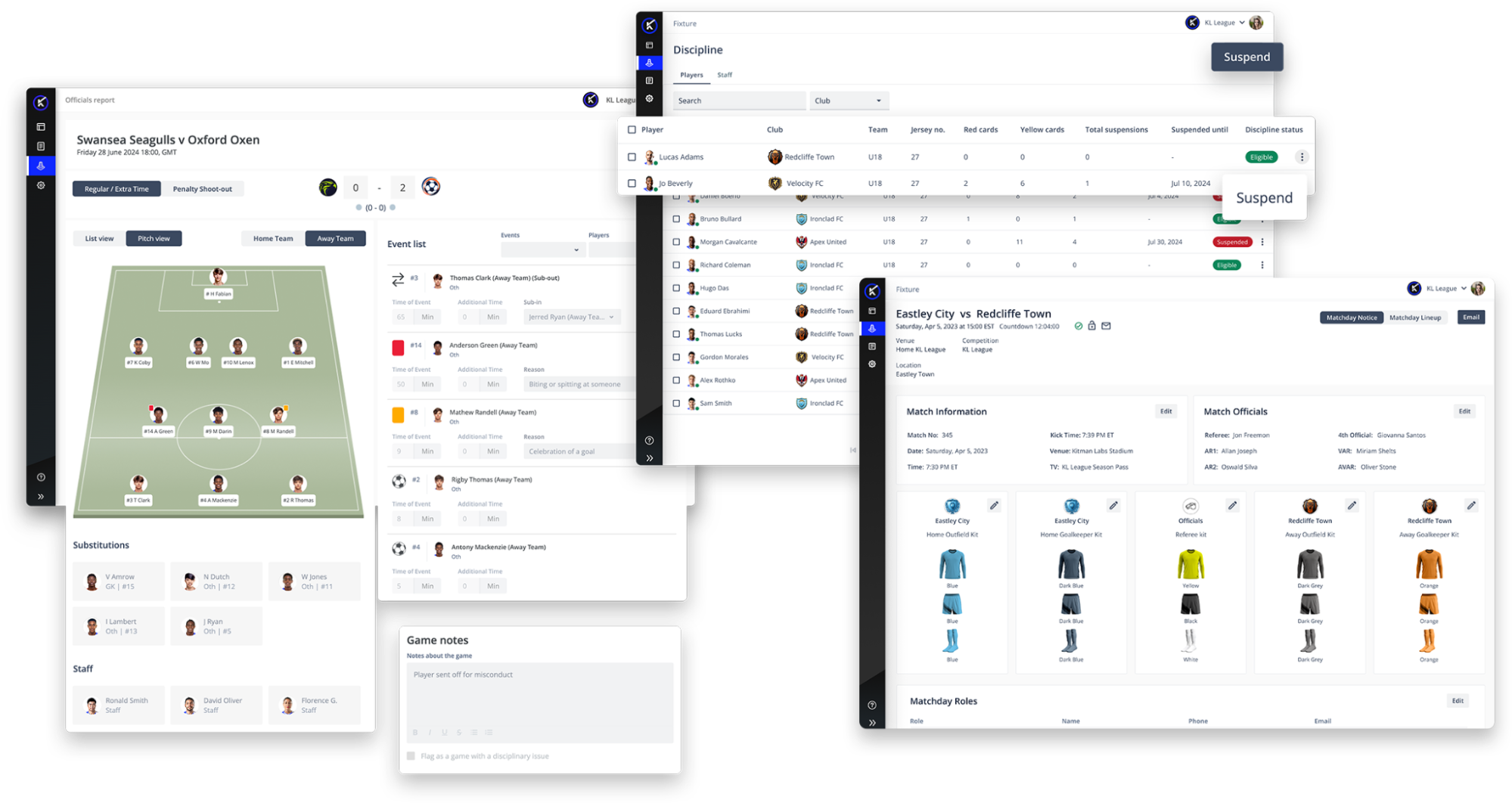
It stops being an operational burden and becomes intelligence, a lens into development quality, consistency, and standards across the national game.
Why This Shift Matters for Development Outcomes
When governance data is connected rather than siloed:
- Pathways become visible instead of assumed
- Gaps and bottlenecks surface earlier
- Resource allocation becomes evidence-led
- National standards can be applied more consistently
Development improves not by adding more programs, but by connecting what already exists.
The same systems that run competitions can help federations understand how talent is being identified, supported, and progressed.
This Isn’t About New Spend. It’s About New Purpose.
Crucially, this shift does not require new governance models or added administrative load.
It requires rethinking how existing investment is applied.
Instead of separate systems for operations and development, federations benefit from a connected structure that supports both competition oversight and athlete progression in a single framework.
When Governance Becomes a Growth Lever
When federations treat governance as strategic infrastructure:
- Development becomes more intentional
- Pathways become easier to evaluate and refine
- Leaders gain confidence in how the sport is evolving
The system that runs sport doesn’t just keep it moving.
It shapes how talent is developed, supported, and sustained across the entire pathway.
Contact us to see how federations are turning governance from administration into a development engine.