Across federations worldwide, the intent is clear: develop better players, prepare them earlier, and create clearer pathways from grassroots to the highest levels of the game.
What varies dramatically is not ambition—but structure.
After years of working with some of the world’s leading leagues and federations, one lesson consistently stands out:
Sustainable development success is not driven by isolated talent or individual programs.
It’s driven by systems that reinforce consistency at scale.
Federations Are Operationally Strong—Developmentally Fragmented
Most federations have invested heavily in operational structure. Competition formats, registration workflows, eligibility rules, and governance processes are typically well defined and consistently enforced.
Development, however, often tells a different story.
Common challenges we see across federations include:
- National curricula that exist on paper but are applied inconsistently
- Coach education frameworks that aren’t reinforced in day-to-day practice
- Player assessments captured in isolation—or not at all
- Training, match, and testing data live in separate systems—limited visibility into whether development objectives are actually being achieved
The issue isn’t effort.
It’s alignment.
What High-Performing National Systems Do Differently
When we look at federations and leagues that consistently produce players aligned to a clear national identity—regardless of size or budget—clear patterns emerge.
High-performing systems don’t rely on individuals to hold things together. They invest in a shared structure that makes good development practices repeatable.
That structure typically ensures:
- Session plans reinforce national curriculum objectives
- Player assessments contribute to long-term development profiles
- Match, training, and testing data live together in context
- Coaches operate within shared teaching frameworks
- Clubs align to common methodologies while retaining their identity

This isn’t about enforcing uniform outcomes.
It’s about standardizing inputs so development can be measured, supported, and improved.
Structure Doesn’t Remove Identity—It Protects It
A common concern among federations is that increased structure might dilute club or regional identity.
In practice, the opposite is true.
Strong development structure:
- Ensures players aren’t disadvantaged by geography
- Creates a shared language across the ecosystem
- Preserves coaching autonomy while reinforcing priorities
- Aligns every pathway to the same national ambition
This is why leading organizations are investing in systems that standardize critical medical and development processes—without stripping clubs of their individuality.
For example, the National Women’s Soccer League announced a league-wide partnership to implement a unified Performance Medicine system across all clubs. The goal: consistent medical workflows, shared visibility into athlete health, and a standardized foundation for player care—while allowing clubs to operate within their own environments.

→ Read the full NWSL partnership announcement
Unified Data Is the Foundation for Development Structure
Without connected data, even the strongest development frameworks struggle to scale.
Federations that succeed in building structure do so by ensuring that player pathway data isn’t fragmented by age group, club, or competition level—but governed through a shared operational foundation.
This approach allows federations to:
- Maintain a single source of truth for player movement and eligibility
- Create transparency across pathways and competitions
- Reduce administrative friction for clubs
- Establish the infrastructure needed to measure development over time
A clear example of this is Major League Soccer’s collaboration across MLS, MLS NEXT Pro, and MLS NEXT, unifying league management and pathway operations across the entire ecosystem. By standardizing player registration, pathway data, and governance processes, MLS has created a connected foundation that supports consistent, system-wide development.
→ Read the full MLS pathway announcement
Structure Enables Measurement—and Improvement
Without unified structure, development success is often anecdotal.
With it, federations can:
- Measure progress objectively
- Evaluate the impact of curriculum changes
- Align coach education with on-field outcomes
- Continuously refine development strategy
This shift—from belief-based development to evidence-led systems—is what separates aspirational programs from sustainable ones.
Even at the highest levels of the game, governing bodies are investing in this model. The Premier League, for example, partnered to deploy a unified Football Intelligence Platform across club academies—creating shared visibility, consistent measurement, and alignment across development, coaching, and performance environments.
→ See the Premier League partnership announcement
A similar approach can be seen in rugby. The Rugby Football Union (RFU) expanded its partnership to deploy a unified iP: Intelligence Platform across national teams, academies, and domestic competitions in England. By integrating medical and performance data into a centralized system, the RFU has strengthened clinical governance, injury surveillance, and player management—while enabling shared intelligence between club and country.
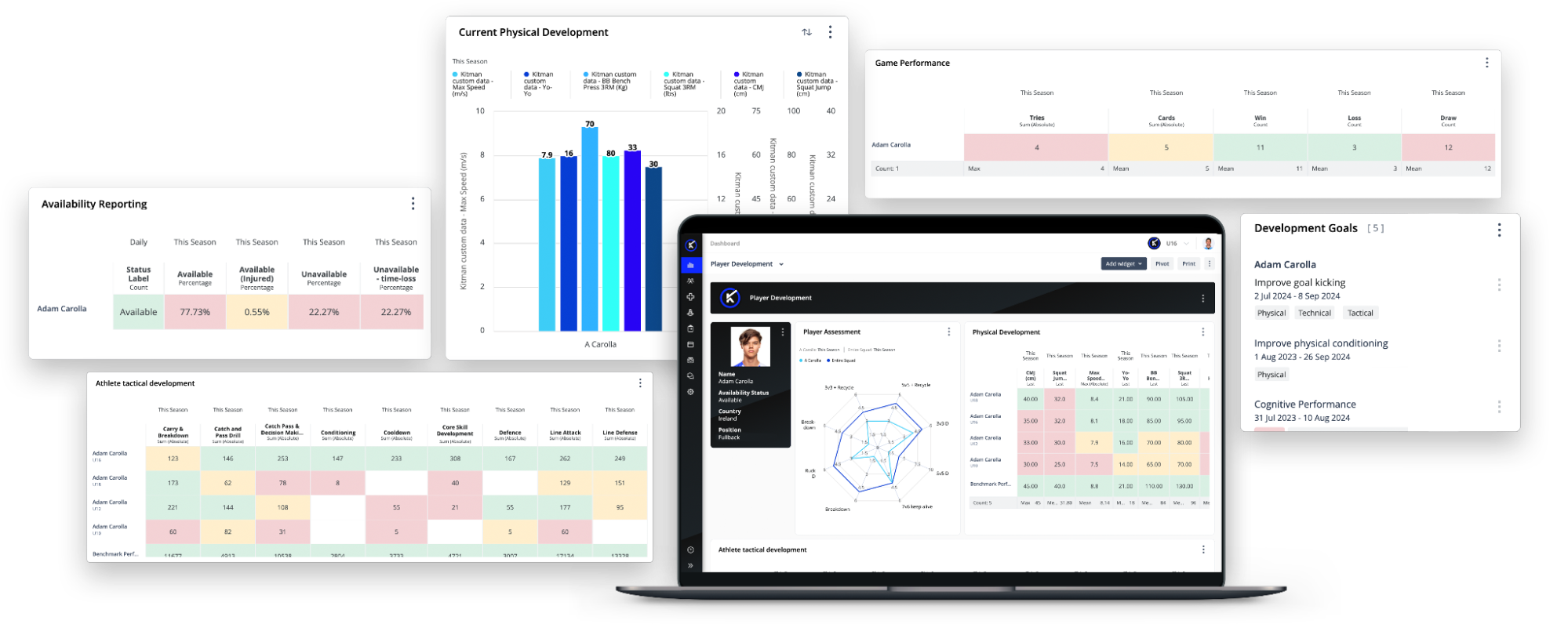
→ Read the full RFU expanded partnership announcement
Lessons That Apply Regardless of Size or Budget
One of the most important insights from working across global federations is this:
Federations don’t need to adopt everything at once to benefit from a unified system.
The federations making the greatest progress are those that:
- Prioritize alignment over fragmentation
- Invest in long-term structure, not short-term fixes
- Treat development as a connected system—not a collection of standalone programs
Many begin by enabling the capabilities that address their most immediate needs—such as competition and pathway operations or athlete health—then expand within the same system as priorities evolve. This delivers structure from day one, without requiring a full transformation upfront.
Structure Is the Competitive Edge
In modern football—and increasingly across all sports—development advantage doesn’t come from doing more.
It comes from doing things together.
When structure reinforces consistency, and consistency reinforces development, federations create environments where success is no longer accidental—it’s repeatable.
Contact us to see how federations are turning structure into a competitive edge.