Federations rarely talk about talent development in financial terms. It’s framed as a mission. A responsibility. A cost of doing business.
But in modern sport, the federations that are most competitive, and most financially resilient, share one trait: they treat talent strategy as a core economic lever, not an operating expense.
Because player development doesn’t just influence results on the field. It shapes qualification outcomes, commercial relevance, sponsor confidence, broadcast interest, and the long-term strength of the domestic ecosystem.
In today’s landscape, talent strategy is financial strategy.
The misconception: Development as a cost center
Most federations account for development the same way they account for administration: necessary, ongoing, and largely defensive.
Budgets are justified by participation numbers.
Programs are evaluated by activity.
Success is measured by effort rather than outcome.
The issue isn’t a lack of investment. It’s that development is rarely treated as an asset, even though it is one of the strongest drivers of both competitive and financial performance.
When development is managed purely as cost:
- ROI becomes difficult to articulate
- Funding becomes vulnerable to short-term pressure
- Strategic decisions rely on belief rather than evidence
And meaningful value is left unrealized—year after year.

How talent development creates financial return
Strong pathways generate return through multiple, reinforcing mechanisms.
1) Competitive success unlocks revenue
Performance drives opportunity. Qualifications for major events and consistent competitiveness across cycles typically increase:
- Prize and distribution income (where applicable)
- Broadcast visibility and media value
- Sponsorship interest and partner confidence
- Event revenues and fan engagement
Depth matters here. Federations with consistent pipelines aren’t dependent on one generation or one standout athlete—they sustain competitiveness over time.
2) Talent quality increases athlete and ecosystem value
Federations that consistently develop talent strengthen the domestic ecosystem in ways that attract investment and partnership:
- Stronger domestic competitions and club sustainability
- Higher progression into top tiers and professional environments
- Greater confidence from partners that the pathway produces outcomes
- Increased interest in the federation’s programs, coaching, and development model
This doesn’t just benefit teams. It strengthens the full system—making the federation more credible to stakeholders and more valuable to sponsors and strategic partners.
3) Consistency reduces financial volatility
The biggest financial risk for federations isn’t underinvestment—it’s unpredictability.
Inconsistent development creates boom-and-bust cycles:
- Short peaks followed by long rebuilds
- Overreliance on exceptional individuals
- Reactive spending to compensate for talent gaps
Aligned pathways smooth outcomes over time—reducing risk and increasing predictability, which matters deeply to boards, ministries, and commercial partners.
Why most federations undervalue development ROI
The issue isn’t philosophical. It’s structural.
Many federations cannot clearly connect:
Development inputs → athlete outcomes → competitive results → financial impact
Without that visibility:
- Development success is hard to prove
- Investment decisions become subjective
- Funding conversations default to cost control
As a result, development remains under-leveraged—despite being one of the federation’s most powerful engines of long-term strength.
Talent strategy becomes financial strategy when structure exists
Federations that unlock development ROI don’t do it by spending more. They do it by aligning the operating model so impact can be measured and scaled.
That means:
- Clear development standards applied consistently
- Longitudinal visibility into progression and availability
- Evidence that links pathway activity to outcomes over time
- Accountability that shows what is working—and where to invest next
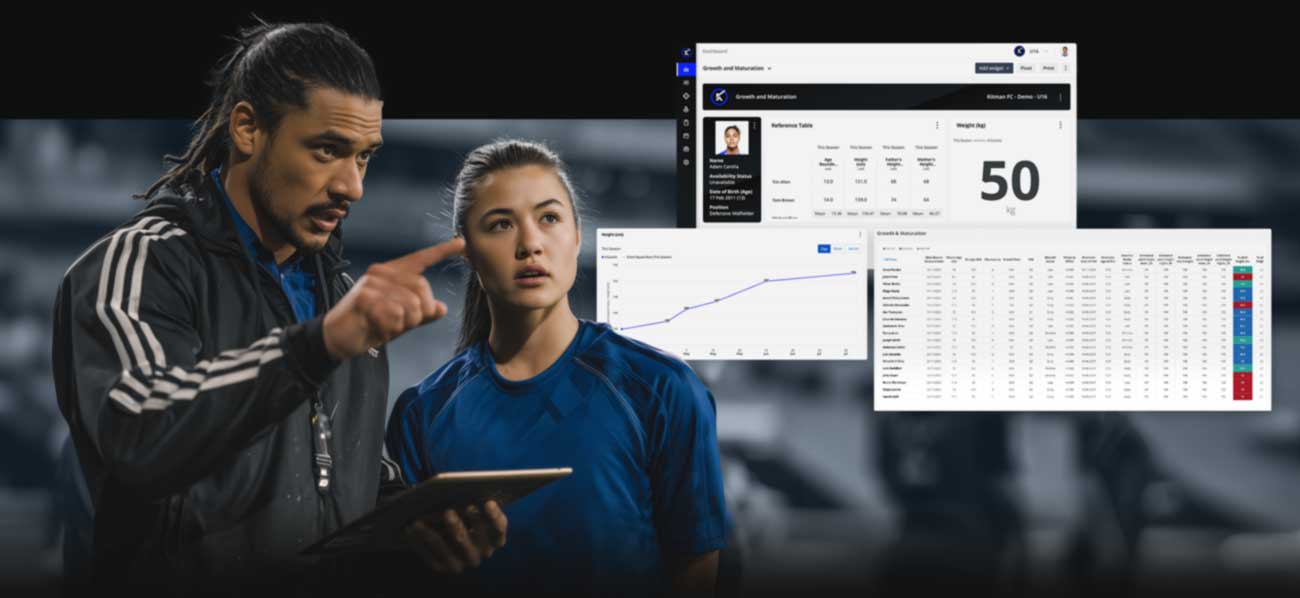
When those elements are in place, development stops being aspirational. It becomes defensible.
This is the point where talent strategy enters financial conversations—not as a cost, but as an investment with measurable return.
The long-term advantage of aligned pathways
The strongest federations don’t optimize for a single revenue line. They optimize for repeatable advantage.
Aligned pathways lead to:
- Higher competitiveness over multiple cycles
- Stronger domestic ecosystems and stakeholder stability
- Increased sponsor confidence and longer-term partnerships
- Greater fan connection to national identity
- Reduced reliance on short-term corrective spending
Each benefit reinforces the next. This is how return becomes sustainable.

Where connected foundation enables scale
To realize this advantage, federations need more than intent. They need infrastructure that makes development impact visible, comparable, and provable.
This is where Operations & Pathway Management, an integrated solution within iP: Intelligence Platform, plays a role—providing a connected foundation that links:
- Pathway participation
- Measurable development systems
- Welfare and availability
- Selection context and outcomes
Not to “sell” development—but to prove its value for boards, ministries, and commercial partners.
Because financial strategy only works when leadership can see, measure, and defend the return.
Development is not a cost to manage. It’s an advantage to build.
Federations that treat talent development as a financial strategy:
- Invest more confidently
- Allocate resources more intelligently
- Compete more consistently
- Grow more sustainably
Better pathways create better athletes. Better athletes create stronger federations—on the field and on the balance sheet.
Contact us to see how federations are aligning talent strategy with financial strategy—and turning player development into one of their highest-return investments.