Watch Stephen Smith, CEO and Founder of Kitman Labs, at the 41st Asian Racing Conference in Riyadh discuss the gap between the rapid evolution of human performance and the slower pace of progress in equine sport. He explains why more data alone is not enough, and how connected intelligence, analytics, and AI can help breeders and trainers better understand progression, individualize development, and make sharper decisions.
Conference
Why Equine Performance Has Stalled and What Data Can Do Next
SHARE

Transcript
Stephen Smith, CEO and Founder, Kitman Labs
Thank you, everybody. I don’t have any thunderstorms, tornadoes, or lightning to start with, but I do have a topic that I think is going to turn the world of racing upside down over the next number of years. I want to start with a question, and that question is based on the changes we’ve seen in the world of human performance—and the lack of change we’ve seen in equine performance over the last number of years.
Over the last 18 months, I’ve been doing a lot of work in the equine space, and that has led me to learn a great deal about what has changed, what’s happening, and the dynamics shaping the industry today.
Much of this is already evident to anyone who follows American football, soccer, rugby, basketball, or athletics. Over the last 20 to 30 years, we have seen phenomenal changes in human performance. Whether it is the speed athletes are running at, the strength and power they are demonstrating, or the resilience and athletic capabilities they are delivering in competition, the change has been dramatic.
Professional soccer offers a strong example of this. We have seen 30 to 50 percent increases in high-intensity running distance during competition, 60 to 80 percent increases in high-intensity sprints or total sprints during games, and maximum speed improvements of 10 to 15 percent over the last 20 years. This is not unique to soccer. We see it in the Olympics, in track and field, in American football, and in basketball.
Yet when we look at equine performance over the same period, we do not see those same changes. The Kentucky Derby time set in 1973 still stands as the record. We are not seeing the same kind of progress in equine performance that we are seeing in human performance.
So the question for those of you who are close to this industry is: why? I believe what we are discussing today helps us examine that more closely. Based on my own career in professional rugby and now working across sport globally, I believe we have an answer.
I started this company for a very specific reason. I was working in professional rugby, collecting huge amounts of data on our athletes—how they trained, how they performed in games, how they were treated, how they recovered, how they developed, and what their strength and conditioning looked like. But our ability to use that data effectively, to understand how what we were doing in training was impacting what happened in games, was incredibly limited.
We had no real ability to take that information, turn it into insights, and understand what aspects of what we were doing were actually working. At the same time, huge amounts of money were being invested in team performance. New technologies were emerging: wearable sensors, coaching systems, medical systems, testing devices. And I think we are seeing the same pattern now in equine performance.
You only have to walk outside the conference hall to see the technology companies trying to sell their solutions. But the ability to bring all of that together and turn it into meaningful insight just wasn’t there.
When I started this company in 2014, we were collecting on average about 95,000 data points per athlete per year. Last year, that number reached more than 230 million data points per athlete per year. So imagine how difficult it is to find insight when data is stored across multiple systems at 95,000 points per athlete. When it reaches this scale, it becomes a completely different problem.
The first generation of point solutions helped us store medical data, training data, performance data, scouting information, and tactical information. But while those systems allowed us to instrument and quantify our world, they also compounded the problem. They created huge stores of disconnected data that didn’t talk to each other and didn’t allow us to generate real return on investment.
For that reason, the entire world of human performance has shifted. We moved from valuing data collection alone—from wanting more tools and more information—to caring about insights, connectivity, and the ability to bring everything together. People want to join the dots and understand what the information actually means.
That is why we created what we call the Intelligence Platform. Over the last 15 years, we have built the capability to collect data from every aspect of high performance and bring it together. Instead of a fragmented data landscape, we create a shared data landscape. Instead of fractured decisions, we enable shared decisions and shared intelligence.
That helps organizations identify high performance, manage talent development, and connect what they are doing to outcomes such as player health, player performance, and long-term progression.
Today, we work with more than 2,000 teams and leagues globally, supporting data collection for over a quarter of a million athletes. We work with some of the biggest leagues in the world. In the NFL, we support player health and safety across every team. In the Premier League, we help power talent development across not only the top 20 clubs but the wider football ecosystem in the UK, tracking athletes from age eight through to the end of their professional careers. In Major League Soccer, we support athlete pathways across the full ecosystem, from MLS NEXT to MLS NEXT Pro through to the first-team professional competition.
What I want to show today are the kinds of use cases we now see as standard in human performance—use cases that the equine world can adopt to gain a real competitive advantage. These insights have become table stakes in professional sport. They are the kinds of capabilities that every team and every league now expects to have.
For example, we can track athletes from eight, nine, or ten years old and understand exactly how many we expect to progress through each stage of development into the professional game. From the conversations I’ve had in the equine world, breeders and trainers often do not know this. They do not know how many horses are entering their system, how many progress, and how many ultimately make it through.
This may sound like simple analytics, but it matters. If you bring 100 athletes into an academy system and only seven, eight, or ten reach the professional level, that is a critical benchmark. When you make changes to your curriculum or development environment, you need to know whether those changes are improving outcomes or making them worse.
We also have the ability to understand what influences progression. We can take training data, demographic data, testing data, medical data, and recovery data, and determine which factors matter most. We can identify what actually influences whether an athlete reaches the professional level or not.
We can do this differently at each phase of development, because what matters at age eight or nine is very different from what matters at 16, 17, or 18. At younger ages, the focus may be on foundational athletic qualities. As athletes move toward elite competition, the emphasis shifts to technical and tactical qualities that impact performance in the competitive environment.
We also have the ability to understand whether our approaches are working. We can set benchmarks and standards for every key characteristic of high performance at each phase of development. We can test throughout the season and determine whether what we are doing is delivering the desired result.
When we hire a coach and put them on the practice field, they build a plan around specific qualities, principles, and intended outcomes. The question is: is it working? When we look at equine performance and the lack of change in measurable outputs such as top speed and race-winning metrics, we have to ask why. Why are we spending money on wearable technology, medical care, interventions, and trainers if the output is not actually improving?
This is where analytics and AI become critical. Based on where an athlete sits in each phase of development, we can understand where they are strong, where they are weak, and which characteristics are most likely to influence whether they progress to the professional level. From there, we can tailor their development to improve the qualities they lack.
We can also project how likely an athlete is to progress. That helps us understand whether we are spending money in the right areas. Should we double down on certain athletes? Should we make hard decisions on others? Understanding how likely an athlete is to succeed, and how our interventions are changing that probability, is fundamental.
From there, we can establish benchmarks, measure progress daily, and understand how far each athlete is from where they need to be. We can share this directly with them, helping them understand their journey, their current position, and what they need to do to improve. We can put them in control of their own development.
This also extends to coaches. They can understand every aspect of what is happening. We can use technology to individualize how athletes are trained, treated, and supported. We can help practitioners understand every facet of performance and how to improve it.
These are the kinds of insights I believe are missing in equine performance today. To me, the equine world looks similar to where human performance and professional sport were 15 years ago. There is still a tendency toward generic programs. Every horse gets treated in a similar way. There is limited ability to benchmark, measure, and objectively assess whether a horse is likely to reach top-tier success, or how many top-tier races it might win.
Until we know what the defining qualities and characteristics are, we are fooling ourselves with how we are spending money in this industry.
The good news is that this is solvable. We can take what we have learned from the human performance world and apply it quickly to equine performance. We can analyze progression rates at every stage of an equine athlete’s career. We can make sense of the enormous volumes of information already being collected.
In many cases, the equine industry actually has more robust and higher-quality data than we do in human performance. There is access to bloodlines, genetic information, and other forms of testing that would not be possible in the human world. The depth of information and the historical data available in this industry creates the opportunity to develop a level of precision in analytics and insight that simply has not existed before.
We can create the same kinds of scorecards. We can identify where horses are strong and weak. We can individualize programming. We can project the likely success of each horse and understand where we should double down, where we should invest, and which assets offer the highest potential.
We can use existing technology to set benchmarks, understand where each athlete stands, and chart a clearer path to success.
My belief is very simple: tailored, data-driven equine player pathways can transform the industry. They can give trainers and breeders a significant advantage over competitors who are still relying on traditional approaches.
The question is who wants to gain that competitive edge.
We are incredibly excited about the role we can play in this industry. We are excited about what we can bring from the world of human performance into the world of equine performance.
Thank you.
Thank you, everybody. I don’t have any thunderstorms, tornadoes, or lightning to start with, but I do have a topic that I think is going to turn the world of racing upside down over the next number of years. I want to start with a question, and that question is based on the changes we’ve seen in the world of human performance—and the lack of change we’ve seen in equine performance over the last number of years.
Over the last 18 months, I’ve been doing a lot of work in the equine space, and that has led me to learn a great deal about what has changed, what’s happening, and the dynamics shaping the industry today.
Much of this is already evident to anyone who follows American football, soccer, rugby, basketball, or athletics. Over the last 20 to 30 years, we have seen phenomenal changes in human performance. Whether it is the speed athletes are running at, the strength and power they are demonstrating, or the resilience and athletic capabilities they are delivering in competition, the change has been dramatic.
Professional soccer offers a strong example of this. We have seen 30 to 50 percent increases in high-intensity running distance during competition, 60 to 80 percent increases in high-intensity sprints or total sprints during games, and maximum speed improvements of 10 to 15 percent over the last 20 years. This is not unique to soccer. We see it in the Olympics, in track and field, in American football, and in basketball.
Yet when we look at equine performance over the same period, we do not see those same changes. The Kentucky Derby time set in 1973 still stands as the record. We are not seeing the same kind of progress in equine performance that we are seeing in human performance.
So the question for those of you who are close to this industry is: why? I believe what we are discussing today helps us examine that more closely. Based on my own career in professional rugby and now working across sport globally, I believe we have an answer.
I started this company for a very specific reason. I was working in professional rugby, collecting huge amounts of data on our athletes—how they trained, how they performed in games, how they were treated, how they recovered, how they developed, and what their strength and conditioning looked like. But our ability to use that data effectively, to understand how what we were doing in training was impacting what happened in games, was incredibly limited.
We had no real ability to take that information, turn it into insights, and understand what aspects of what we were doing were actually working. At the same time, huge amounts of money were being invested in team performance. New technologies were emerging: wearable sensors, coaching systems, medical systems, testing devices. And I think we are seeing the same pattern now in equine performance.
You only have to walk outside the conference hall to see the technology companies trying to sell their solutions. But the ability to bring all of that together and turn it into meaningful insight just wasn’t there.
When I started this company in 2014, we were collecting on average about 95,000 data points per athlete per year. Last year, that number reached more than 230 million data points per athlete per year. So imagine how difficult it is to find insight when data is stored across multiple systems at 95,000 points per athlete. When it reaches this scale, it becomes a completely different problem.
The first generation of point solutions helped us store medical data, training data, performance data, scouting information, and tactical information. But while those systems allowed us to instrument and quantify our world, they also compounded the problem. They created huge stores of disconnected data that didn’t talk to each other and didn’t allow us to generate real return on investment.
For that reason, the entire world of human performance has shifted. We moved from valuing data collection alone—from wanting more tools and more information—to caring about insights, connectivity, and the ability to bring everything together. People want to join the dots and understand what the information actually means.
That is why we created what we call the Intelligence Platform. Over the last 15 years, we have built the capability to collect data from every aspect of high performance and bring it together. Instead of a fragmented data landscape, we create a shared data landscape. Instead of fractured decisions, we enable shared decisions and shared intelligence.
That helps organizations identify high performance, manage talent development, and connect what they are doing to outcomes such as player health, player performance, and long-term progression.
Today, we work with more than 2,000 teams and leagues globally, supporting data collection for over a quarter of a million athletes. We work with some of the biggest leagues in the world. In the NFL, we support player health and safety across every team. In the Premier League, we help power talent development across not only the top 20 clubs but the wider football ecosystem in the UK, tracking athletes from age eight through to the end of their professional careers. In Major League Soccer, we support athlete pathways across the full ecosystem, from MLS NEXT to MLS NEXT Pro through to the first-team professional competition.
What I want to show today are the kinds of use cases we now see as standard in human performance—use cases that the equine world can adopt to gain a real competitive advantage. These insights have become table stakes in professional sport. They are the kinds of capabilities that every team and every league now expects to have.
For example, we can track athletes from eight, nine, or ten years old and understand exactly how many we expect to progress through each stage of development into the professional game. From the conversations I’ve had in the equine world, breeders and trainers often do not know this. They do not know how many horses are entering their system, how many progress, and how many ultimately make it through.
This may sound like simple analytics, but it matters. If you bring 100 athletes into an academy system and only seven, eight, or ten reach the professional level, that is a critical benchmark. When you make changes to your curriculum or development environment, you need to know whether those changes are improving outcomes or making them worse.
We also have the ability to understand what influences progression. We can take training data, demographic data, testing data, medical data, and recovery data, and determine which factors matter most. We can identify what actually influences whether an athlete reaches the professional level or not.
We can do this differently at each phase of development, because what matters at age eight or nine is very different from what matters at 16, 17, or 18. At younger ages, the focus may be on foundational athletic qualities. As athletes move toward elite competition, the emphasis shifts to technical and tactical qualities that impact performance in the competitive environment.
We also have the ability to understand whether our approaches are working. We can set benchmarks and standards for every key characteristic of high performance at each phase of development. We can test throughout the season and determine whether what we are doing is delivering the desired result.
When we hire a coach and put them on the practice field, they build a plan around specific qualities, principles, and intended outcomes. The question is: is it working? When we look at equine performance and the lack of change in measurable outputs such as top speed and race-winning metrics, we have to ask why. Why are we spending money on wearable technology, medical care, interventions, and trainers if the output is not actually improving?
This is where analytics and AI become critical. Based on where an athlete sits in each phase of development, we can understand where they are strong, where they are weak, and which characteristics are most likely to influence whether they progress to the professional level. From there, we can tailor their development to improve the qualities they lack.
We can also project how likely an athlete is to progress. That helps us understand whether we are spending money in the right areas. Should we double down on certain athletes? Should we make hard decisions on others? Understanding how likely an athlete is to succeed, and how our interventions are changing that probability, is fundamental.
From there, we can establish benchmarks, measure progress daily, and understand how far each athlete is from where they need to be. We can share this directly with them, helping them understand their journey, their current position, and what they need to do to improve. We can put them in control of their own development.
This also extends to coaches. They can understand every aspect of what is happening. We can use technology to individualize how athletes are trained, treated, and supported. We can help practitioners understand every facet of performance and how to improve it.
These are the kinds of insights I believe are missing in equine performance today. To me, the equine world looks similar to where human performance and professional sport were 15 years ago. There is still a tendency toward generic programs. Every horse gets treated in a similar way. There is limited ability to benchmark, measure, and objectively assess whether a horse is likely to reach top-tier success, or how many top-tier races it might win.
Until we know what the defining qualities and characteristics are, we are fooling ourselves with how we are spending money in this industry.
The good news is that this is solvable. We can take what we have learned from the human performance world and apply it quickly to equine performance. We can analyze progression rates at every stage of an equine athlete’s career. We can make sense of the enormous volumes of information already being collected.
In many cases, the equine industry actually has more robust and higher-quality data than we do in human performance. There is access to bloodlines, genetic information, and other forms of testing that would not be possible in the human world. The depth of information and the historical data available in this industry creates the opportunity to develop a level of precision in analytics and insight that simply has not existed before.
We can create the same kinds of scorecards. We can identify where horses are strong and weak. We can individualize programming. We can project the likely success of each horse and understand where we should double down, where we should invest, and which assets offer the highest potential.
We can use existing technology to set benchmarks, understand where each athlete stands, and chart a clearer path to success.
My belief is very simple: tailored, data-driven equine player pathways can transform the industry. They can give trainers and breeders a significant advantage over competitors who are still relying on traditional approaches.
The question is who wants to gain that competitive edge.
We are incredibly excited about the role we can play in this industry. We are excited about what we can bring from the world of human performance into the world of equine performance.
Thank you.
RELATED
Kitman Labs and the Future of Sport: Data, AI, and a Global Impact
In a Virgin Media News feature, Kitman Labs is profiled as a Dublin-born startup turned global leader in sports data analytics. CEO Stephen Smith poin..
How AI Is Changing Sport, Not Replacing People: Stephen Smith on The Sports Agents
Kitman Labs CEO and founder Stephen Smith joins Gabby Logan and Mark Chapman on The Sports Agents to unpack how AI is already reshaping talent ID, inj..
RELATED VIDEOS

How AI Is Changing Sport, Not Replacing People: Stephen Smith on The Sports Agents
Kitman Labs CEO and founder Stephen Smith joins Gabby Logan and Mark Chapman on The Sports Agents to unpack how AI is already reshaping talent ID, injury risk, daily training decisions, and fairness in both men’s and women’s sport.

Kitman Labs CEO Stephen Smith on Building the Future of Talent Development in Global Sport
In conversation with Ger Gilroy on Off The Ball, Stephen Smith outlines how Kitman Labs is transforming athlete care and development through data-driven insights, helping organizations unlock performance and build sustainable talent pathways.
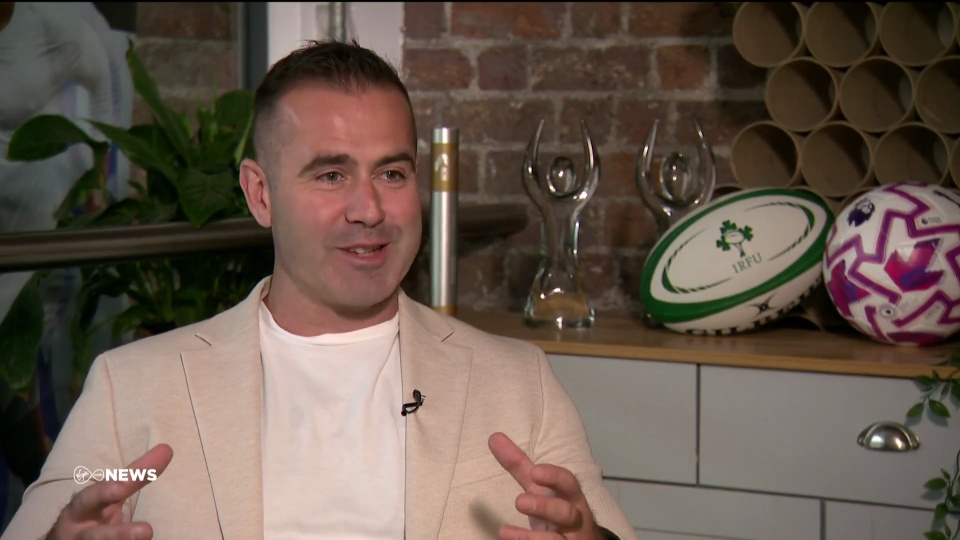
Kitman Labs and the Future of Sport: Data, AI, and a Global Impact
In a Virgin Media News feature, Kitman Labs is profiled as a Dublin-born startup turned global leader in sports data analytics. CEO Stephen Smith points to AI as the next game-changer for talent, performance, and athlete care.