Most organizations collect more training and match data than ever before: GPS metrics, wellness scores, testing results, session plans, match demands, and availability context.
But many teams still face the same issue: They have data, but they don’t have usable insight in the moment decisions are made.
Instead, performance analysis often happens after the fact, pulled into spreadsheets, rebuilt into weekly reports, and translated into slide decks for coaches.
Modern athlete performance analysis software should do more than store performance data.
It should help teams understand training load, intensity, and exposure patterns in context, so staff can plan, review, and adjust training with confidence across the microcycle.
What is athlete performance analysis software?
Athlete performance analysis software helps teams collect, structure, analyze, and visualize performance-related data to support:
- Workload monitoring and planning
- Training load distribution across the microcycle
- Match-context benchmarking
- Readiness conversations
- Squad and individual exposure management
At its best, performance analysis software doesn’t just show what happened.
It helps teams understand:
- Where workload came from
- How exposure accumulated
- Whether training aligned to intent
- What needs to change next
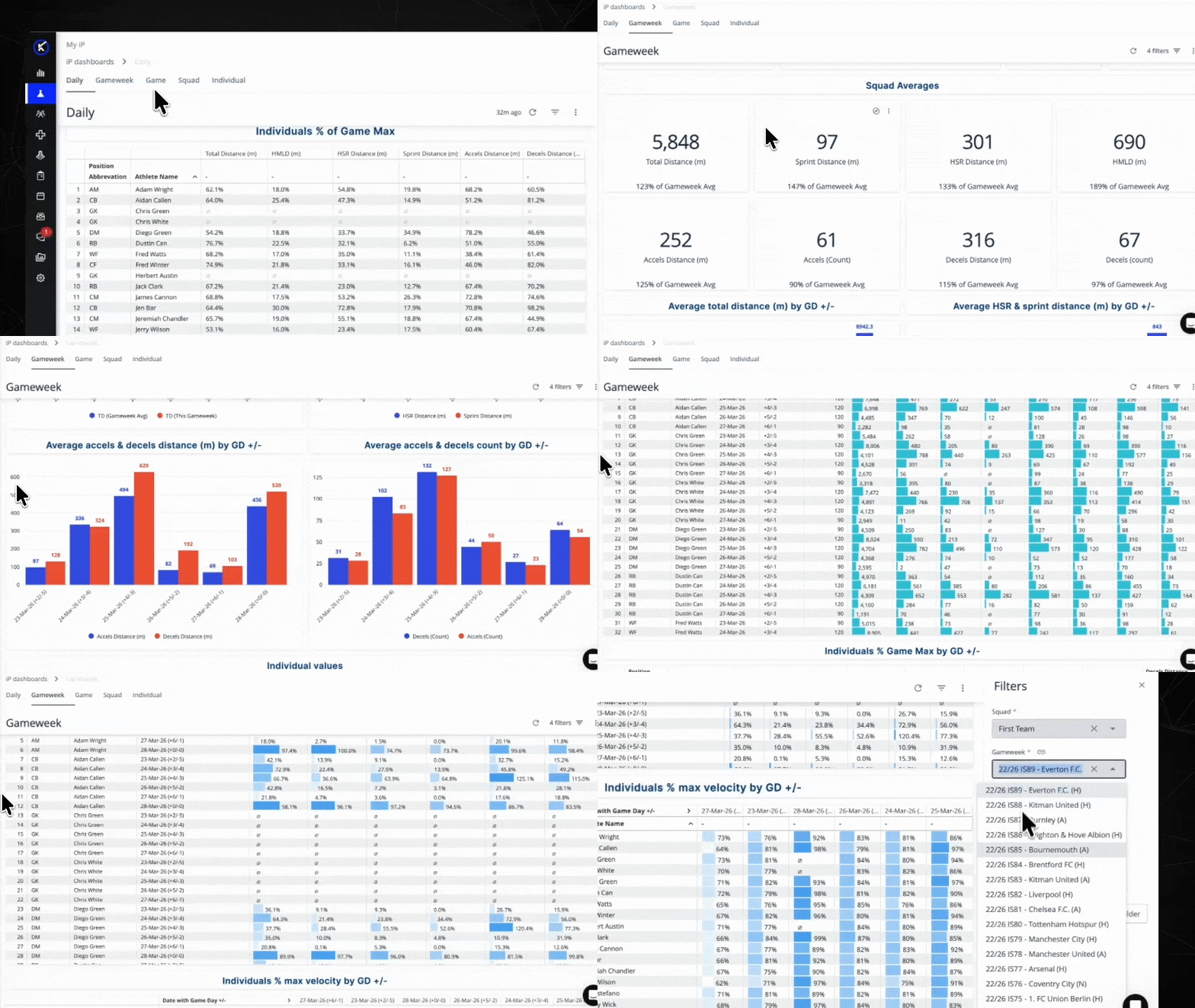
Why performance analysis still breaks down in practice
Even teams with advanced athlete monitoring systems often struggle to make performance analysis fast, repeatable, and scalable.
The friction usually comes from four places.
1) Session totals hide what matters
Two sessions can produce similar totals, same duration, same total distance, yet place very different demands on athletes depending on drill structure, intensity, and participation.
2) Match context is hard to apply
Most teams know what match demands look like. But comparing training to match exposure across the week is often slow, manual, or inconsistent.
3) Reporting becomes a bottleneck
When insight depends on exports, spreadsheets, or analyst rebuilds, performance staff spend more time formatting than interpreting.
4) Staff can’t align quickly
Coaches and leadership need clear, shareable views, not raw data tables or one-off reports.
Where modern performance analysis happens
Modern athlete performance analysis requires more than data capture. It requires structured workload data, unified athlete context, and reporting that can scale across roles.
Within iP: Intelligence Platform, performance teams analyze training and match workload through the Performance Optimization Solution, connecting sessions, drills, athletes, and game context in one unified environment.
My iP strengthens this experience by delivering modern reporting and visualization inside iP, so dashboards are explorable, role-aware, and easy to share with coaches and leadership.
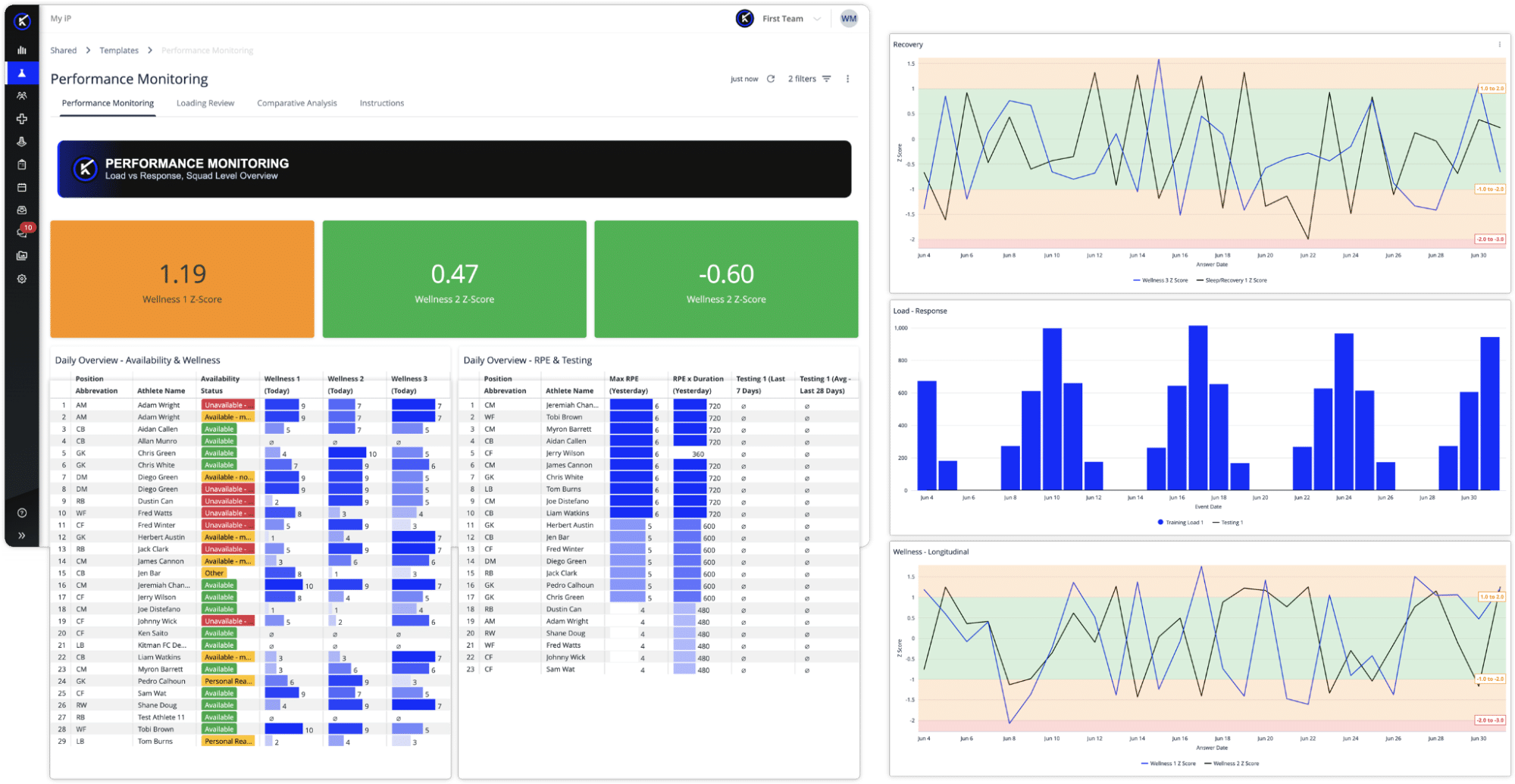
Performance Optimization powers the analysis.
My iP powers how that analysis is delivered.
Key capabilities of modern athlete performance analysis software
Performance analysis software should be designed around real performance workflows, not generic dashboards.
Here are the five capabilities that matter most.
1) Unified performance data with the right context
Performance analysis only works when training load can be interpreted alongside athlete context.
That includes:
- Session structure and drill metadata
- Participation and availability status
- Internal load measures like RPE
- Testing results such as CMJ
- Match exposure and competition demands
When this context is disconnected across tools, performance analysis becomes incomplete and slow.
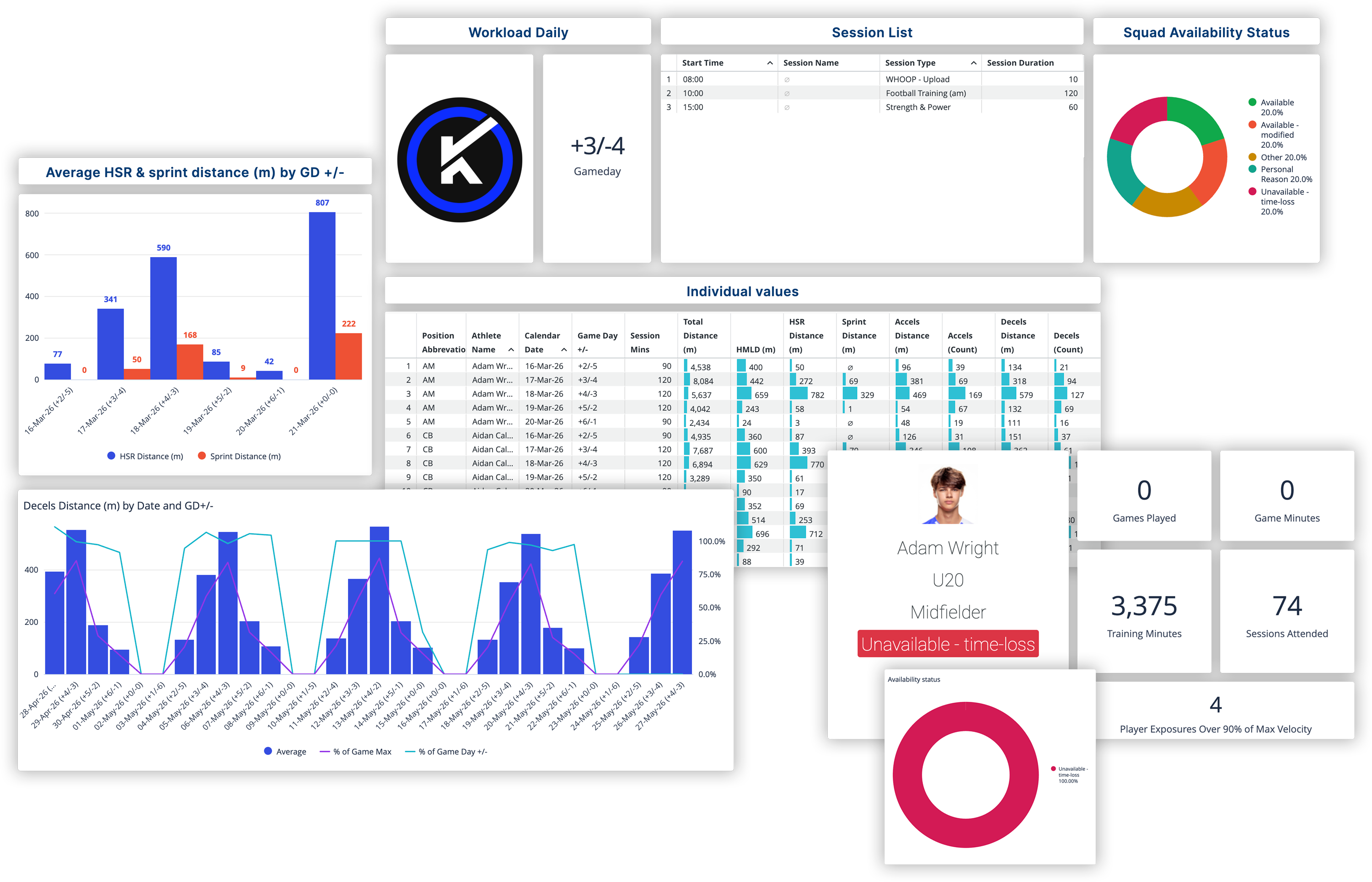
Modern systems should unify performance data so staff can analyze workload without having to assemble it.
2) Drill-level workload insight (not just session summaries)
Session totals are useful, but they rarely explain why a session produced a given outcome.
Drill-level insight allows performance staff to:
- Break down workload by drill name, drill type, and participation
- Identify which drills drive high-intensity exposure
- Compare drill stimulus across sessions or training blocks
- Connect training design to athlete demand
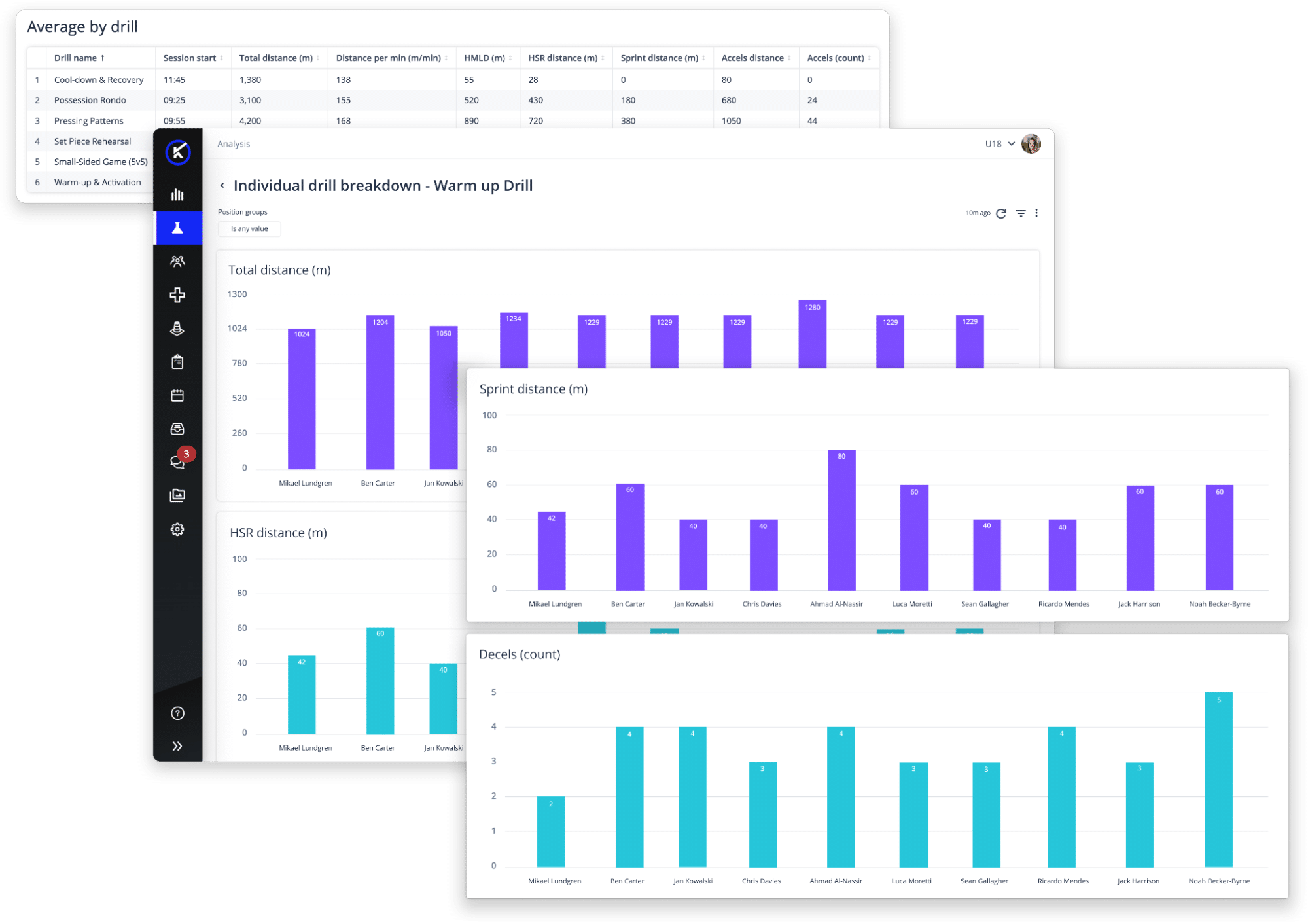
This changes performance analysis from “monitoring numbers” to supporting training design.
The goal isn’t rigid targets.
The goal is clarity, so training intent and workload outcomes stay aligned.
3) Training load in match context across the microcycle
Workload becomes far more meaningful when it’s evaluated relative to match demands and the structure of the week.
Modern athlete performance analysis software should make it easy to:
- Compare training sessions against match demands
- Review intensity relative to peak game exposure
- Analyze patterns using Game Day +/- structure
- Understand whether each training day is delivering the intended stimulus
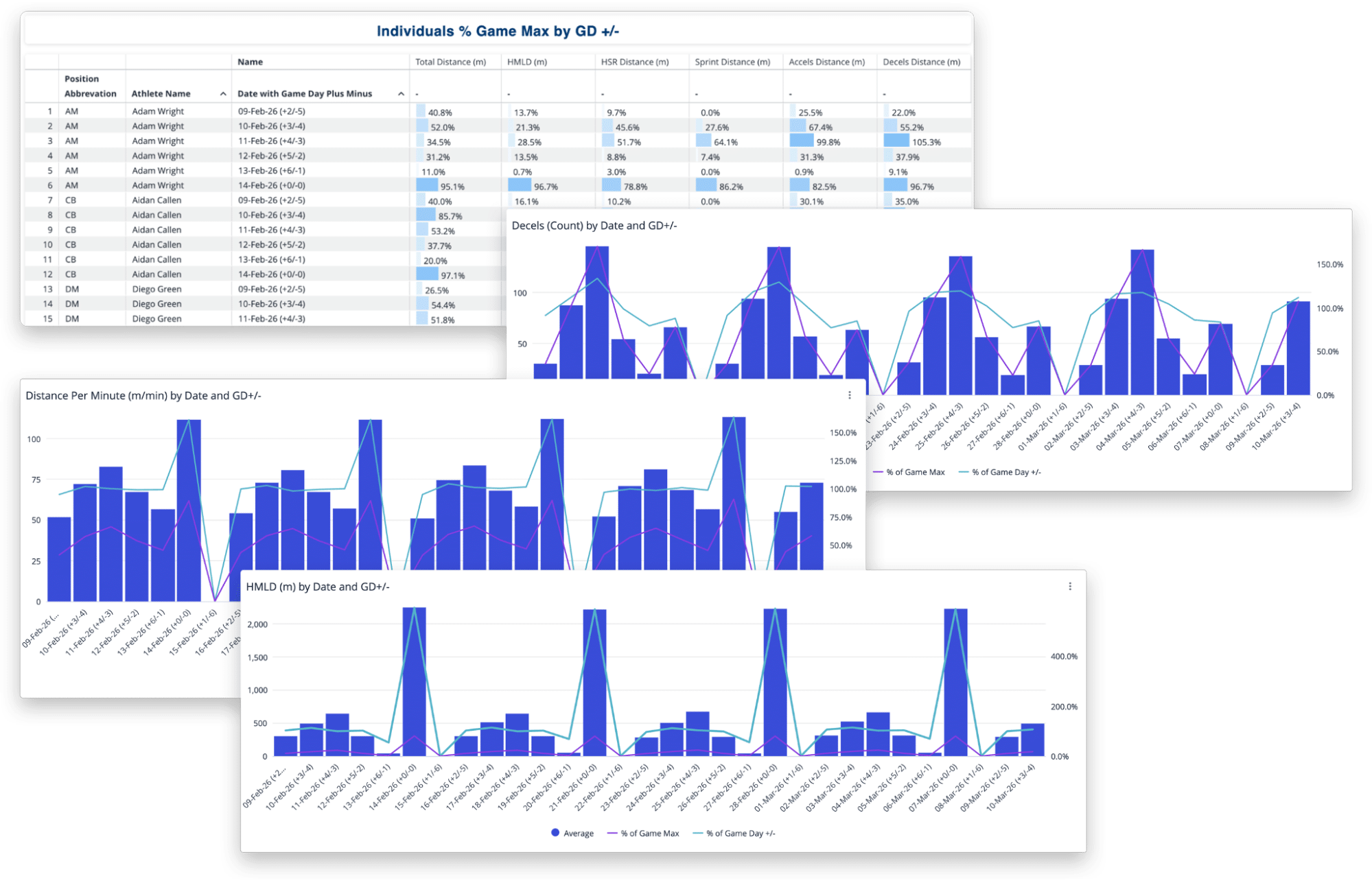
This is what turns performance analysis into microcycle planning support, not just retrospective reporting.
4) Cumulative squad and individual load alignment
The most common breakdown in workload planning is this:
The squad view looks fine.
But individual athletes are accumulating load very differently.
Performance analysis software should allow staff to:
- Track cumulative workload across the microcycle
- Identify emerging outliers early
- Filter by squad, position group, or participation context
- Move quickly from squad-level trends to individual profiles
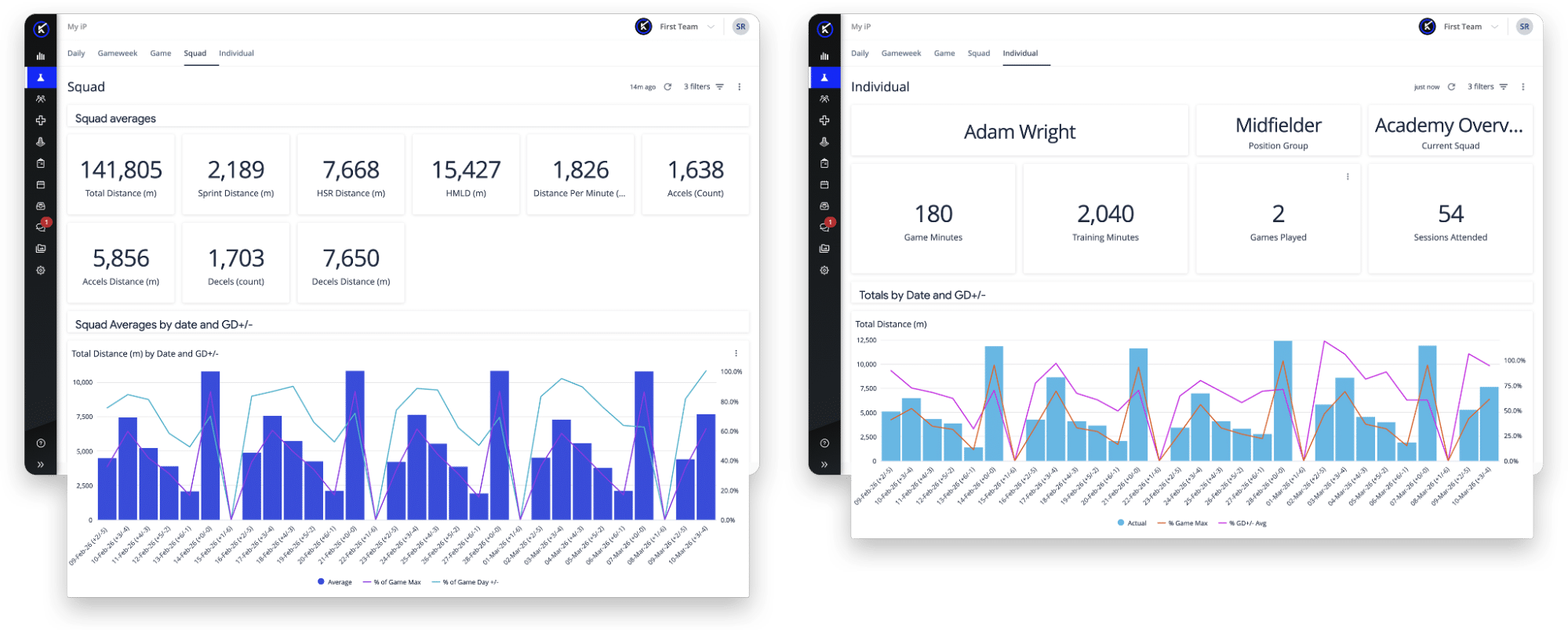
This supports proactive exposure management, without requiring manual report rebuilds.
5) Fast reporting that coaches can actually use
Performance analysis doesn’t end with charts.
It ends with decisions, often involving multiple stakeholders.
Modern systems should allow teams to:
- Explore dashboards dynamically (not locked static reports)
- Filter by session, drill, player, or week without rebuilding
- Export, print, and share trusted outputs for coaches and leadership
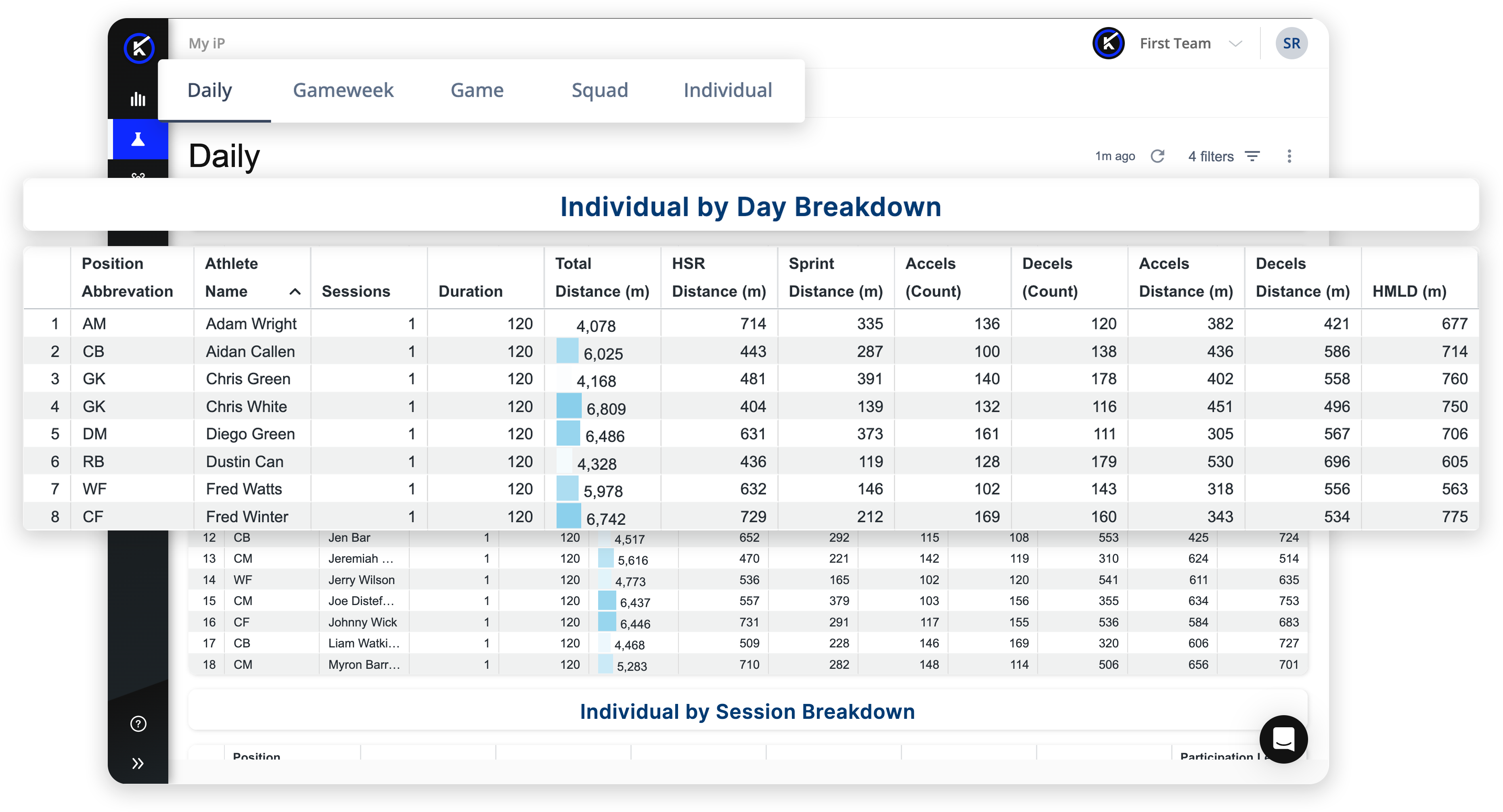
Because not every stakeholder logs in, but everyone needs aligned context.
My iP, the reporting and visualization layer in iP: Intelligence Platform, enables this through explorable dashboards and exportable outputs, making reporting usable across the organization.
From monitoring tools to performance analysis workflows
Many teams already “monitor” athletes.
But monitoring alone doesn’t deliver structured performance analysis.
Monitoring Tools vs. Performance Optimization in iP: Intelligence Platform
| Capability | Basic Monitoring Tools | Performance Optimization in iP |
| Data capture (GPS, RPE, testing) | Yes | Yes |
| Session totals | Yes | Yes |
| Drill-level workload breakdown | Rare | Built-in |
| Match-context comparisons | Manual | Built-in |
| Microcycle views (GD+/-) | Limited | Built-in |
| Cumulative load tracking | Basic | Advanced |
| Squad vs individual alignment | Difficult | Seamless |
| Coach-ready reporting | Manual | Enabled through My iP |
Monitoring tools record workload.
Performance Optimization structures that workload into decision-ready workflows, strengthened by My iP’s intelligence and reporting layer.
From performance analysis to sports intelligence
For many organizations, athlete performance analysis is the starting point.
As data maturity grows, teams expand into broader analytics capabilities, connecting performance insight with medical, coaching, and operational data to support organization-wide decision-making.
When performance analysis is powered by structured, unified data, and supported by governed reporting layers, insight becomes scalable across roles, departments, and leadership.
Contact us to see how the Performance Optimization Solution in iP: Intelligence Platform, strengthened by My iP, supports modern athlete performance analysis workflows.