AI can help performance and medical teams review athlete history, spot changes, and find answers faster. The catch is that the number behind the answer has to mean what you think it means.
Take high-speed running. Two athletes can post similar numbers while their teams use different speed thresholds, so both figures are correct but comparing them leads to the wrong conclusion. Thresholds also shift between seasons or when a team changes GPS provider, and unless those changes are recorded, AI compares numbers that no longer mean the same thing.
An accurate number can still produce the wrong answer. That is the AI readiness gap.
Our first blog, AI Can Build the Dashboard. Your Athlete Data Still Needs a Reliable Home, looked at whether you can trust the system holding athlete data. Now, let’s look at whether you can trust the answers AI gives you.
1. What decision are you trying to make?
It is easy to start with the data you already collect and ask AI what it can find. But that may not answer the question your staff need to solve.
Start with the decision. Are you deciding whether an athlete is ready for the next game, planning their training week, or reviewing a concern about workload? Each question needs different information.
A better AI tool cannot fix a question that was never clear.
2. Do you know what the data means?
Before comparing numbers, check how they were measured and what happened in the session. A high training load may be part of the plan. A drop in running distance may simply mean a shorter session, not a problem with the athlete.
Record the context alongside the right athlete, session, or date. A short note about the session goal, travel, or a change in the plan can explain why the numbers look different.
The same applies in medical care. An athlete may be medically cleared to return to play but still need time to build up to the demands of a full match. Looking at clearance alone would miss that context.
3. Is there enough evidence to trust the answer?
AI can give an answer even when there is not enough evidence to support it. A precise number or polished report is not proof that the conclusion is right.
A 2025 study published in Science and Medicine in Football reviewed 722 football performance and injury studies. Women made up just 7% of participants, and 13% of studies focused only on women. If AI draws on studies like these to recommend an action for a female athlete, staff should check whether the evidence applies to her.
Even when AI uses only your club’s own data, more data does not always mean better evidence. You might have years of records but only a few cases that match the question. Changes in training methods, coaching staff, or athlete groups can also make older comparisons less useful.
Check who the evidence represents, how recent it is, and what is missing. If the data cannot support a firm conclusion, staff need to know that.
4. Who decides what happens next?
An AI flag can draw attention to an athlete. It does not tell staff what to do.
A drop in readiness could be linked to travel, poor sleep, illness, or a planned training block. Staff need to speak with the athlete and review the wider picture before changing the plan.
AI can help bring the information together. The responsible medical or performance lead still needs to decide whether action is needed, what should change, and who owns that decision.
5. Will the right people get the answer in time, and in a usable form?
An answer only helps if it reaches the right person before a decision is made. The timing and level of detail need to fit how each person works.
A coach may need a clear view of an athlete’s availability. Medical staff may need the notes and reasoning behind it. Both need current information, with access based on their role.
Staff also need to understand what AI has checked, what it has not checked, and when to question the result.
How the five questions work together
Use the five checks together before changing an athlete’s plan. A clear decision sets the direction. Reliable data and enough evidence support the answer. The right staff member reviews the findings, makes the call, and shares what others need to know. If something is missing, check it before acting.
| What to confirm before acting | |
1. The decision |
Which call the answer is for. Readiness for the next game, the training week, and a workload concern each need different information |
2. What the data means |
How each number was measured, and what happened in the session. A high load may be the plan, and a shorter session is not a problem with the athlete |
3. The evidence |
Who the evidence represents, how recent it is, and what is missing. A precise number is not proof the conclusion is right |
4. The decision owner |
That the responsible medical or performance lead reviews the finding and owns what changes. A flag draws attention, it does not set the action |
5. Reaching the right people |
That it reaches the right person before the decision is made, at the level of detail they work with, with access based on their role |
Where AI can make a difference
When staff trust the data and understand its limits, AI has a much better chance of helping. It can connect medical and performance information, highlight changes worth reviewing, and prepare staff for a decision, which leaves more time to ask questions and work with athletes.
Start with one decision your team makes often, and see whether you can answer these five questions.
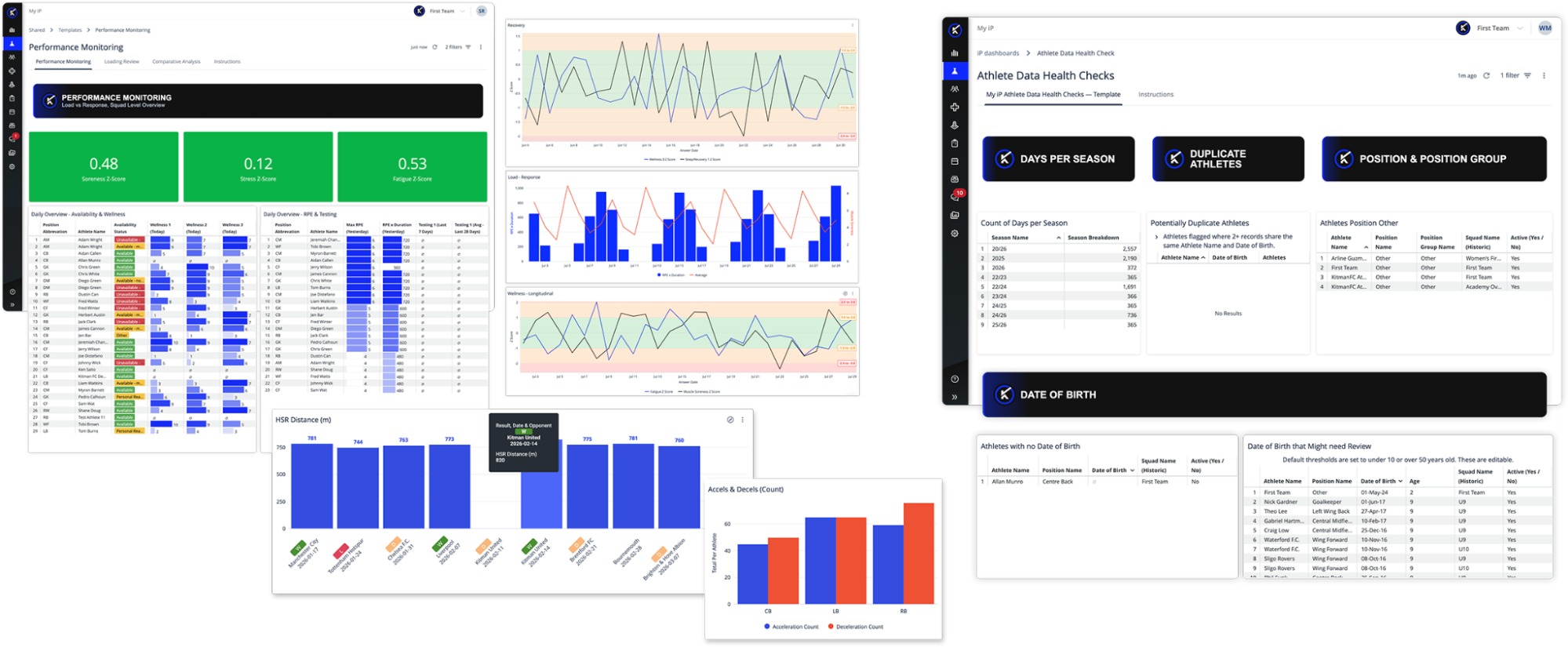
iP: Intelligence Platform keeps athlete data in one shared system, with access based on each person’s role. Data Health Check Dashboards help staff spot missing or unexpected information. My iP lets teams report on that data without moving athlete records into separate tools. Staff still make the final call. See how iP works or talk to our team.