AI can help a practitioner create a useful tool in days. A few prompts and spreadsheets can produce athlete lists, injury logs, rehab plans, fitness dashboards, and reports. It can even look like a complete athlete management system (AMS). But looking complete and being ready to manage real athlete records are different things.
That speed is useful. Staff can try new workflows, build reports around their needs, and test ideas without waiting for a development team.
The question is not whether to use AI. It is whether the data behind the tool can be trusted.
You can build a dashboard quickly. Building a reliable athlete record takes more work.
What AI Tools Do Well
Describe the workflow in plain English and AI can help create the charts, filters, and athlete profiles your team needs.
These tools can make it easier to explore ideas, change reports, and show others how a better process could work.
The challenge begins when people start using a new tool to store and manage real athlete data. At that point, the tool needs more than a good dashboard.
| What an AI-built tool usually handles | What managing real athlete records also needs | |
Data collection |
A form that captures whatever staff type in | Checks as information is entered, so a wrong date, a duplicate athlete, or a session logged against the wrong team is caught early |
Where the record lives |
Storage in a browser, on one device, or in a hosted database | One shared source for athlete records, a central backup, and clear rules for updates |
Access control |
A login, sometimes shared, sometimes tied to one staff member’s email | Individual accounts, separate access to medical notes and availability, and removal when someone leaves |
History of changes |
The current value of each field | A record of who changed what and when, that still answers the question months later |
AI access to data |
Whatever staff upload or paste in | An approved view of what the tools can reach, and an agreement covering how athlete data is handled |
Clinical approval |
Drafted rules, suggested access levels, and outline rehabilitation workflows | Review and sign-off by the right medical or performance lead, applied consistently and recorded |
Connected data |
A few spreadsheets, imported by hand | Tracking, wearable, force plate, medical, and schedule data matched to the right athlete and session, with a warning when a feed stops |
Ownership and support |
One person who knows how it was built | Named ownership, support, and a maintenance plan that survives a change of role |
Who Is Responsible for Athlete Data?
When your team collects medical, injury, or wellness information, your organization is responsible for how that data is used and protected. Using AI to build the tool does not change that.
Privacy and health-data rules vary by location. They may set requirements for who can access information, how long it is kept, and when it must be deleted. Those rules still matter if an AI tool helped build the system.
If staff use personal AI accounts or hosting services, your organization may not have agreements in place covering how athlete data is handled. The organization is still responsible for protecting that data, even without those agreements.
There is also a practical question. Months after an athlete returns to play, someone may ask why that decision was made. Can your team show which information it used, who reviewed it, and who made the decision?
Athletes may also ask to see their information or request its deletion. Could your team find every copy, including exports, files stored in other tools, and information pasted into AI chats?
Why Good Data Starts at Collection
A dashboard is only as useful as the data behind it. That starts with how your team collects information.
A form without basic checks may accept the wrong date, a duplicate athlete, or a session recorded against the wrong team. Missing or incorrect information can then appear in reports.
By the time someone spots the problem, staff may need to check many records and find out whether the incorrect data affected earlier decisions.
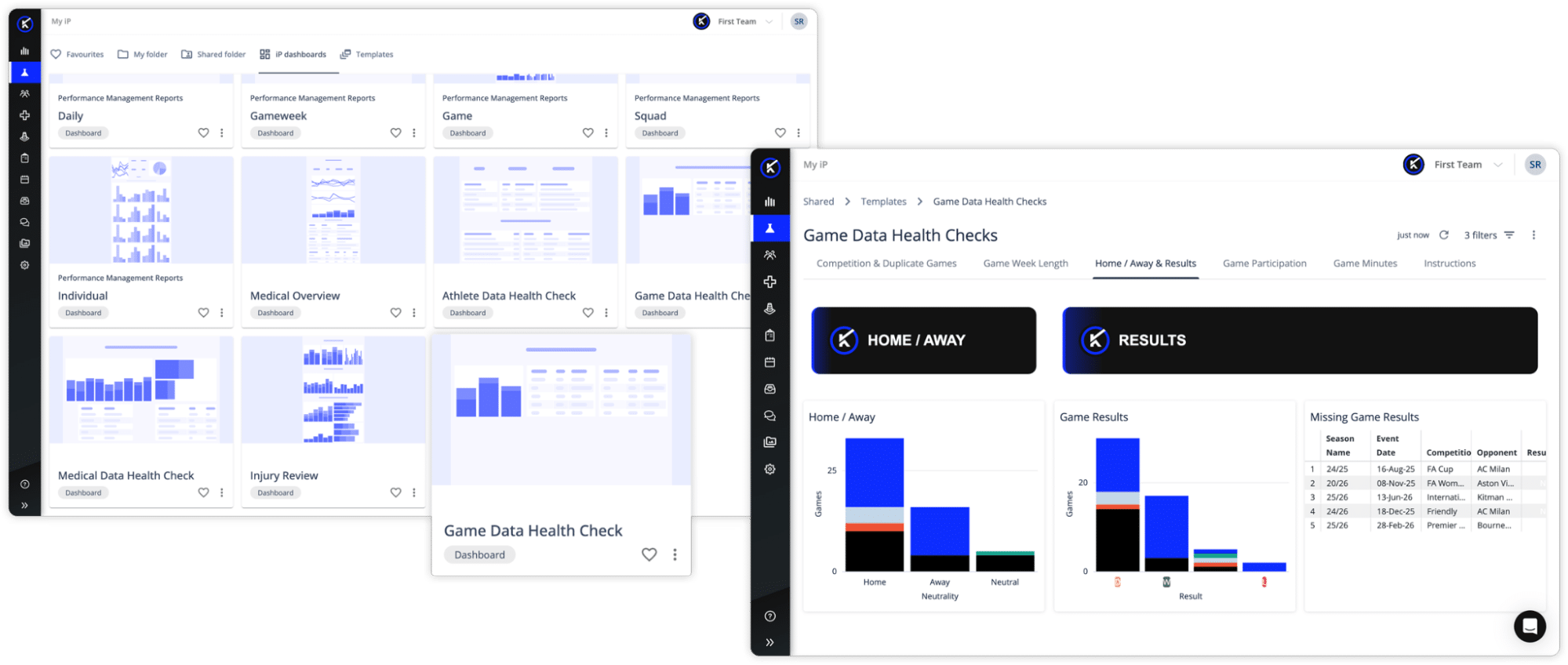
Good reporting starts with good data collection. Why data health matters in sport.
What Happens When Data Lives in Different Places?
Some simple tools store information in a browser or on one device. That can work for a personal test. But it may leave your team without shared access, a central backup, or control over who can see the data.
Exporting and importing files can create another problem. A physio updates a return to play date on Monday. A strength coach changes the plan later that day. On Tuesday, the coach opens an older file. Which version is right?
Even a well-built database can cause confusion if it holds a separate copy of records that staff are updating elsewhere.
Your team needs one shared source for athlete records, clear rules for updates, and a way to see what changed. New dashboards and AI tools can then work from that same information. Why reporting belongs where the data lives.
Control Who Can See and Change Data
Most AI app builders now provide a hosted database and logins. But having them does not mean athlete data is protected.
Access rules decide which records each account can read or change. If those rules are missing or left at their defaults, athlete data could be exposed.
Shared logins create another risk. They leave no clear record of who changed what, and access may remain open when someone leaves.
Check who owns the accounts and whether the tool requires a login. Some tools are available at a public web address without a login, while others are tied to one staff member’s email rather than the organization.
Your system should answer:
- Who can see medical notes, and who should only see availability?
- Who can change an athlete’s injury status or return to play timeline?
- Who can edit, delete, export, or share records?
- What happens when a staff member leaves?
- Can we see who changed a record and when?
These rules should follow the data, even when staff use different dashboards and tools.
If your team cannot answer these questions, athlete information is less protected than it looks. What real security requires.
Access is one part of the picture.
Our checklist covers it alongside the other areas your team should review.
Know What Data Your AI Tools Can Access
Be careful about which athlete information staff upload or paste into AI tools. A spreadsheet or note may contain personal medical details.
What happens to that information depends on the provider, plan, and settings. Check whether it is stored, logged, or used to train models before sharing real records.
This does not mean staff should avoid AI. It means the organization should approve which data the tools can access. For early testing, sample data is often enough.
Who Approves the Rules?

AI can help teams create useful features, from injury logs and availability views to performance testing data and training reports.
It can also suggest who should have access to each feature or draft a rehabilitation workflow. Those drafts are a starting point, not approved clinical guidance.
The right medical or performance lead still needs to review and approve the rules. The team should then use them consistently and keep a record of that approval.
What Happens When You Add More Data?
A tool may work well with a few spreadsheets. Connecting tracking systems, wearables, force plates, medical records, and schedules is a different job. Data can arrive late, use different formats, or refer to the same athlete in different ways.
Connections can also stop working without warning. If a provider changes its API or a connection expires, new data may stop arriving. The dashboard could still show last week’s numbers without anyone noticing.
Medical records involve additional steps. Connecting to a clinical system usually requires a vendor agreement and work with healthcare data standards. An AI prompt cannot replace that work.
Your system needs to match that information to the right athlete, session, or match and check it before staff use it. Doing this once, in a shared data system, helps every connected tool.
What If Only One Person Understands the Tool?
Many teams know this problem from spreadsheets and Sports BI tools. One person builds a useful report, and the team starts depending on it.
But if only that person can update it, the team may struggle when they leave or move roles. Staff may not know where the data came from or which report is current.
AI speeds up building, but teams still need support, clear ownership, and a plan for maintenance. Keep important athlete records in a shared system so a dashboard can change without putting the data at risk.
Build the Tool. Protect the Record.
AI-built tools can help your team work faster. The key is knowing when a useful tool starts becoming the place where important athlete records live.
Use AI to explore ideas, test workflows, and show what your team needs. Then build on the record rather than copying it. Keep the athlete record, and the reporting your staff rely on every day, in one governed system your tools can work from.
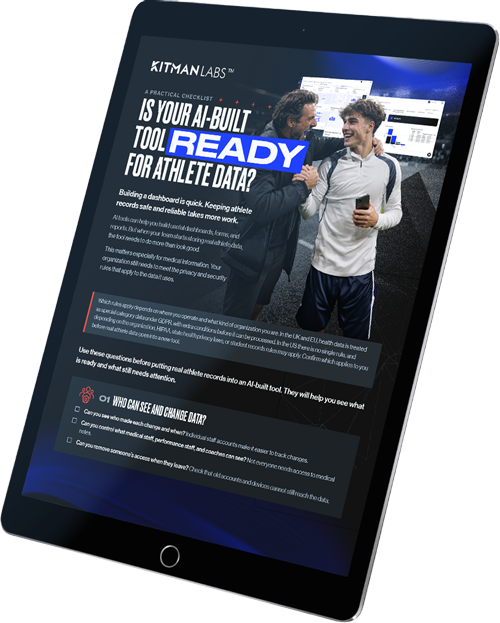
Use our checklist before putting real athlete records into a new tool. It covers the questions your team should be able to answer.
Whether AI built the tool matters less than whether your team can trust the data, manage who sees it, and explain important decisions later.
Trusting the system is one half of the question. The other is knowing when to trust what AI tells you. AI Readiness in Sport: Five Questions Every Performance Team Should Ask walks through the checks to run before an AI answer shapes a decision.
That is what iP: Intelligence Platform is built to support. It brings athlete information together, helps staff check data as it is collected, controls access, and keeps a history of changes.
Reporting in My iP runs on that same data, so staff can build and adapt dashboards without moving athlete records into a separate tool. If your team wants to build its own tool, it can use the API for iP to access athlete data without having to manage the main athlete record in another system. See how iP works or talk to our team.