You have more athlete data than any staff in history, and less time to make sense of it. Sports tracking software captures nearly everything now: every sprint, collision, and heartbeat across training and competition, from GPS and indoor positioning to force plates, heart-rate monitors, and wellness check-ins. The capture problem is solved.
The interpretation problem isn’t. All that data lands in a dozen apps, exports, and spreadsheets that don’t talk to each other, so the readiness call still gets made after the fact instead of before the session. The edge isn’t more tracking. It’s what happens when every signal is connected, structured, and read in one place. That’s what iP: Intelligence Platform does with the data your tracking systems already produce.
What sports tracking software measures, and where it stops
Sports tracking software is any technology that captures objective data on how athletes move, work, and recover. Most programs run several types at once, each built to answer a different question:
- Outdoor movement (GPS/GNSS): distance, speed, high-speed running, accelerations, and collision load for field sports.
- Indoor positioning (LPS, UWB, optical): the same movement picture for court and indoor sports, where satellite signal can’t reach.
- Physiological monitoring: heart rate, heart-rate variability, sleep, and recovery. The internal cost of the work.
- Strength and force testing: force plates and dynamometry for power, asymmetry, and return-to-play benchmarks.
- Wellness and self-report: soreness, mood, and sleep quality. The context no sensor can see.
- Video and event data: tactical actions and involvements. What happened, not just how much.
Each system answers its own question well. What none of them answer are the questions that cross systems: is this athlete’s running load safe given last night’s poor sleep and a lingering soreness flag? Tracking software captures. It doesn’t connect. That’s the gap every staff hits the moment they own more than one tool, and it’s the gap that decides whether the data changes a decision or just fills a dashboard.
This is the point where teams start comparing athlete monitoring systems, the category meant to turn tracking data into decisions. When you evaluate one, the capture spec matters less than the demo suggests.
Four questions separate a data source from a decision system:
- Does it connect to everything else you run, automatically and in a shared structure, or export to yet another spreadsheet?
- Does it put movement, medical, and wellness data in one view, or in five?
- Does the data arrive clean and contextualized, or does someone reconcile it by hand every morning?
- Can every department read the same numbers the same way, or does each defend its own silo?
Where tracking becomes intelligence
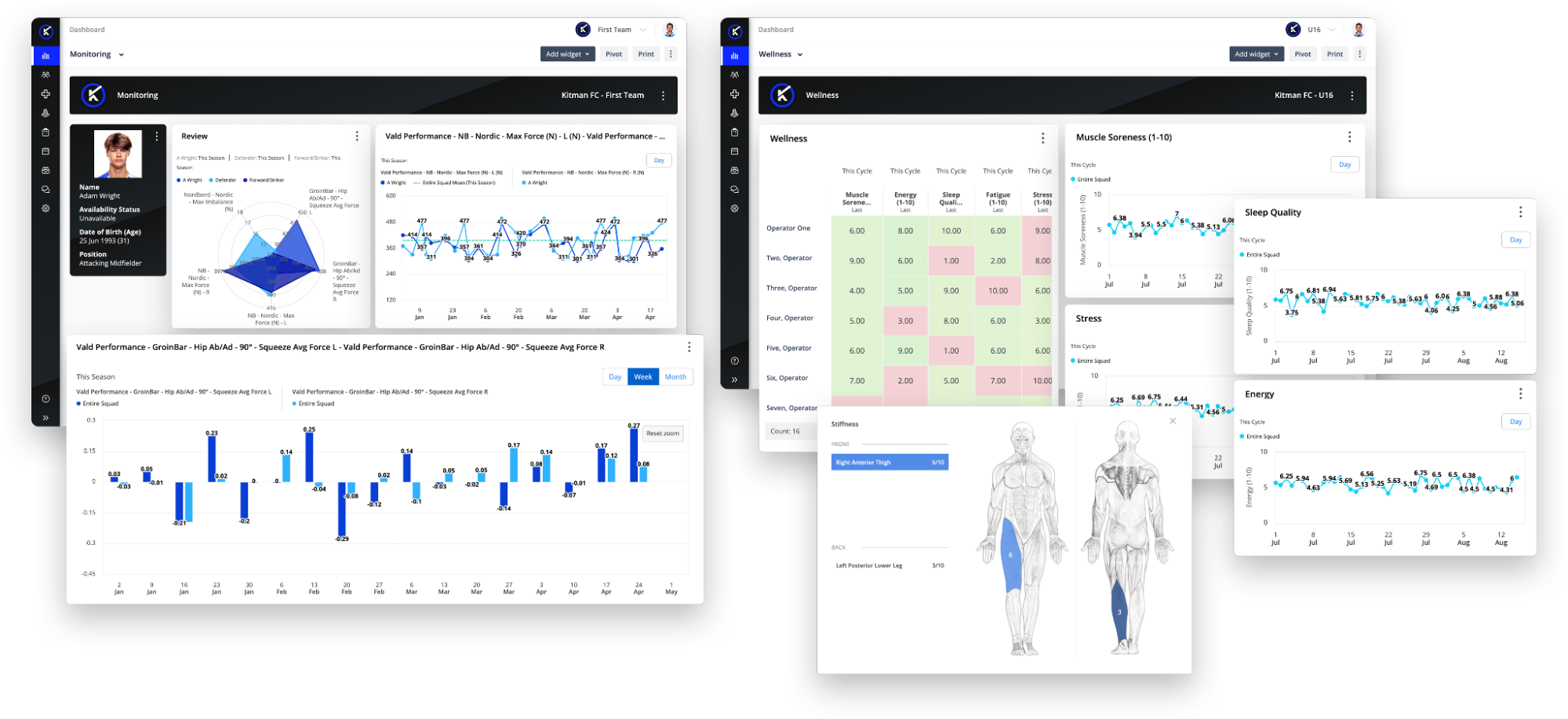
This is the shift tracking software can’t make on its own, and it’s what iP is built for. iP ingests and structures data from every tracking system you run: GPS and indoor positioning, force plates, heart-rate monitors, wellness surveys, and dozens more. It arrives clean, contextualized, and ready to use, so no one starts the day reconciling exports by hand.
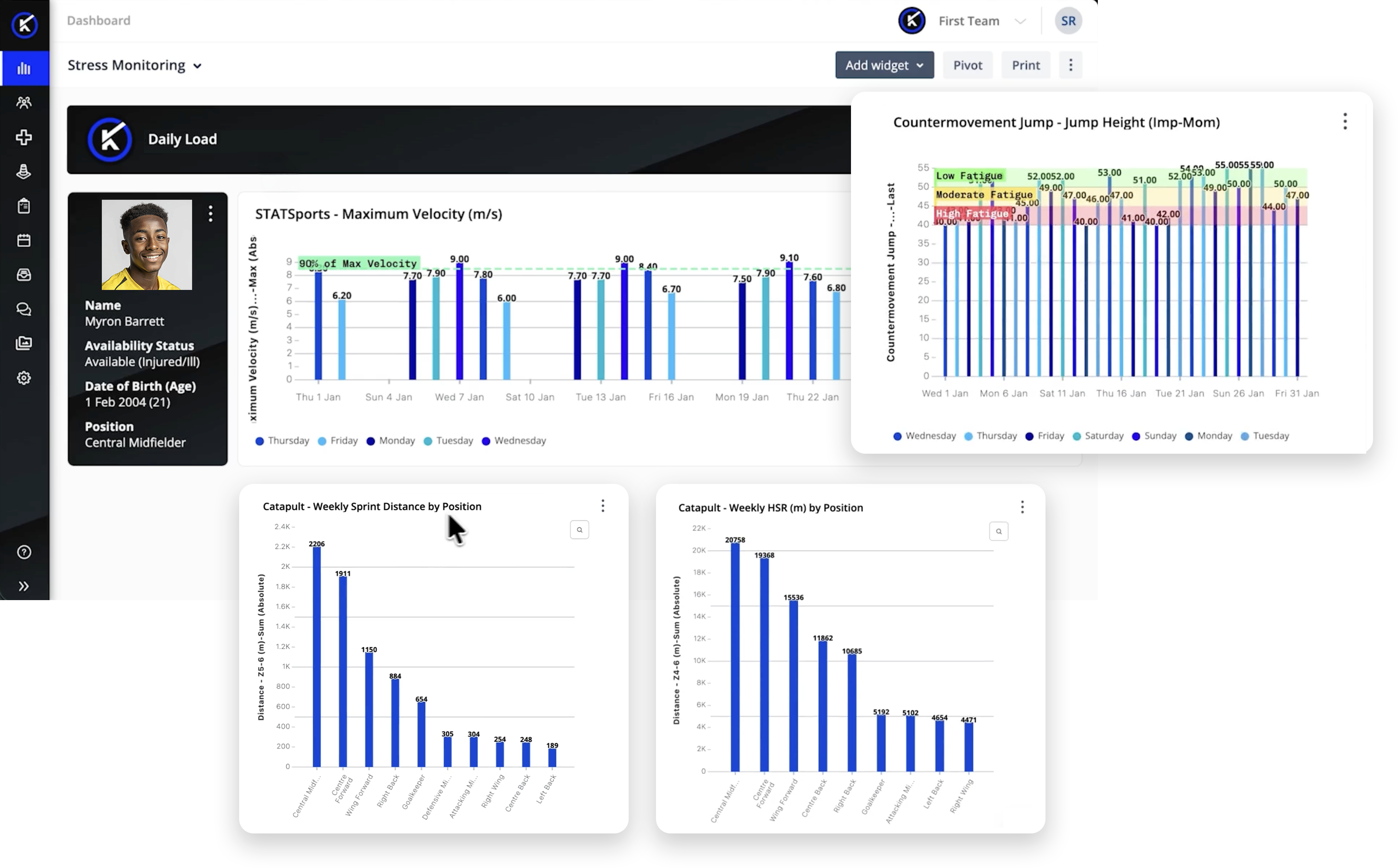
The result is one connected view instead of five disconnected ones. Every department works from the same numbers, structured around the decisions they actually make, whether that’s workload planning, managing return to play, or preparing a training week.
Why iP matters
- One athlete profile: movement, strength, wellness, medical, and tactical data in a single view.
- Automated workflows: alerts, load monitoring, test reviews, and daily reporting, without the manual assembly.
- Decisions, not just dashboards: the connected view surfaces what needs action today.
- 150+ integrations: across performance, medical, tactical, and operational systems.
How leading tracking technologies deliver more value in iP
Teams rely on different tracking technologies to capture strength tests, movement, heart rate, tactical actions, and indoor or outdoor load. What varies is how well they work together. iP unifies the data from each, so every system does more inside a shared workflow. Here’s why teams use each one, and how iP extends it.
| Integrations | Why teams use it | How teams extend value in iP |
| VALD Performance | Strength and rehabilitation testing—force plates, asymmetry, dynamometry, and objective progress tracking. | Rehab Readiness in iP: Staff combine testing trends with wellness, GPS exposure, and medical notes to guide safer, evidence-based return to play decisions. |
| Catapult | GPS-based movement and workload tracking for field-based sport, capturing full-volume and high-intensity demands. | Sprint Exposure & Workload Planning in iP: Coaches and performance staff monitor high-speed running, develop max velocity, and manage positional load. |
| STATSports | GPS and heart-rate monitoring for fatigue modeling and session load tracking, with real-time feedback. | Dynamic Stress Monitoring in iP: Integration with wellness and medical data helps identify rising fatigue, adjust training intensity, and support preparedness decisions. |
| Hudl | Event tagging and tactical review data, providing structured match actions such as passes, tackles, and involvements. | Integrated Tactical & Physical Review in iP: Teams combine event data with sprint exposures, movement demands, and wellness trends to inform session design and performance conversations. |
| KINEXON | Ultra-wideband indoor positional tracking for court sports, delivering high-precision movement data where GPS cannot operate. | Indoor Load Monitoring in iP: Teams align court-based movement metrics with strength testing, recovery data, and readiness indicators to manage training blocks more effectively. |
Performance Intelligence in action
This is what Performance Intelligence looks like in practice.
For an athlete working back from injury: iP brings together their force-plate testing, GPS exposures, daily wellness, and practitioner notes in one place. Staff see the full progression, clear and connected, and make the next call with confidence instead of stitching it together across apps.
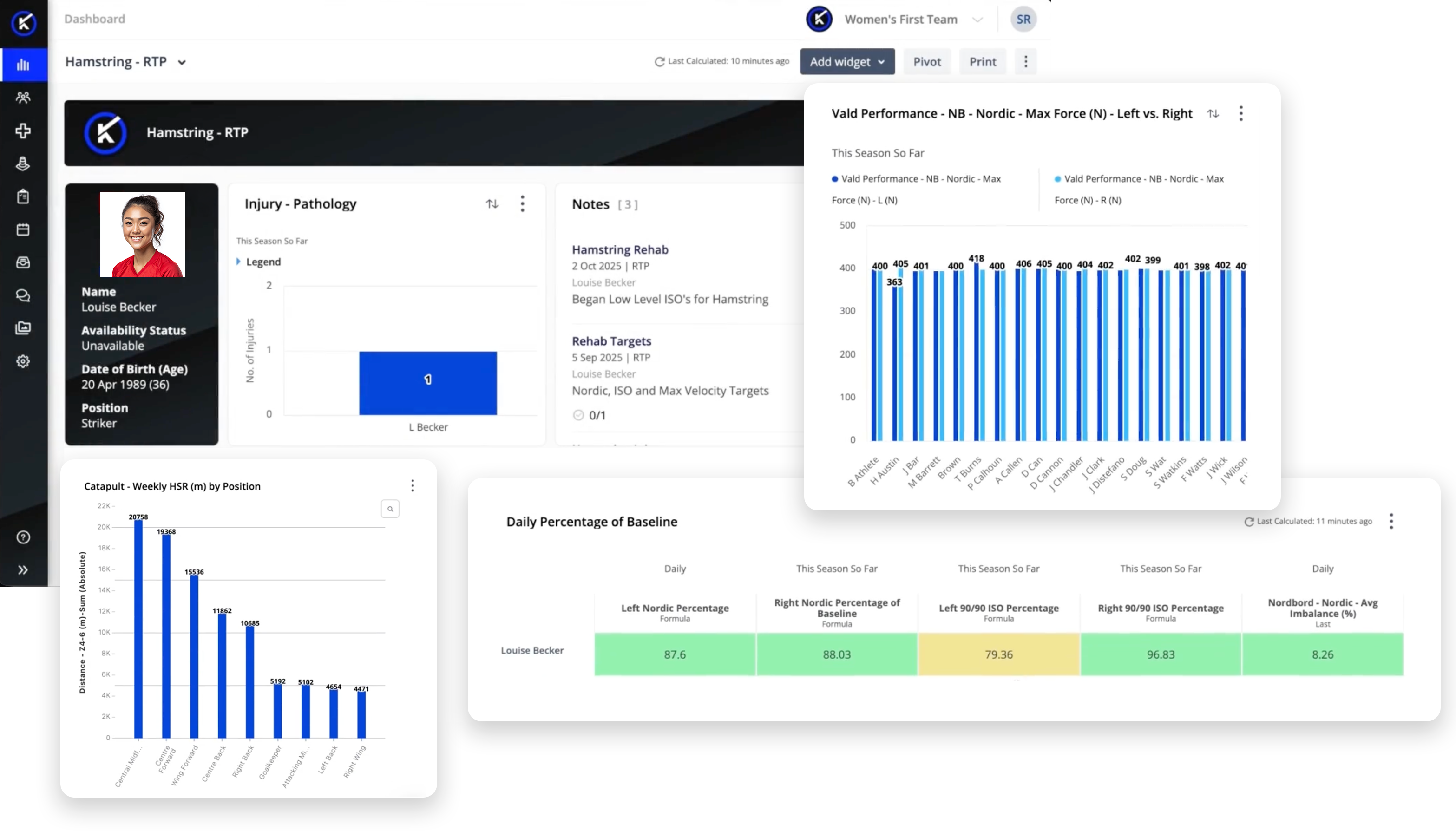
For a staff planning a training week: iP shows which athletes are under-exposed to high-speed running, who reported poor recovery, and who carried heavy tactical load, all from the systems already feeding it. Coaches set session intensity, manage positional workload, and rotate with the full picture in front of them. No manual cross-checking.
One connected system, one competitive edge
Sports tracking software gives you the view. iP turns that view into decisions. By connecting every performance technology you run, GPS, force plates, testing systems, video, and wellness, iP removes the silos and gives staff the context to act faster and with more confidence.
For any program investing in tracking systems, iP is what makes the investment pay off. It turns raw metrics into connected intelligence that keeps athletes healthier, aligns staff around the same picture, and sharpens the organization’s competitive edge.
Want to see how iP brings your tracking systems into one connected view? Book a demo.