Training load becomes most valuable when it’s understood in relation to the demands of competition and the structure of the microcycle.
Game demands provide critical reference points for both load and intensity—but without the ability to apply that context across the microcycle, teams risk either under-preparing athletes or reacting session by session.
Viewing training load against game demands across the gameweek (defined by days between games, not a fixed calendar week) gives performance teams a clearer way to plan, review, and adjust training with periodization in mind—without turning benchmarks into rigid targets.
The Challenge
Many teams struggle to consistently apply game context to gameweek planning and microcycle design.
Common challenges include:
- Manual benchmarking of training sessions against game data
- Static reports that make GD+/- comparisons slow or impractical
- Difficulty understanding whether each training day is delivering the intended stimulus for its role in the microcycle
- Readiness conversations that lack shared visual context
Without fast, flexible views across the gameweek, teams are often forced to rely on intuition—or react to issues after the fact.
What We Hear From Performance Teams
Performance staff regularly tell us:
- “We know what game demands look like—but it’s hard to apply that context across the week.”
- “We want to plan training around the microcycle, not just compare one session to one game.”
- “We need GD+/- views that support periodization—not static benchmarks.”
Teams recognize that game data shouldn’t be treated as an optimal target. Game demands vary by opponent, role, and game state—and their value comes from how they’re applied across the microcycle.
What teams want instead is game context as a reference point for planning and review, while interpretation and final decisions remain with coaches and practitioners.
What You Can Do with Performance Management Dashboards in My iP
My iP surfaces training and game workload insight using structured session and game data from the Performance Optimization Solution in iP—so teams can plan and review the microcycle with game context already in place, not manually recreated.
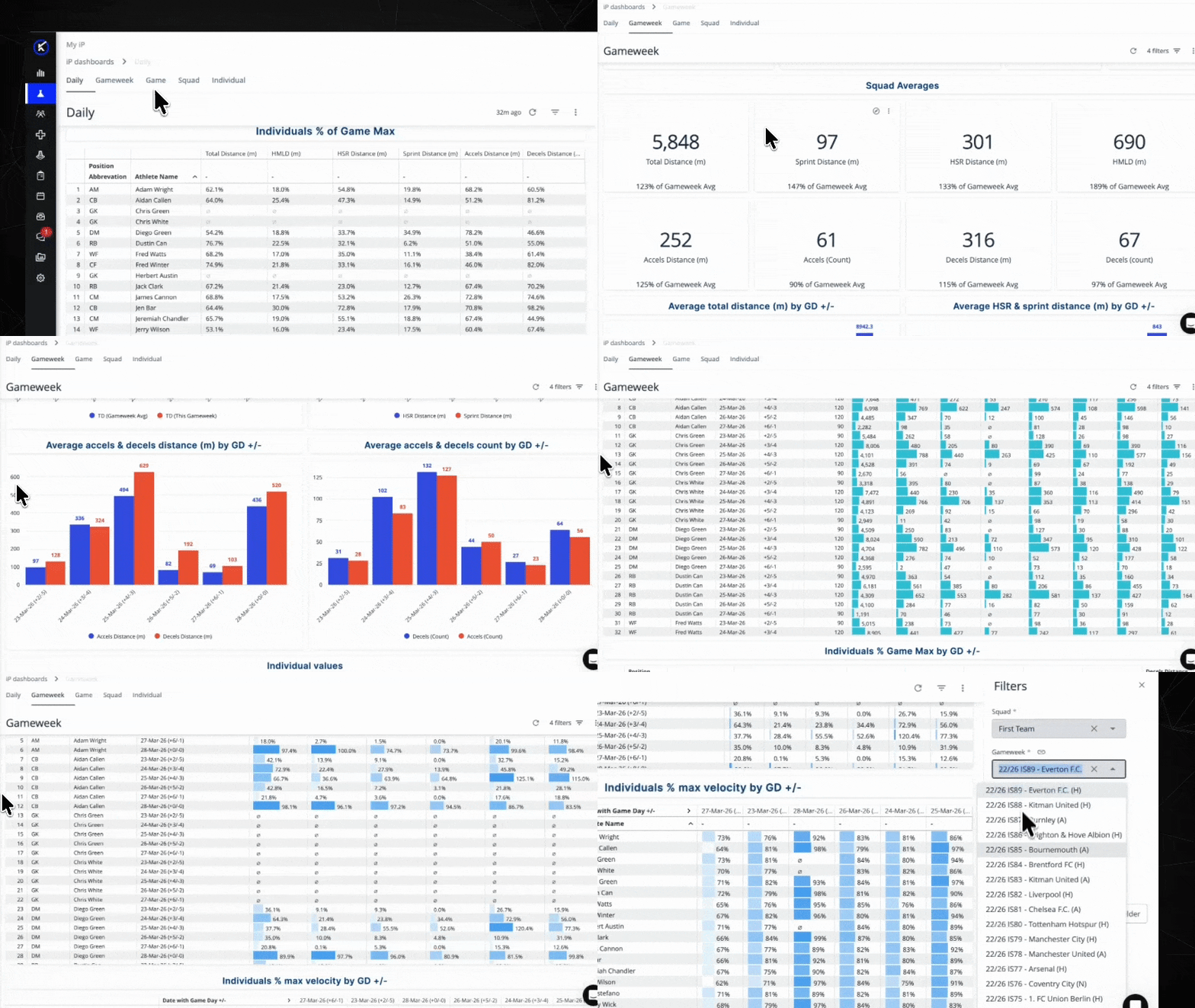
Compare Training Load to Game Demands Across the Gameweek
In Performance Management Dashboards, training sessions are automatically contextualized against competition.
Teams can:
- View training load alongside % Game Max to understand intensity relative to peak game demands
- Use Game Day +/- (GD+/-) views to compare current training days to historical equivalents (e.g., GD+2/-3 vs GD+2/-3)
- See how each training day contributes to the intended stimulus of the microcycle, not just isolated session outputs
Game context supports planning and review—without prescribing rigid training targets.
Plan and Review Exposure Across the Microcycle
Teams can:
- Compare cumulative training load to game exposure across the gameweek
- Filter by squad, position group, or individual to add role-specific context
- Identify under- or over-exposure relative to the intended structure of the microcycle—early, not after the fact
This supports intentional periodization while preserving the structure and purpose of each training day.
Support Periodization, Not Reaction
Game context is most powerful when applied across time.
Performance Management Dashboards allow teams to:
- Compare microcycles across different fixture densities and game phases
- Understand how game demands shift over time—and how training adapts in response
- Validate whether loading, tapering, and recovery days are delivering the intended stimulus
Training remains deliberate—even as competition demands change.
Support Coaching and Performance Conversations
Training-to-game views create shared understanding across staff.
Teams can:
- Use GD+/- and % Game Max visuals to explain planning decisions in coaching language
- Review microcycle structure during weekly planning or post-game reviews
- Align on adjustments without defaulting to reactive top-ups
Game data informs the conversation—without dictating the outcome.
The Outcome: Periodization Decisions with Game Context
When training and game data are viewed together across the microcycle, performance teams can:
- Plan training with clearer alignment to game demands
- Balance exposure across the week with greater confidence
- Communicate decisions clearly using shared visual context
- Keep training aligned with coaching intent and periodization principles
Game data becomes a reference point for planning—not a rulebook.