If you build reports for a club, the workflow is familiar. Performance, medical, and coaching data sits across specialist systems. But the report the organization actually uses gets exported into a general-purpose BI tool, or rebuilt by hand in a spreadsheet, week after week.
It works. It also means your intelligence layer sits apart from your data. Definitions drift between departments. Dashboards split into competing versions. Pipelines and reporting structures need constant upkeep. And you become the bottleneck for every routine question the organization wants answered.
In sport, business intelligence usually points at the commercial side: revenue, ticketing, sponsorship, fan engagement. The same discipline applies just as well to performance, medical, and coaching data, but only when the reporting stays connected to the governed data beneath it.
In iP: Intelligence Platform, that’s Performance Intelligence.
What Performance Intelligence actually means
Performance Intelligence is the governed use of connected sport data to deliver consistent, role-relevant analysis across an organization, inside the same platform that holds the data.
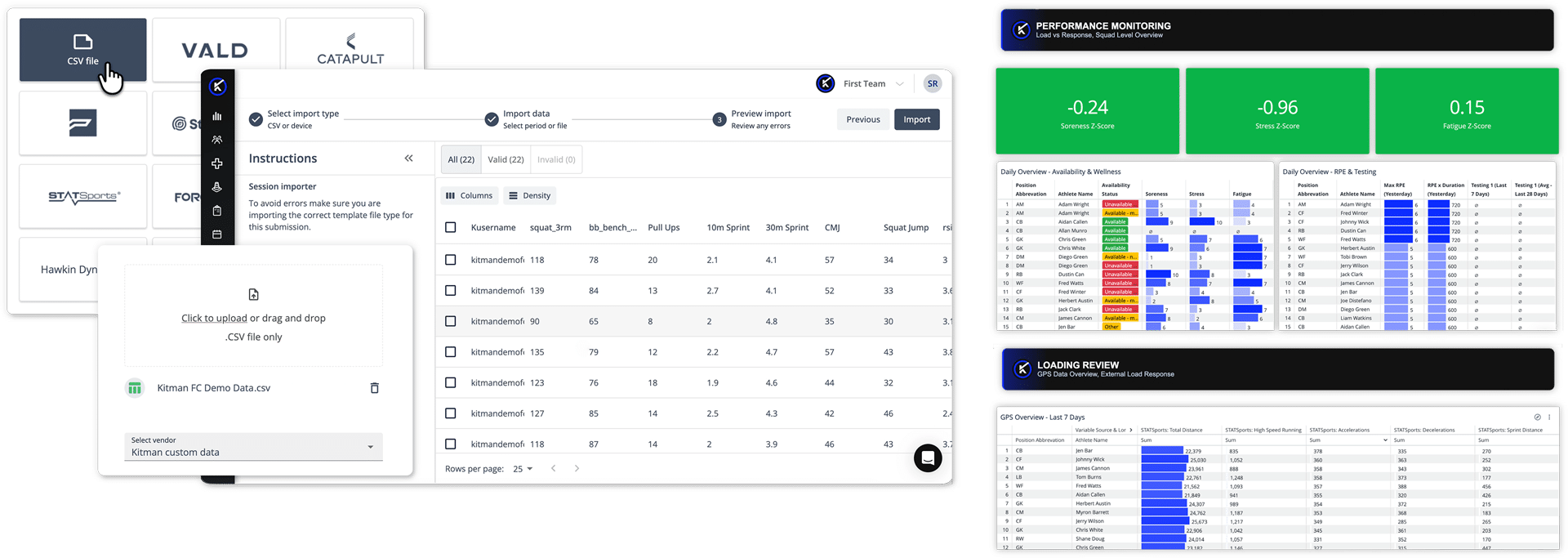
It goes beyond recording athlete information, tracking isolated metrics, or running static reports. It connects data across departments and turns it into role-aware dashboards, shared metric definitions, configurable views, and reusable reporting structures that anyone can export and share. It turns a set of data systems into an intelligence layer, one that answers questions the same way across roles, departments, teams, and seasons.
Most organizations already have the first half. Athlete monitoring is standard. Medical documentation is digitized. Workload is tracked. Testing results are stored. Collecting the data stopped being the advantage a while ago. What you do with it is the frontier now.
Why the intelligence layer belongs inside the platform
The question isn’t whether a general-purpose BI tool can produce a good dashboard. Plenty can. The question is what happens around that dashboard.
When reporting lives in a separate environment, the work piles up at the edges. Data has to be exported, connected, or rebuilt. Metric definitions get recreated and maintained by hand. Permissions get managed in a second system. Templates drift apart across departments. Change the source data, and you often have to change the reporting layer to match. As the organization grows, so does the maintenance.
When reporting and visualization sit inside the same governed environment as the data, those seams shrink. Definitions stay connected to the data beneath them. Reporting structures get configured once and reused. Access reflects real roles. Dashboards evolve without spinning up another disconnected reporting stack. That’s the advantage of a platform built as one system from day one, not assembled from separate tools.
None of this means killing the spreadsheet or blocking exports. Both earn their place for specialist analysis and for sharing outside the platform. It means you stop depending on them for the recurring reporting that drives everyday decisions.
Sports analytics and Performance Intelligence aren’t the same
The terms get used interchangeably. They mark different levels of capability.
| Sports analytics | Performance Intelligence in iP | |
| Data exploration | Yes | Yes |
| Performance modeling | Yes | Yes |
| Governed metric definitions | Varies by workflow | Core requirement |
| Organization-wide dashboards | Sometimes | Built into the platform |
| Role-aware reporting | Configured separately | Delivered through My iP |
| Reusable reporting structures | Not always | Configurable and governed |
| Leadership visibility | Inconsistent | Designed into the reporting experience |
| Consistency across teams and seasons | Requires ongoing management | Supported by a shared data foundation |
Analytics answers a question. Performance Intelligence builds the system that answers the recurring ones the same way every time, on shared definitions and governed data, in views designed for each role.
For the category itself and how the buying decision differs, that’s the job of a sports analytics platform built properly.
How iP delivers Performance Intelligence
Performance Intelligence needs two things: a governed data foundation, and a reporting layer that makes insight usable by role. iP has both.
iP: Intelligence Platform is the foundation. Performance, medical, coaching, and operations data structured in one connected, governed environment, instead of separate departmental reporting stacks.
My iP is the reporting and visualization layer inside it. Role-aware dashboards, reusable templates, and self-service insight that scale across the organization, with outputs people can export, print, and share with stakeholders who never log in.
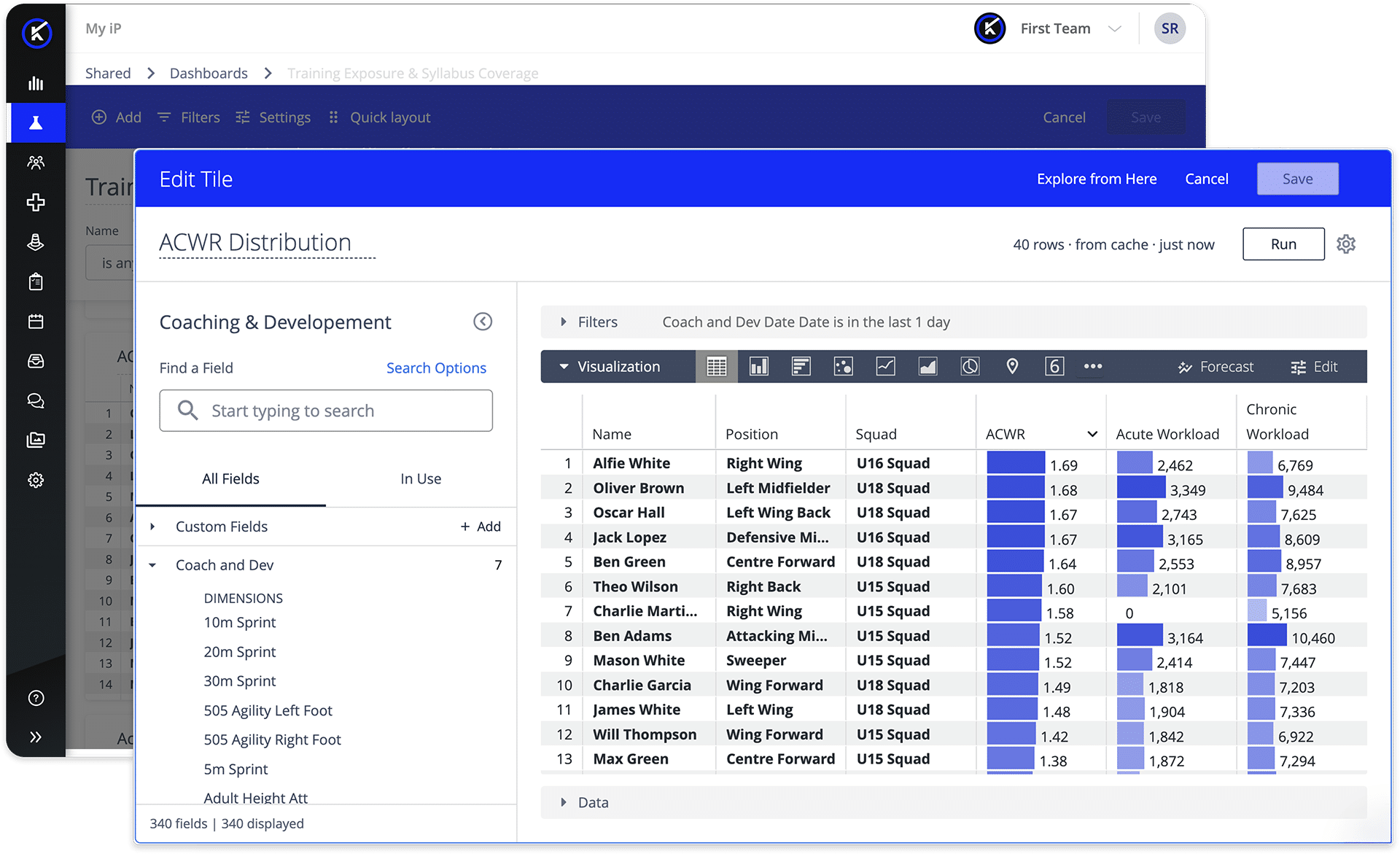
Creator Mode is where your power users configure it. Benchmarks, analytical structures, terminology, views, and reusable templates that reflect how your organization defines performance. It’s the control you’d expect from configurable reporting software, without your core intelligence layer sitting outside your data.
When a question needs specialist depth, Custom Analytics brings expert data science to the same governed data.
For the people who build the reports
Performance Intelligence doesn’t remove the analyst. It removes the grind that keeps you from the questions worth your time.
Instead of rebuilding the same report every week, you configure structures and templates once and reuse them across teams and seasons. Instead of fielding every routine request by hand, you give stakeholders governed, role-relevant dashboards. Instead of maintaining five versions of the same metric, you set one shared definition, next to the data it comes from.
Everyday users get clearer access. Leadership gets consistent outputs they can export and share. You spend less time rebuilding reporting and more time on the analysis only you can do.
That’s what separates an intelligence layer from a pile of dashboards.
| External BI workflow | Performance Intelligence in iP | |
| Athlete data availability | Needs an export, connector, or replicated dataset | Available inside the platform |
| Metric governance | Recreated and maintained separately | Connected to the governed data |
| Reporting delivery | Managed in another workspace | Delivered through My iP |
| Role-aware views | Configured separately | Designed around real roles |
| Template management | Maintained outside the data platform | Configured and reused inside it |
| Analyst workload | Includes pipeline and dashboard upkeep | Focused on reusable analysis |
| Export, print, and sharing | Available | Available from governed outputs |
Intelligence is infrastructure
In elite sport, advantage is increasingly structural. It isn’t only training design, injury management, or recruitment. It’s how well an organization structures, governs, and applies its information. The edge is shifting from who collects the most data to who turns connected data into aligned, trusted intelligence.
Build that layer inside the platform and it grows with the organization. Build it as a separate reporting environment and you spend every season maintaining the seams between the data, the definitions, and the dashboards people rely on.
Ready to bring recurring reporting closer to the data that powers it?
Contact us to see how My iP and Creator Mode turn connected sport data into governed, role-aware Performance Intelligence in iP: Intelligence Platform.