Within Performance Management Dashboards in My iP, the Gameweek view helps practitioners assess whether the training week is unfolding in line with the demands of competition.
By defining the microcycle based on the actual days between fixtures, rather than a fixed calendar week, it gives staff a clearer picture of how load is accumulating across the cycle relative to match demands.
This creates a single reference point for planning, reviewing, and adjusting the week.
Validate the Structure of the Week
The most important question in any microcycle is simple: Did the week unfold as intended?
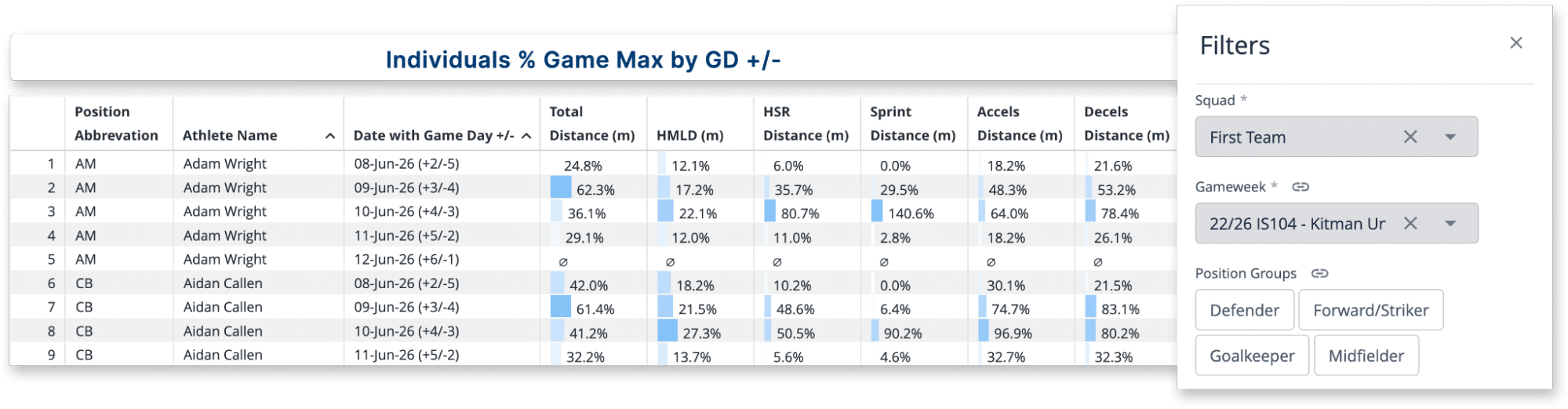
The Gameweek view helps answer that by mapping daily training load across the cycle alongside % Game Max and Game Day (+/-) structure. This makes it easier to assess whether intensity is appropriate for each day, whether load is building progressively across the week, and whether tapering is visible heading into matchday.
Instead of reviewing sessions in isolation, staff can see the full loading curve and identify where the plan and reality diverged.
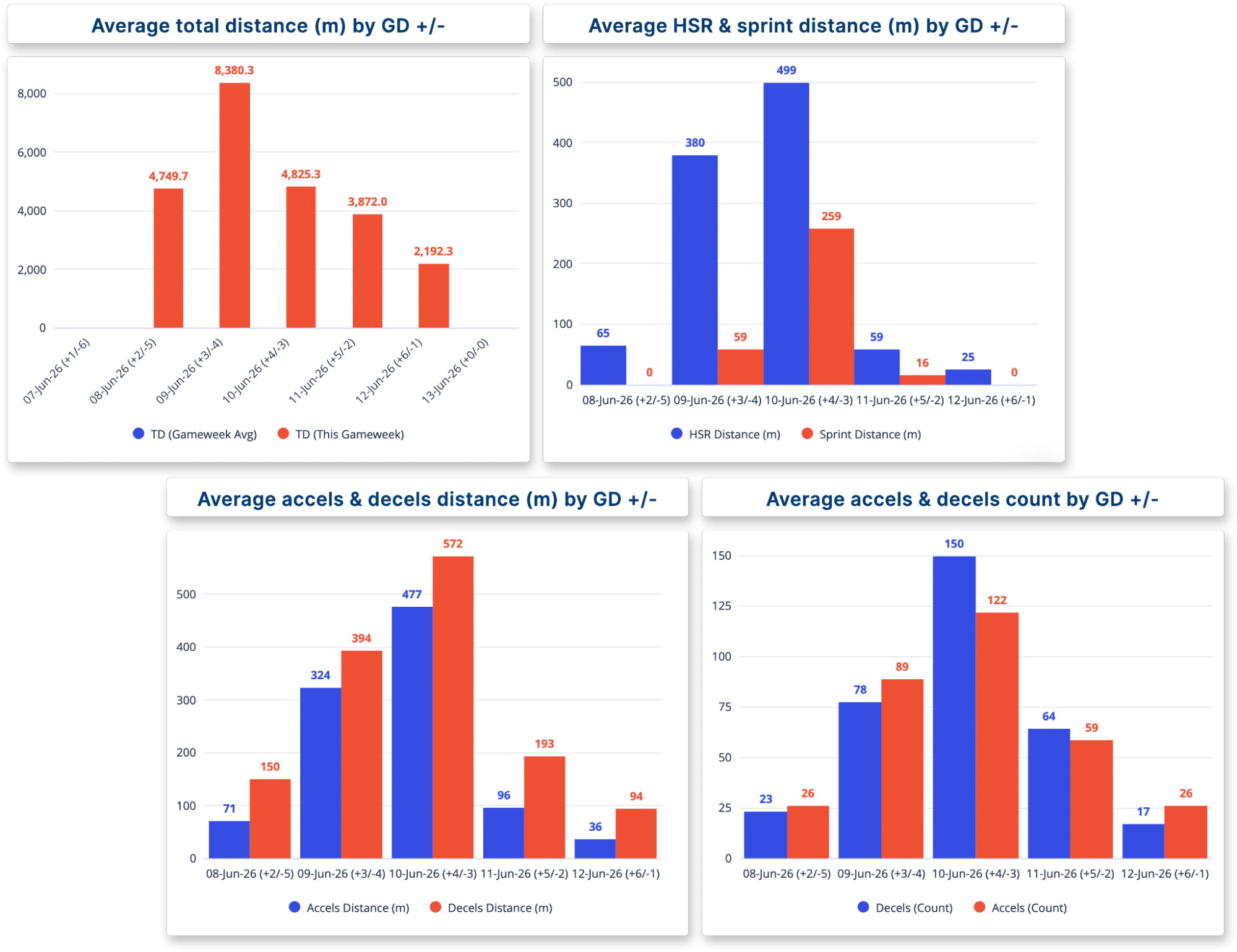
For a deeper look at how training aligns with match demands across the microcycle: Training Load in Game Context
Manage Load Across the Squad
Training plans are built at the squad level, but outcomes rarely distribute evenly.
The Gameweek view aggregates load across the full cycle, allowing teams to compare squad averages against individual accumulation, review position group differences, and identify players with modified or missed sessions. This helps staff identify imbalance early, before it affects readiness or availability.
Rather than reacting after the week is complete, teams can adjust remaining sessions with a clearer view of where each player sits.
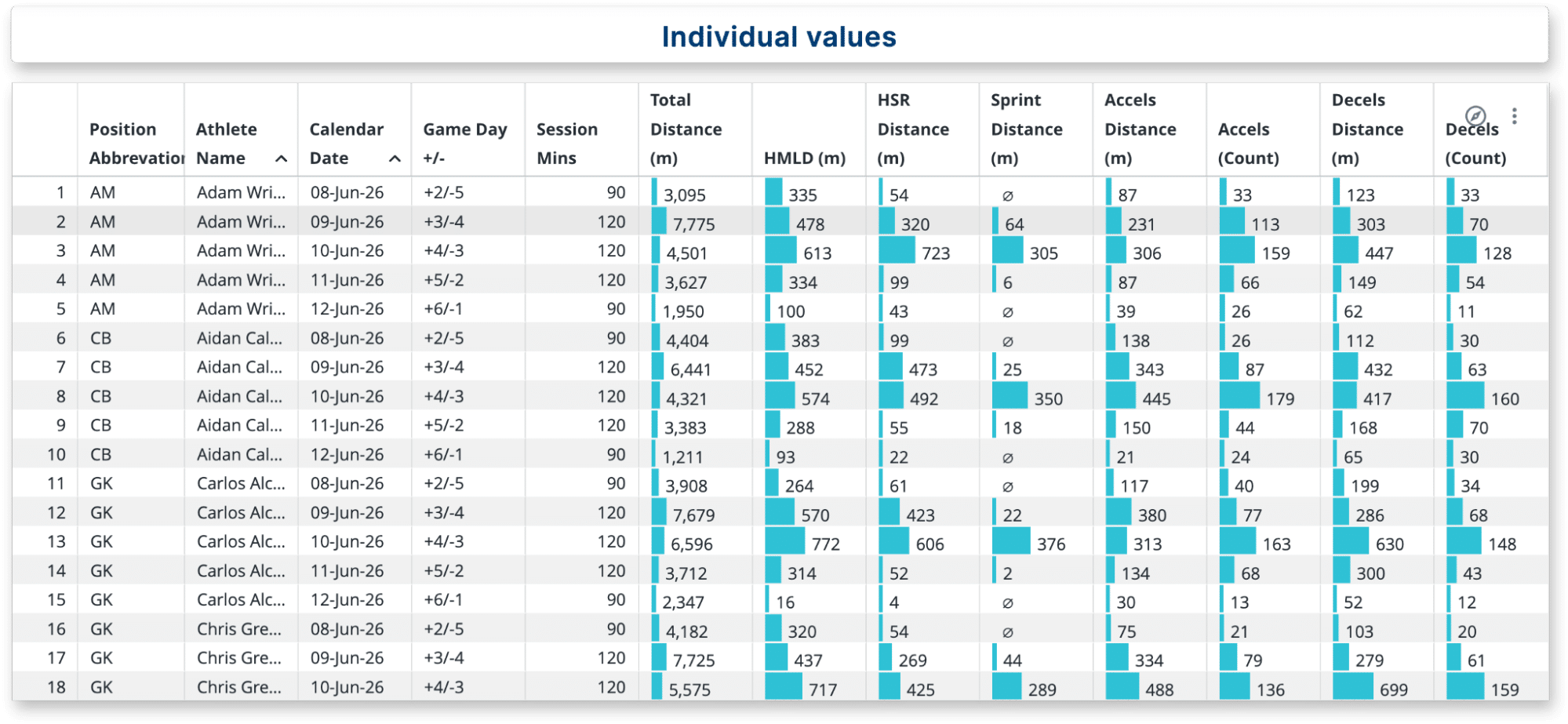
See how this applies in practice: Squad and Individual Load Alignment
Compare Different Gameweek Demands
Not every week places the same demands on the squad.
The Gameweek view makes it easier to compare standard and congested fixture cycles, single-game and multi-game weeks, and shifts in load and intensity based on the available time between matches. That helps teams understand how fixture density shapes training decisions and adapt without losing consistency in approach.
From Weekly Review to Better Decisions
The Gameweek view does not prescribe what the week should look like.
It provides the visibility needed to validate whether the planned structure was delivered, adjust upcoming sessions based on actual load, and communicate decisions clearly across the performance and coaching staff.
The result is a more consistent link between training design and match readiness, without relying on manual analysis or disconnected reports.
See Gameweek Analysis in Action
This short walkthrough shows how the Gameweek view brings training load and match demands together across the microcycle, so you can quickly assess whether the week is aligned with your intended structure.